E-Paper



‘BRT works when it provides efficient service and end-to-end connectivity’
Shivanand Swamy, professor emeritus at the centre of excellence in urban transport at CEPT University, bats for the BRT in Indian cities

 Prefer HTon Google


To break the traffic gridlock and breathe easy, cities in India must make space for cleaner, efficient, low-cost public transportation. The bus rapid transit system (BRTS), which puts buses in dedicated fast lanes and operates the service on the lines of the rail-based Metro, is popular worldwide for these benefits. However, Indian cities are conflicted about it. The Pune BRT is only partially operational. Delhi dismantled its lone corridor in 2016. Bhopal too is all set to scrap it.
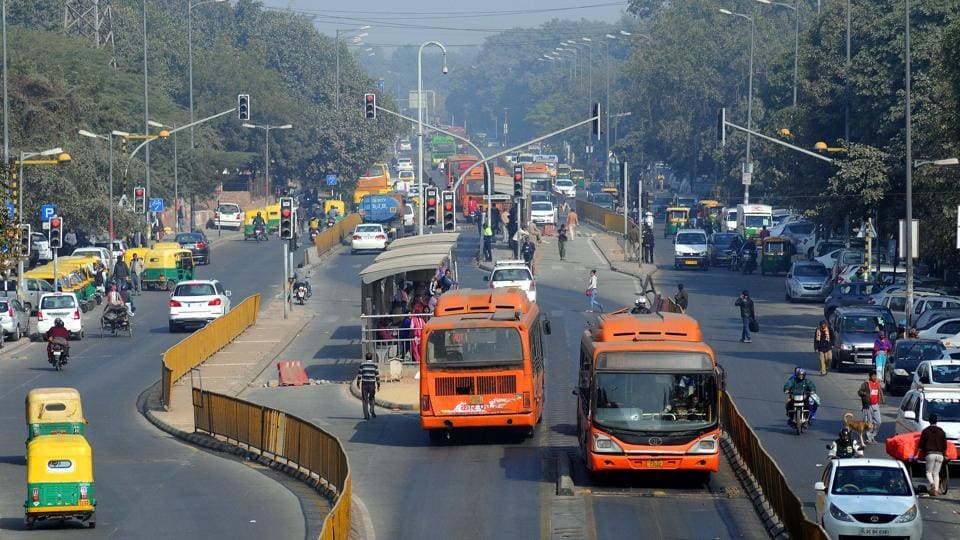
However, Ahmedabad and Surat have managed to make it work. To understand this inconsistency, Shivani Singh spoke to Shivanand Swamy, professor emeritus at the centre of excellence in urban transport at CEPT University in Ahmedabad, who supported the planning and development of the BRTS in Ahmedabad, Surat and Hubbali–Dharwad, and advised the union ministry of housing and urban affairs (MoHUA) to formulate guidelines for BRTS and bus-based services.
Edited excerpts:
Why is there such a mixed response to BRTS in India?
The most successful BRT systems operate in Latin American cities. They already had many buses — mainly private — operating and competing. They wanted to build the Metro. Since they did not have money, they decided to make the bus look and operate like the Metro. In India, BRT was projected as an alternative to the Metro because that’s how it was in Latin American cities. But now, even Bogota (Colombia) is getting the Metro.
(Historically) Indian cities didn’t have good public transport. Wherever a reasonable supply (of buses) existed, the quality deteriorated for various reasons. They were losing ridership. We needed to bring people back on public transport. The major issue at that time and even today is that there is no space for buses on our roads.
In 2012, Ahmedabad, with a population of 5.5 million, had 23 cars per 1,000 people. Last year, with a population of 7.5 million, there were 55 cars per 1,000 people.
Indian cities have less than a metre per capita of road space; in the United States, it is about 3-4m per person. But the fact that we do not have the space required to function as car (dominated) cities is not well understood.
We’ve been building Metros, but they won’t be adequate everywhere. They are expensive. Their (passenger-carrying) capacity is very high, but (they operate only) on certain corridors. I believe they will be viable in the future. We have to have buses, but they cannot operate in mixed traffic.
In Bengaluru, bus speeds are down from 19-20kmph to 13-15kmph in some places. Despite running the same duration of 16 hours, buses covers a shorter distance. With halt-and-go driving conditions, fuel costs also go up. If buses carry fewer passengers, revenues decline. We have to ensure that buses are given adequate space on the street, either fully or partially segregated, so they get priority.
Still, such an experiment failed in Delhi. Pune shrunk its operation. Now, Bhopal is all set to dismantle its BRT.
In Delhi, the corridor length was only about 5km, and the choice of corridor was not right in the first place. It didn’t have any group of people being serviced or getting the benefit.
In Pune, it was a half-hearted attempt. Some corridors have their bus stations in the centre; some are kerbside. Some have off-board ticketing, while others have on-board ticketing. It is not a system, but corridors with some priority (to buses). Pune now has the Metro, so there will be comparison and competition between the two services. Delhi built 5km, Pune built 30-40km, but there was not much difference.
Indore, again, has 12km of BRT. But I won’t be surprised if, even there, people come back with similar responses to what they are doing in Pune. They have built systems that are not complete. By systems, we mean pre-board fares, level-boarding, quality bus, and regularity. Pune didn’t have these.
In Bhopal, BRT was serving a purpose. The problem is that a bus corridor was built (on a less congested stretch), which looked empty. But there was no corridor on the congested stretch.
Also, people park their cars on the roadside (and cause congestion), but nobody complains about it. But they only complain about this one lane (of BRT), which looks empty. They don’t realise how many passengers are inside the bus moving on that corridor. People who travel in buses have very little say. Those who use cars are very vocal, and their voices are heard.
We are not pushing bus transport in a significant way. The government of India is giving some funds, so cities build these corridors. MoHUA guidelines say you need about 60 buses per 100,000 population. None of these cities, including Delhi, has that number. London has about 400km of underground Metro network and 8,000 buses.
How are BRTs in Ahmedabad and Surat performing?
Half the system works well in Ahmedabad, and the other half does not. On the western side, where it works well, there are a lot of middle- and higher-income neighbourhoods. The fares are affordable, and you have announcements inside buses, and bus stations are elegantly designed. When we had 45km, we already had about 150,000 passengers.
But when we added the other side, there was a mismatch in the procurement of new buses, and we had to distribute the existing ones. In that process, we lost ridership on the west. On the eastern side, the system is not complete. It is segregated only in some places. City buses are competing with BRT in the same corridor.
The point is clear — you cannot build a segregated system everywhere. But you have to provide end-to-end connectivity, whether it’s the same bus or interchanges. Also, interchanges have to be designed well; schedules have to be defined so people don’t waste time waiting for the bus.
That’s something that has been done in Surat. It is also the only city in India that has three types of bus systems — BRT, city bus and high-mobility corridor. You can board any bus with a ticket or a smart card anywhere in the city. Ahmedabad is building the Metro, and they are working to integrate it with the city bus and the BRT.
Probably the most recent successful BRT system in the country is the one between the twin cities of Hubballi and Dharwad (18 km apart) in Karnataka. They operate about 90 buses a day and carry about 90,000 to 1,00,000 passengers. They have an express service, which takes 25 minutes while the regular service takes about 40 minutes.
The Ahmedabad corridors are not making enough profit. Do you think that’s a concern?
You design a system for a certain level of ridership. If the ridership is very high, you get large buses — 12-18m. If buses can’t carry so many people, go for the Metro. If the ridership is low, you go for midi- or minibuses. What is most important to a passenger is the frequency. If I don’t get a bus, there is a rickshaw waiting by to compete.
Most cities have two peaks (for traffic), although nowadays, you also have an afternoon peak. As the distances are not long and the peak (time) is very short, there is a lean time when the buses, which have a carrying capacity of 60-70 passengers, carry only 10 or 20 passengers. (To maintain the frequency) one has to look at the viability gap.
Both Ahmedabad and Surat have midi buses, (apart from) standard-sized buses — mainly to give very high-frequency service, although they are considering inducting 18m buses. Certain corridors in Ahmedabad have a 2-5minute frequency. When we designed the operation plan in Surat, we started with 8 minutes in peak hours and a 12-minute frequency in non-peak hours. As the demand increased, this came down to 4-5 minutes during peak and 8 minutes during non-peak hours.
You cannot have a headway of 30 minutes and claim to be providing public transport. That’s how it is in cities in north and west India, even Bhopal. You have 100 buses for a population of 2 million, which is inadequate. You need about 1,000 buses for 2 million people. Even in Ahmedabad, we need about 3,000 buses, but we have only 1,000. BRT is doing okay but city buses are not. Acknowledging these problems, the Gujarat government created the CM bus scheme, providing a viability gap (funding) per vehicle km.
Will the PM e-Bus-Sewa scheme help boost public bus transport?
Big cities are not included in this scheme; only small cities are. This is some support but the number of buses to be provided, which is 100 per city, is inadequate for cities without public bus transport.
For example, among the cities with a population of 500,000, Gulbarga (Kalaburagi) operates 350 city buses. Hubballi-Dharwad (1 million population) already operates 300 buses. Bus ridership is habit formation. From 100 buses, cities will need more in the coming two years to take the fleet size to 300. This scheme is on the lines of the Gujarat CM bus scheme. It should play a positive role in developing public transport systems in current three or four-tier cities.
Do large cities that lack adequate bus service have the financial capacity to buy new buses?
Local bodies in big cities are not financially sound. There was a time when they had octroi as a major source of revenue. After it was abolished, they got some compensation for a few years, but it diminished over time. Local governments need to have their own sources of revenue. Why not share GST with local bodies? Also, like water supply and drainage, public transport is a local subject. But in the order of priority, public transport is treated as an optional service in many cities.
BRTS makes sense in high-density areas, but retrofitting bus lanes in such places is difficult because the road space is saturated with private vehicles.
You need political will. If you don’t do it, then you would just sit in the car, and not move at all. It is happening in Bengaluru, where, on certain stretches, it can take an hour to cover 4-5km. Also, whether there is congestion or no congestion, high or low demand, you have to provide simple bus priority or segregated lines for the entire city.
Maintaining lanes designated for buses requires strict enforcement.
When Prime Minister (Narendra Modi) was the chief minister of Gujarat, he came for the inauguration of the Ahmedabad BRT; he got out of the car and walked from the entry point to the bus station. While he was in Gujarat, we built about 40-45 km of the BRT network in Ahmedabad. No ministers, court judges, police or municipal commissioners entered the BRT lanes (in their cars). That’s the kind of thing he had set in the practice.
Things have loosened a bit. Now boom barriers and automatic gates have been put on the corridors, which open and close as the bus enters and proceeds. So, if there are issues, they’ll have to be sorted out. The costs of not having a good public transport system are huge in terms of accidents, travel time, air pollution, economic costs… Our cities are designed for community living, and we do not have road space just for cars.
What is the way forward?
Any investment in public transport – whether the Metro or the bus — is a good idea if it works. If you are spending ₹10,000 crore on the Metro, spend an additional ₹2,000 crore on buses, and have integrated ticketing, it could change the game. We need complete public transport development — investments in the Metros, buses, walking and bicycling.
Also, we need to recognise that parking is a private good. It must be bought and sold in the market. It should not be the responsibility of the public authorities to provide on-street parking. A limited amount of paid parking could be provided but not everywhere. Governments should not build multi-storey parking lots. Let private entrepreneurs build and operate them.