E-Paper



‘Cities at centre of climate discussion for first time’
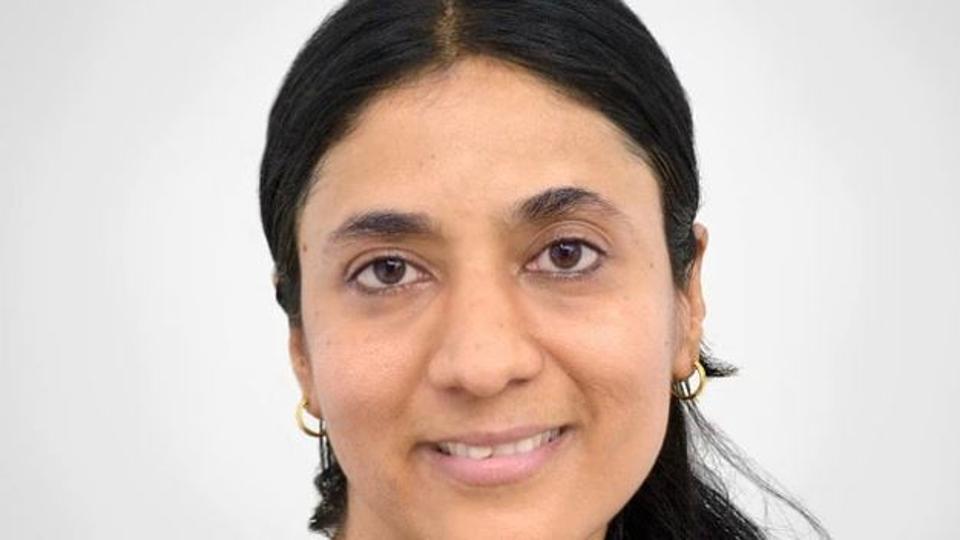
Interview with Shruti Narayan, regional director, South and West Asia, at C40 Cities, following the recently held Conference of the Parties (COP)

 Prefer HTon Google


From record-breaking heat to intense rain, from cyclones and floods to long dry spells, 2023 had its share of worst weather extremes. Their impact was magnified in cities due to population density, income inequalities, insufficient public services, and civic mismanagement. While the urgency for accelerated climate action in urban spaces is now understood, its roadmap, the issues of monetary and technical support, and the challenge to ensure an equitable and humane approach to implementing solutions demand more clarity and unanimity.
The recently held Conference of the Parties (COP) — the United Nations’ high-profile annual assembly of world leaders negotiating terms of climate action — agreed on the issues of transitioning away from fossil fuels and the framework for the global goal of adaptation, while taking stock of climate action and mobilising the loss and damage fund.
To understand how these outcomes will play out for cities, HT spoke with Shruti Narayan, regional director, South and West Asia, at C40 Cities, a network of 100 international cities that assists six Indian metros in framing their climate action plans. Edited excerpts:
**What were the biggest takeaways for cities from the Conference of the Parties (COP)-28 in Dubai?
This COP was, in many ways, a landmark one. The focus on fossil fuel transition; the approval of loss and damage fund (for developing countries affected by climate change) although the (pledged amount of) $700 million compared to the billions that are required is a drop in the ocean; the first-ever global stock take and a full-scope review of climate issues; acknowledging that the next round of nationally determined contributions (NDCs) – which are due for revision in 2025 -- need to have a global adaptation plan; discussing the impact of climate crisis on health… These were all significant.
Also, for the first time, cities found the centre stage amid all these discussions, which otherwise tend to happen at the national level. The first-ever local climate action summit focussed on cities was organised. Over 100 cities came together. The coalition of high-ambition multi-level partnerships (CHAMPS) was launched. This indicates that no action can be delivered on the ground without consultation with local and subnational governments.
**How will the transition away from fossil fuel play out in Indian cities that are heavily dependent on them? Much of the transportation, for instance, runs on oil and gas. There is a push for electric vehicles, but they’ll still be powered by electricity generated in coal-fired power plants until the share of renewables increases.
One of the things that this COP probably couldn’t do and would need to be taken up in the next COP is how this transition will happen for economies that are heavily dependent on fossil fuels. To get them to transition away quickly will require transitional financing.
Cities need data-driven and evidence-based climate action plans. Once the cities know cross-sectorally what their emissions are, they can explore how to get to the reduction part. In cities, energy building and transport sectors are the biggest emitters. If we look at energy efficiency as the first principle of production, it immediately reduces our reliance on energy. This makes the transition from fossil fuels easy and more economical.
The second step is to look at renewable energy – there’s agreement at COP-28 to triple renewable energy -- and how to bring in new technologies. Here, platforms such as CHAMPS and local climate actions provide opportunities for cities to have negotiations with subnational and national governments on the phase-out because decisions such as these require all players to come together,
The first principle of mobility needs to start from walkability and how to incentivise public transportation. That will reduce the need for motor vehicles, making electrification of transportation more viable.
Through C40’s city finance facility, we are working with Brihanmumbai Electric Supply & Transport Undertaking (BEST), looking at deploying renewable energy on bus depots to power their growing (electric) bus fleet. This kind of project can be replicable and help cities achieve their electrification targets while enhancing public transportation.
**What does the loss and damage fund have for Indian cities? What are the ways to access it?
The World Bank has been reached out to see how they could be the secretariat (to host the fund). But irrespective of the loss and damage fund, we still need to establish certain aspects of the broader climate financing. First, there are gaps in climate funds. Second, there are limitations in how cities can access these funds directly. That is the discussion on the multilateral development bank reforms: What kind of risk mechanisms can be there? How can cities improve their creditworthiness?
Once the loss and damage fund is operationalized, one hopes these issues will be addressed so cities can access it quickly. It cannot be a debt because cities can’t be heavily in debt while trying to access these funds (for recovering from a disaster). We cannot burden the already burdened cities with more debt. So there has to be other mechanism of providing the funds.
**C40 is assisting many Indian cities in formulating their climate action plans. How are they progressing?
C40 is a network of cities with about 100 members. In South and West Asia, we have 11 cities in total and six of them -- Ahmedabad, Delhi, Bengaluru, Mumbai, Chennai and Kolkata -- are in India.
Members need to commit to formulating a climate action plan that aligns with the Paris Agreement, which means that these plans have a target-driven approach for a 50% reduction (in emissions) by 2030 and reaching net neutrality by 2050.
While the Indian government has set a very ambitious target of net neutrality by 2070, we need big cities to transition even earlier. We have launched the climate action plan for Mumbai and Bengaluru with WRI-India. C40 directly supported the Greater Chennai Corporation and the state department for the city climate action plan. We are currently working with Kolkata, Ahmedabad and Delhi to finalise their climate action plans in line with the agreements made at the national government level.
While these will be the lighthouse cities, we’re already working with many non-C40 cities or other Tier 2 and Tier 3 cities in India to inspire climate action. In Maharashtra, for example, we are working with 42 cities in addition to Mumbai on the roadmap to lower emissions in the buildings and energy sectors.
**Do cities have funds and institutional capacity to get action on the ground?
Three cities we are working with have formed or are in the middle of forming climate action cells. C40 also has a governance tool called climate budgeting. The cities must start looking at every rupee they spend through the lens of climate. Align city budgets with climate (agenda). Also, urban planning and master planning is a way of embedding (climate) action in how the city will grow.
**How can master plans and climate action plans be integrated?
Master plans outline the land use, road networks, and blue-green infrastructure in a very basic way — right from the density of the cities to how they’ll move people and goods, how they’ll balance the green with (land) development rights, which (in turn) will impact the air quality and the health of citizens.
Cities worldwide, especially in India, face the encroachment of water bodies that have completely disrupted the natural water flows, leading to increased urban flooding or droughts. Master plans map out these water bodies and can ensure they are retained. By doing this, cities can manage urban heat island effects. This will be a significant climate action.
The Chennai Metropolitan Development Authority is working on revising its master plan. We have finished the climate action plan for Chennai. This is an opportune time to see how the two can get integrated. It can then provide the framework for other cities in India and the global south. This is a significant way of embedding climate action (in planning) in high-growth cities.
**What’s the progress on the Mumbai Climate Action Plan launched in March 2022?
Mumbai is working on climate budgeting, which will ensure that everything you do becomes embedded with climate action. Mumbai is also creating a climate cell. They are working on updating the (Greenhouse gases) inventory, which is also very important to understand the trajectory and identify the gaps to work on adaptation issues.
C40 is working with Mumbai on energy and building transition. We’re looking to support Mumbai on a methane programme, looking at remediation measures in existing landfills and how we can help the city navigate its organic waste. Mumbai is working on electrification of freight. We are working with BEST on deploying renewable energy on its past depots.
**What is the key focus area of the recently launched Bengaluru climate action plan?
The key issue is mobility. What can be done to make the city more walkable. How can we expand the public transportation network, increase zero-emission areas, and incentivise (purchase and use of) electric vehicles. The plan also looks at renewable energy deployment in the city, incorporating energy efficiency and the issue of air quality.
**COP has successfully launched the global stocktake. Locally, how can we bring accountability in climate action plans for cities in India?
At C40, our membership is voluntary, but members are committed to highly accelerated action on climate. We have the leadership standards that each city needs to adhere to. We review these standards every year. If a city does not meet these standards, we try to understand what could be the reason. If it has faced a catastrophe, we make special consideration. Otherwise, their membership can get annulled.
These reviews are disclosure-based. We look at data. If the city has a climate action plan, it has to update its inventory every two years and its action plans in four to five years. These climate action plans are made and launched by the government, making itself accountable to its citizens.
The framework in which we review the cities remains the same, but the context of how cities prepared their climate action plans and how they perform may differ. Some cities might want to prioritise transport, some might prioritise water, etc.