
 E-Paper



Clean fuel push led to rise in number of PUC fines: CAQM to HC
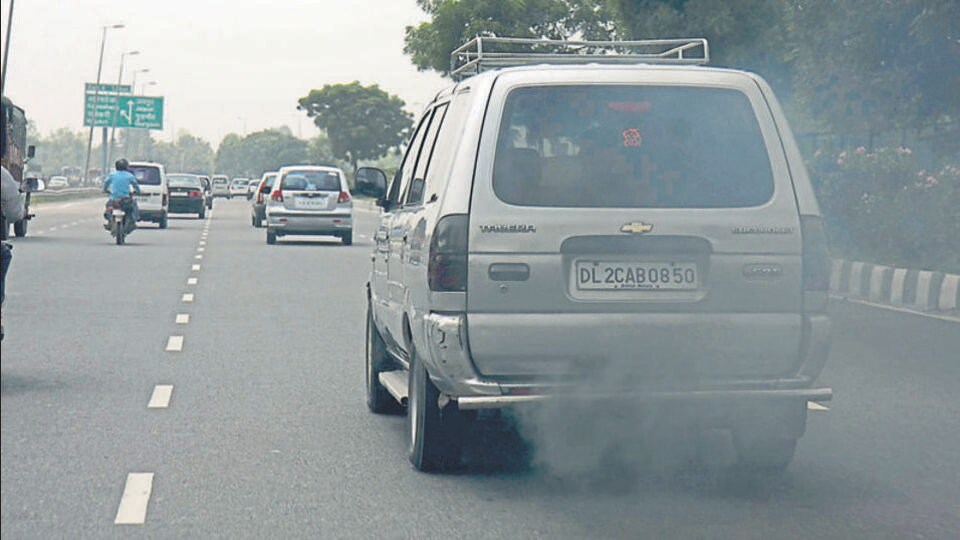
According to the report, 181,000 commuters in Delhi were challaned for driving without a valid PUC or for overloading in the first six months of 2024

 Prefer HTon Google


The push for cleaner fuel technology to tackle vehicular pollution in Delhi has led to an increase in the number of challans against commuters driving without a valid pollution under control (PUC) certificate, the Commission for Air Quality Management (CAQM) has said in a status report submitted with the Supreme Court.
CAQM made the submission in a report filed on October 1, in response to the September 24 directions of the Supreme Court — which is currently hearing a public interest litigation (PIL) filed by MC Mehta — asking what steps have been taken to curb air pollution in the Capital.
According to the report, 181,000 commuters in Delhi were challaned for driving without a valid PUC or for overloading in the first six months of 2024, in comparison for 164,000 challans for these two traffic offences in the entirety of 2023.
To be sure, the apex court in a later hearing on October 4, pulled up the commission for not being serious in its efforts to stop stubble fires in Punjab and Haryana. The court will consider on October 16 CAQM’s comprehensive action plan on the 10 factors contributing to Delhi’s pollution.
Every year, Delhi faces a public health crisis in the run-up to and during the winter season. The crisis begins with farmers in Punjab, Haryana, and Uttar Pradesh setting fire to hundreds of square kilometres of paddy fields after harvesting them to clear them of residue, causing a smog jacket to form over northern India, particularly the national capital.
Other factors, such as emissions from firecrackers and dust pollution, often leads to a drastic deterioration of the Capital’s air, with the air quality index (AQI) climbing past 400 and even 450, to reach pollution levels of “severe” and “severe-plus”.
CAQM, in its status report filed on October 1, said, “Vehicular pollution is one of the most significant contributing sectors to the generally poor air quality in Delhi-NCR. Abatement of vehicular pollution thus has been one of the main focus areas of the commission in its deliberations with the NCR state governments and government of national capital territory of Delhi (GNCTD).”
The commission also said that there are plans in place for four-fold rise in charging points for electric vehicles by 2026 and early deadlines for national capital region (NCR) states to switch to less polluting fuels in intercity buses and autos.
It said, “Towards an effective long-term strategy of controlling vehicular emissions, transition to e-mobility has been identified as an important tool.” Equally important, the report added, “is the need to build requisite infrastructure to support e-mobility - battery charging stations, battery swapping points and for disposal of large volume of batteries which is likely to be generated in the ensuing years”.
According to the report, Delhi has 3,00,810 electric vehicles (EVs) and 4,793 charging points. The commission said that GNCTD has been given a target of increasing the number of charging points to 18,000 by 2025-26, with UP and Haryana being set targets for an addition of 252 and 170 points, respectively, by the end of 2026.
CAQM also noted that overage vehicles in Delhi-NCR continue to be a matter of concern.
“Progress in this regard has been far from satisfactory for any of the NCR states or NCTD as is evident from the details of overaged vehicles impounded by the agencies concerned,” it said.
The commission further said that public transport in Delhi largely runs on electricity or CNG, but that is not the case when one enters neighbouring states. “Diesel-fuelled auto rickshaws are still plying in the NCR across the states of Haryana, Uttar Pradesh and Rajasthan,” it said, adding that while CAQM has mandated new registration of only CNG/electric autos across NCR since last year, the cities have been given time till 2026 to phase out the existing diesel auto rickshaws in a staggered manner. By the end of this year, this will be implemented in the NCR districts of Gurugram, Faridabad, GB Nagar and Ghaziabad, the report said.
A similar exercise has been proposed for inter-state buses plying within Delhi, CAQM said.


