
 E-Paper



Delhi primary schools to remain shut till November 10 as AQI turns 'severe plus' again
Delhi Air Pollution Updates: For Class 6-12, schools are being given the option of shifting to online classes, Atishi said.

 Prefer HTon Google


Delhi education minister Atishi on Saturday said primary schools in Delhi will remain closed till November 10 as pollution levels continue to remain high in the national capital. For Class 6-12, schools are being given the option of shifting to online classes, she said.
“As pollution levels continue to remain high, primary schools in Delhi will stay closed till 10th November. For Grade 6-12, schools are being given the option of shifting to online classes,” she announced on social media X.
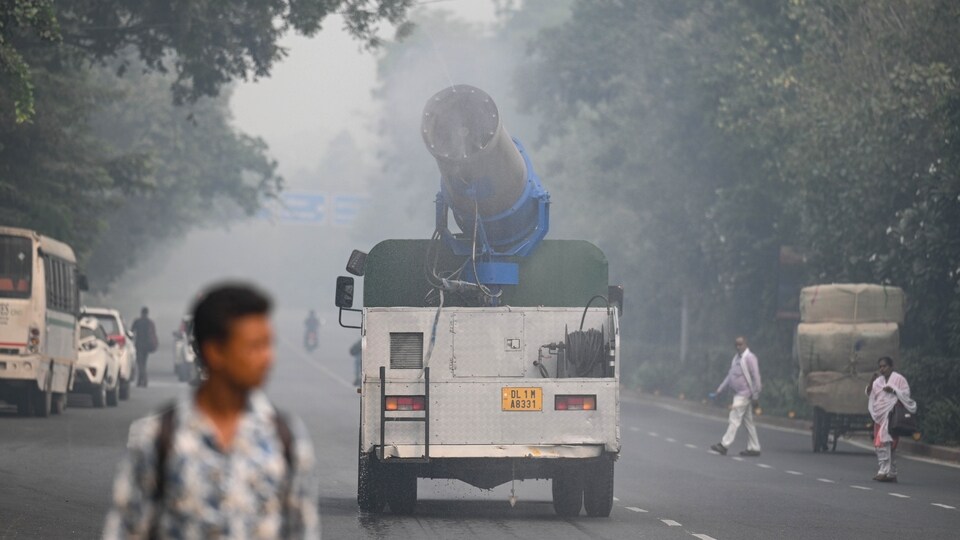
The announcement comes even as pollution levels once again reached the “severe plus” category in the capital due to unfavourable wind conditions, particularly calm winds during the night, news agency PTI reported A toxic haze lingered over Delhi for the sixth consecutive day on Sunday.
Earlier on Friday, chief minister Arvind Kejriwal declared a holiday for all government and private primary schools in the national capital after the pollution levels plunged into the 'severe' category.
The air quality index deteriorated from 415 at 4pm on Saturday to 460 at 7am on Sunday.
Under the Centre's air pollution control plan, all emergency measures, including a ban on polluting trucks, commercial four-wheelers, and all types of construction, are mandated to be initiated and enforced in the National Capital Region if the AQI crosses the 450-mark.
The concentration of PM2.5, fine particulate matter capable of penetrating deep into the respiratory system and triggering health problems, exceeded the government-prescribed safe limit of 60 micrograms per cubic metre by seven to eight times at multiple locations throughout Delhi-NCR. It was 80 to 100 times the healthy limit of 5 micrograms per cubic meter set by the WHO.
Air quality in Delhi-NCR declined over the past week due to a gradual drop in temperatures, calm winds that trap pollution, and a surge in post-harvest paddy straw burning across Punjab and Haryana.
Data from the Central Pollution Control Board shows that Delhi's air quality index increased by over 200 points between October 27 and November 3, culminating in a descent into the 'severe plus' category (above 450) on Friday.
Friday's 24-hour average AQI (468) was the worst since the previous high of 471 recorded on November 12, 2021.
The air quality in neighbouring Ghaziabad (410), Gurugram (441), Noida (436), Greater Noida (467), and Faridabad (461) also reported hazardous air quality.
According to the data issued by SAFAR-India, the air quality in the Lodhi Road area was recorded at 385 (very poor) while the Delhi University area stands at 456 (severe).
According to doctors, for any healthy person, a recommended AQI should be less than 50, but these days the AQI has spiked beyond 400, which could prove fatal for those suffering from lung-related diseases and even pose a risk of lung cancer.
Delhi environment minister Gopal Rai has written to Union minister Bhupender Yadav, requesting him to ban the entry of vehicles non-compliant with BS-VI norms into Delhi from neighbouring states in Delhi-NCR.
He also requested an emergency meeting of neighbouring states' environment ministers.
Also, the National Green Tribunal (NGT) has sought responses from the Chief Secretaries of the affected states and directed to take immediate remedial action and submit the action taken report before the Tribunal.
NGT in a statement, said that immediate action is required for the prevention and control of air pollution in these cities so as to ensure better air quality for the residents.
(With inputs from agencies)


