E-Paper



Farm fire contribution to Delhi pollution dips this year
Till November 12, Punjab recorded 7,112 farm fires—significantly lower than the 24,717 fires recorded in the same period last year


New Delhi
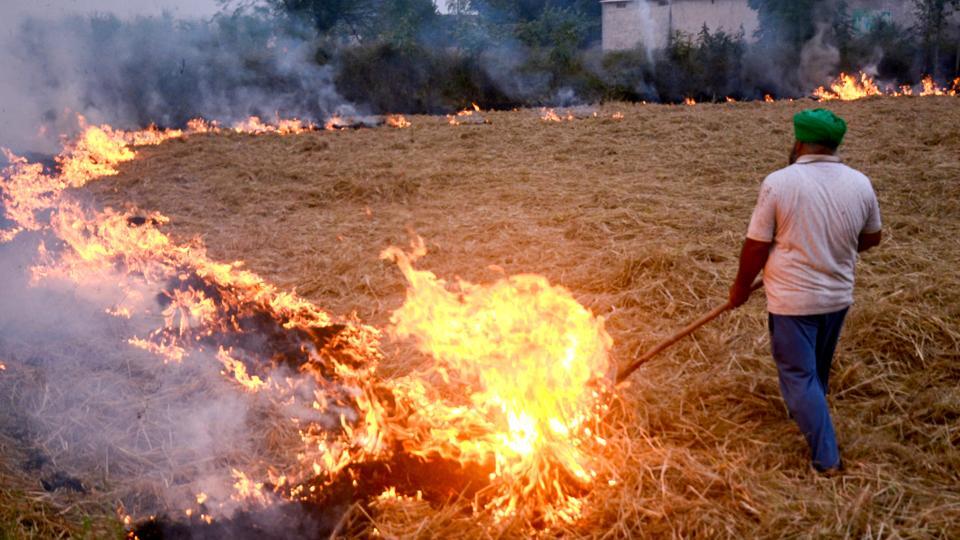
Farm fires accounted for an average of 16.23% of Delhi’s finer particulate matter (PM2.5) between October 22—when the second stage of the Graded Response Action Plan (Grap) came into force—and November 11, which is lower than the contribution of 20.33% from the same period in 2023, according to the Centre’s decision support system (DSS).
Smoke from the burning of paddy residue in Punjab and Haryana is historically a key contributor to the Capital’s worsening air quality index (AQI) in winter. Delhi’s AQI has stayed over 300, in the “very poor” category, since October 30, but is yet to cross the 400 mark and breach the “severe” level. Experts said a drop in the farm fire count from last year, combined with a variable wind direction, could be helping Delhi this year.
“Last year, for a sustained period, we had northwesterly winds prevailing, which allowed stubble smoke to reach Delhi consistently. This year, the wind direction has kept on changing, meaning not only is the count lower, but northwesterly winds have not persisted for as long,” said an official with the Indian Institute of Tropical Meteorology (IITM), which runs the DSS.
According to data shared by the Indian Agricultural Research Institute (IARI), till November 12, Punjab recorded 7,112 farm fires—significantly lower than the 24,717 fires recorded in the same period last year and 43,144 fires recorded in 2022. In Haryana, the total fire count till November 12 was 1,020—down from 1,813 fires in the same period last year and 2,979 fires in 2022.
Officials in Punjab said that a major chunk of paddy has been harvested, with the next crop being sown by most farmers. Isolated fires continue to be recorded in both Punjab and Haryana till November 30 though. The fire count on Tuesday in Punjab was 83, down from 418 a day earlier. In Haryana, the count on Tuesday was 12, down from 27 a day earlier.
The highest single-day count in Punjab this year is 730 fires, recorded on November 8; it was 3,230 on November 5, 2023. In Haryana, the highest single-day count this year is 98, recorded on October 12; down from a peak of 127 recorded on October 15 last year.
The highest single-day contribution, of 35.17%, was recorded on November 1 this year, when strong northwesterly winds were blowing towards the Capital. The wind direction, however, changed to southeasterly on November 3 and has largely remained variable since. Last year, the peak contribution was 35.43%, recorded on November 3, but the daily contribution remained over 20% between November 2 and 9, which is generally when farm fire count in Punjab and Haryana peak.
Priyanka Singh, programme lead with think-tank CEEW, said Delhi’s AQI may improve and drop below 300 after November 19, with the farm fire count dips. “This decrease may take place due to a reduction in stubble burning, which generally occurs after November 15 each year,” she said.