E-Paper



Permanent solution needed for toxic foam in Yamuna: DJB
The toxic foam — an annual phenomenon in the Yamuna during winters — are caused by soap-like surfactant molecules, which are indicators of high levels of untreated sewage and industrial pollutants in the river’s water

 Prefer HTon Google


Toxic foam continues to cover the Yamuna’s surface, especially around the Okhla barrage, and officials from the Delhi Jal Board (DJB) — which undertook an exercise to sprinkle an anti-foaming agent in the river ahead of the Chhath festival — are now advocating for permanent installations at the site to tackle the froth.
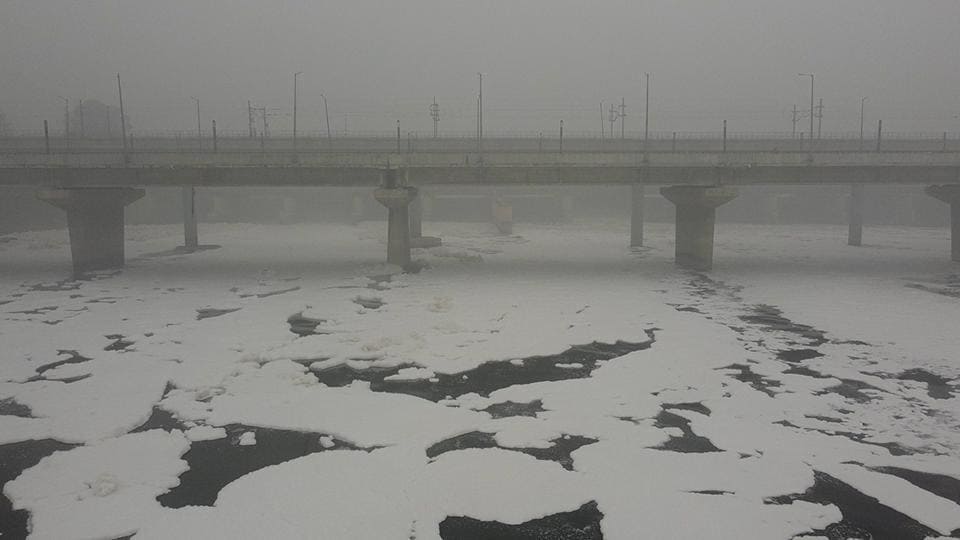
The toxic foam — an annual phenomenon in the Yamuna during winters — are caused by soap-like surfactant molecules, which are indicators of high levels of untreated sewage and industrial pollutants in the river’s water.
A senior DJB official said that the water on October 21 began a 15-day drive to spray a silicone dioxide-based anti-foaming solution to reduce frothing in the Yamuna. However, he said, the intervention should be turned into a permanent installation which will save money and also be more effective.
“We have used around 13 tonnes of the anti-foaming agent to reduce frothing. We can bring down the level of chemicals being used to almost half with permanent sprinklers along the length of 540m long barrage, which can be used for administering anti-surfactant solution, as per requirements and pollution load. This will also bring down costs — every year, we set up temporary infrastructure. There were four occasions this year when the equipment near reaction chambers was washed away due to fast flow of water,” the official said.
A second official said the pondage area upstream of the Okhla barrage needs to be cleared of vegetation — especially water hyacinth — for any meaningful achievement in froth control.
“The organic carbon content in the water was found to be very high over the entire fortnight (when the anti-foaming drive took place). The filamentous bacteria in aquatic plants release surfactant-like molecules which increase the frothing. A permanent machine should be deployed to tackle the water hyacinth problem throughout the year,” the official said.
The second official also called for a re-look at the schedule for the annual exercise to clean the Agra canal, alleging that the work leads to discharge of silt that further pollutes the river.
Bhim Singh Rawat, an activist with the South Asia Network on Dams, Rivers and People, said that instead of focussing on river pollution for 15 days before Chhath Puja, a round-the-year action plan is needed, and the underlying cause should be tacked. “The Upper Yamuna River Board water agreement between the Yamuna basin states is up for renewal next year, and that could be first step to restore the river water.”