
 E-Paper



Supreme Court grants Centre more time to reply to plea on Places of Worship Act
The Supreme Court on Wednesday gave the Union government two more weeks to file its response to a clutch of petitions that have challenged the validity of the 1991 Places of Worship Act.

 Prefer HTon Google


The Supreme Court on Wednesday gave the Union government two more weeks to file its response to a clutch of petitions that have challenged the validity of the 1991 Places of Worship Act, even as the Centre submitted that the issue is “sensitive” and will require a detailed deliberation before putting in a reply.
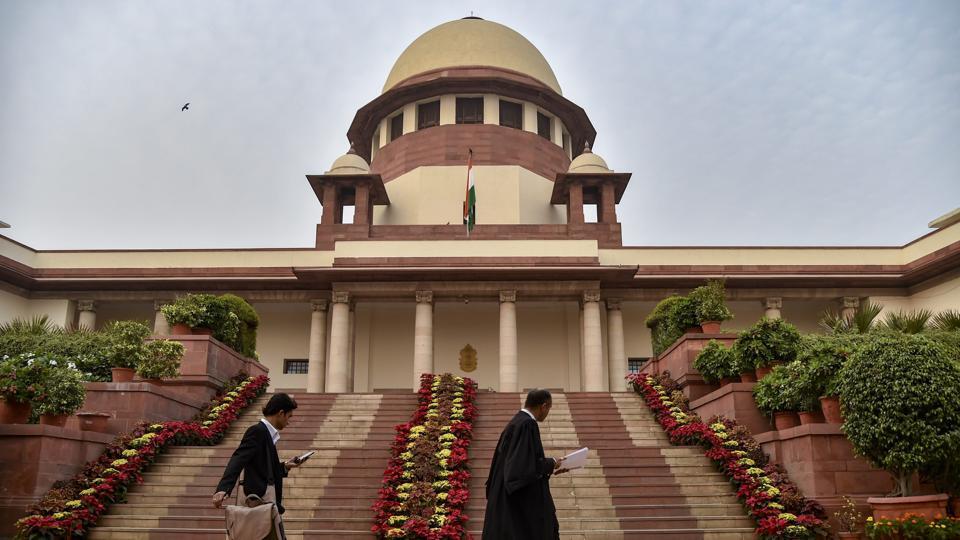
On September 9, the bench, led by Chief Justice of India (CJI) Uday Umesh Lalit, asked the Centre to file its reply within two weeks but no such affidavit was submitted. On Wednesday, Solicitor General Tushar Mehta, representing the government, asked for more time on the grounds that the reply was still under consideration.
At this, the bench, which also included justices Ajay Rastogi and S Ravindra Bhat, observed that the stand of the Union government becomes relevant when the validity of a legislation is challenged, and extended the time by another two weeks.
The Act locks the religious identity of a place of worship as it existed on August 15, 1947, and makes it punishable to attempt to change its character. The challenge before the court will have a bearing on ongoing legal disputes before several courts, including those involving the Gyan Vapi mosque in Varanasi and the Shahi Idgah in Mathura.
During the hearing, a brief discussion also took place on the significance of the passages in the 2019 Ayodhya verdict, which held that the Act is “a legislative intervention which preserves non-retrogression as an essential feature of our secular values.”
While Muslim bodies such as Jamiat Ulama-i-Hind and All India Muslim Personal Law Board harped upon the declaration in the Ayodhya verdict, several petitioners including advocate Ashwini Upadhyay and Vishwa Bhadra Pujari Purohit Mahasangh argued that the top court was not dealing with the Act in the Ayodhya land dispute and what was said was just obiter dicta (observations made in the passing).
At this, the bench asked SG’s personal opinion regarding the impact of the Ayodhya judgment on the petitions before it. Mehta replied that the issue may not be covered by the Ayodhya judgment.
The bench then adjourned the case to November 14.
The court had in March 2021 issued a notice on Upadhyay’s petition, alleging that the 1991 law violated Article 25 (right to practice and propagate religion) and Article 26 (right to manage religious affairs) of the Constitution, besides being discriminatory by barring religious communities from approaching courts to restore their places of worship. He even questioned the Centre’s power to enact such legislation.
Subsequently, several other petitions and applications were filed on the issue. They are all being heard together. Jamiat’s petition, on the other hand, has sought enforcement of the 1991 law. “Muslim places of worship are being made the subject matter of frivolous controversies and suits, which are patently barred under the 1991 Act,” it said.


