
 E-Paper



World Music Day: Lost notes of tradition in cacophony of new-age music
Traditional folk music and instruments in Lucknow are fading away as newer entertainments like DJs and pre-recorded tracks take over. Folk singers and instrumentalists are struggling to survive as people become detached from traditional musical forms. Jogi singer Chunnilal Yogi has seen his earnings drop from ₹25,000 to ₹10,000 per month. Shehnaai player Sher Ali has gone from 25 commitments a month to just three or four. Nakkara player Mohammad Siddiqui struggles to keep the art alive as no one plays or trains in the nakkara anymore.


The myriad folk music styles and instruments that existed in Lucknow are slowly fading away, as newer fads push forward in the entertainment space.
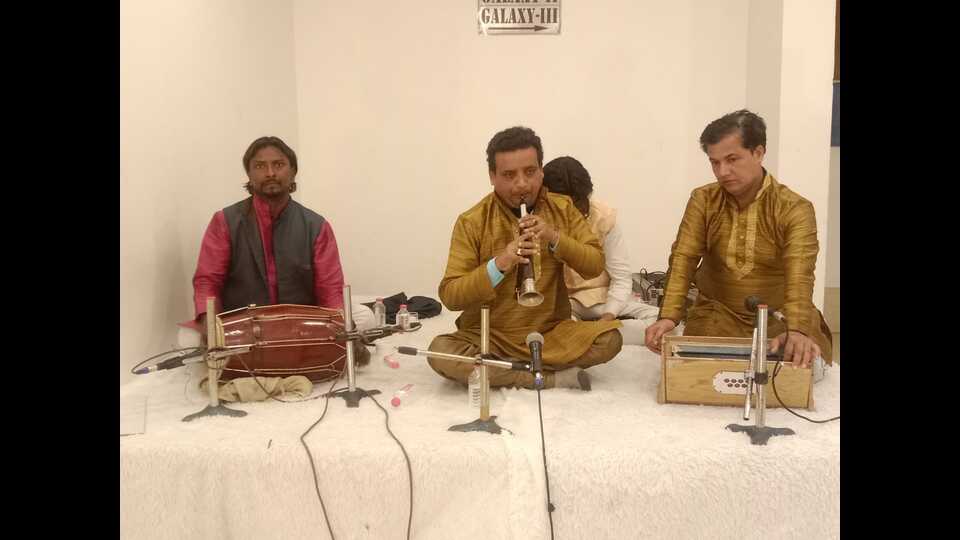
With DJs performing at family events and pre-recorded tracks playing in the background of staged performances, folk singers and instrumentalists are watching their art forms slowly dying for want of takers. Where once they used to be booked with commitments for months on end, these traditional artistes now find themselves struggling for survival.
DJs vs decades-old Jogi worship music
Chunnilal Yogi, a Jogi singer from Balrampur, Gonda, has gone from making ₹25,000 to ₹10,000 per month, in a matter of years. According to him, people in U.P. are getting detached from the traditional musical forms due to Western styles taking up the musical space these days.
“Ever since the DJs took over and modern forms of music became popular, people are losing touch with our styles, which have been around for so many decades,” said Yogi. He said that he had been a Jogi singer all his life, taking over the baton from his father, who was one himself.
Jogi music is largely in worship of Lord Shiva, and is about the marriage of Shiva and Parvati, as well as songs about other saints worshipped by the community. They perform vocals, accompanied by the harmonium, dholak, and khanjari. Chunnilal Yogi travels with his group of five members, across U.P. to perform at functions, weddings.
The group is also invited to perform in houses when a boy child is born, but the demand for their particular skill and expertise, has died significantly, he says. He drew a comparison, saying, “if earlier, the demand for us was Re 1, now it is less than 50 paise,” he explained.
Scion of darbar musician struggling to make ends meet
Sher Ali, a third generation instrumentalist, who is now struggling to keep his family afloat, said that shehnaai-playing is going to stop with him. His grandfather Bismillah Ali, used to play outside Bhool Bhulaiya, at Nawab Wajid Ali Shah’s darbar. His father too carried on the family occupation with the shehnaai.
However, “There is no possibility of income in this line of work here anymore. I do not want my children to suffer,” said Ali. He recalls that about a decade or less ago, his month would be packed with at least 25 commitments, whereas now it has dropped to three or four, at wedding ceremonies.
“Earlier, no occasion was complete without the tune of a shehnaai,” he said. “And now, we get maybe three to four calls in a month. Traditional classical instruments are fast losing popularity, and it is affecting our livelihood. Only those who still value the essence and cultural significance of the shehnaai still call for us at events. Everywhere else, DJs and music producers have taken over. We do not get any support from the government either, unless there is a reason to showcase the traditional art forms of the state.”
Folk percussionists losing visibility
Thirty-one year old nakkara player, Mohammad Siddiqui, is struggling to keep the art alive, as no one plays or trains in the nakkara anymore. He has also taken to playing the dholak now, as the demand for nakkara players, and the professionals themselves, has gone down drastically. “My grandfather, my father, all used to play the nakkara. It was played to accompany nautanki performances. When you heard the beats of the nakkara throughout the village, everyone knew that a play was happening, and they would follow the sound to come and watch. Now, those traditions have dissipated,” said Siddique, sharing that his grandfather and father would travel to a different village fair every month, and play the nakkara there for people’s entertainment.
“It is difficult to run a family, when you perform once every two months,” he said. He gets occasional calls from Sangeet Natak Akademi and Bhartendu Natya Akademi, when they organise theatre acts, and has previously been called to Mumbai and Delhi to perform his art as well, but frets that the state government has not done much to endorse the nakkara. “Tabla, kathak, and other workshops are happening, but nothing for the nakkara,” he said.