E-Paper



First sign of upcoming monsoon: Seasonal blooms add vibrant colours to Mumbai
Laburnum Road at Gamdevi in South Mumbai owes its name to the rows of Golden shower trees planted along the road in the British era

 Prefer HTon Google


Mumbai: Amid the usual view of skyscrapers and grey concrete jungle, the blooming Golden shower trees, locally known as Bahava and Amaltas, add a dash of romance to the Mumbai cityscape.
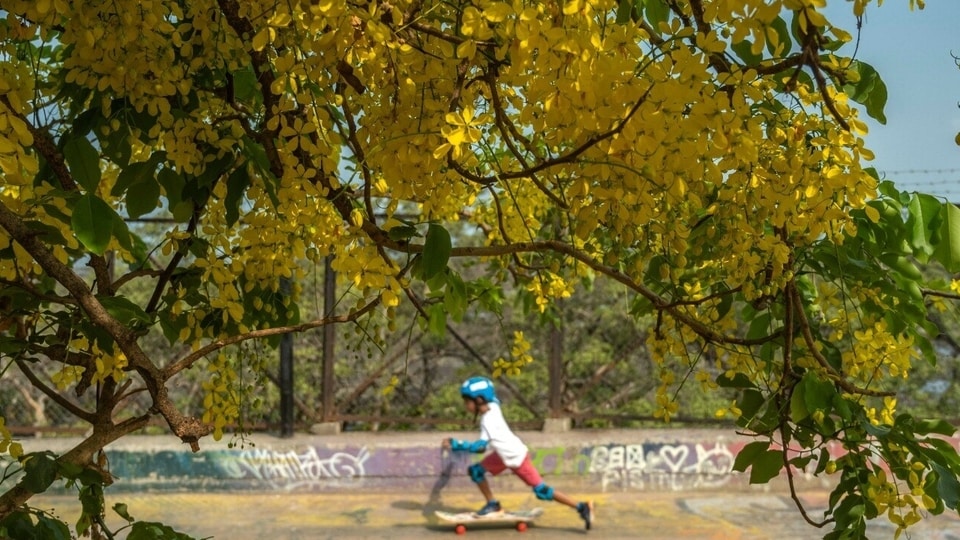
Bahava is a flowering plant native to the Indian subcontinent and Southeast Asia and is known for its bright yellow flowers that bloom in the summer and cover its branches. According to Brihanmumbai Municipal Corporation, there are around 4,856 Bahava trees in full bloom across the city signalling the onset of monsoon, forty days after its blossoms.
One can spot the flowers in abundance at Pramod Mahajan Kala Park in Dadar, and outside Mahalakshmi Racecourse and in Powai and Vikhroli. They are called Golden showers as they shed strings of yellow blooms.
It is interesting to note that Laburnum Road at Gamdevi in South Mumbai, home to the historic Mani Bhavan where Mahatma Gandhi lived during his Mumbai stint, owes its name to the rows of Golden shower trees also known as Laburnum trees, planted along the road in the British era.
BMC Gardens superintendent Jitendra Pardeshi suggests that Mumbaiites should take some time out of their busy life to admire the blooming Bahavas which adds a unique charisma to the bustling city.
Besides Bahava, here are some commonly sighted flowering trees and plants across the city.
Local name- Bahava
Botanical name: Cassia fistula, commonly known as the golden shower tree or Indian laburnum
Location: Pramod Mahajan Kala Park in Dadar and outside Mahalakshmi Racecourse
Description: It is often referred to as “Bahava” in some regions. It’s a tropical tree known for its stunning clusters of yellow flowers and medicinal properties.
Bahava, also known as the golden shower tree, is a medium-sized flowering tree native to India, Malaysia, and Southeast Asia.
Its scientific name is Cassia fistula. It is the official state flower of Kerala and Thailand.
It can grow up to 30-40 feet tall and is known for its showy blooms of golden yellow flowers that bloom in the spring and summer.
This tree has medicinal uses, like treating constipation and urinary disorders. Its leaves are effective against herpes simplex, and the bark used in antidiabetic medicine.
Local name: Red Chapha
Botanical name: Plumeria Rubra Linn
Location: Pramod Mahajan Kala Park in Dadar
Description: Plumeria rubra Linn, also known as frangipani or temple tree, is valued for its cultural, aesthetic, and medicinal importance. Culturally revered in tropical regions, it symbolises beauty, love, and devotion, often featuring in religious ceremonies and festivals. Aesthetically, its fragrant flowers in various colours enhance gardens and landscapes, while its medicinal properties offer remedies for skin conditions, fevers, and respiratory issues in traditional medicine.
Local name: Kailashpati
Common name: Cannon Ball Tree
Botanical name: Couropita guianensis Aubl
Location: Matoshree Meenatai Thackeray Shilpagram, Poonam Nagar in Jogeshwari
Description: Kailashpati, also known as the Cannon Ball tree, is a majestic species renowned for its unique appearance and cultural significance. With its large, round fruits resembling cannonballs, this tree stands out in tropical landscapes. Native to Southeast Asia and India, it holds sacred significance in Hindu mythology, often associated with Lord Shiva. Its fragrant flowers, shaped like inverted saucers, emit a sweet scent, attracting pollinators and admirers alike. The Kailashpati’s striking presence makes it a cherished botanical treasure, admired for its beauty and revered for its cultural symbolism.
Local Name: Sita Ashok
Botanical name: Saraca Asoca
Location: Prabhavati devi shyam Narayan Singh maidan in Thakur village, Kandivali East
Description: Sita Ashok, also known as Saraca asoca, is a revered tree in Indian culture celebrated for its graceful beauty and historical significance. With its lush, dark green foliage and clusters of fragrant, vivid orange-red flowers, it adds a touch of elegance to tropical landscapes. The Sita Ashok holds a special place in Hindu mythology, associated with love, devotion, and the epic tale of Ramayana, where it is believed to have blossomed in the presence of Sita, the consort of Lord Rama.
Local name: Tamhan
Common name: Pride of India
Botanical name: Lagerstroemia species
Location: Shahid Jawan Abdul Hamid Park in Dharavi
Description: Tamhan, also known as Lagerstroemia speciosa, is a majestic tree native to Southeast Asia and widely cultivated for its ornamental beauty. Renowned for its stunning display of vibrant flowers, Tamhan boasts clusters of large, showy blooms in shades of purple, lilac, or pinkish-violet, which adorn the tree for an extended period. Its graceful canopy and attractive foliage enhance its visual appeal, making it a popular choice for landscaping and garden adornment. Additionally, Tamhan’s wood is valued for its strength, ranking high among timber species.