
 E-Paper



Gieve Patel: Physician and polymath “with a slightly sick concern with the body” passes way
The play was set in 19th Century south Gujarat where many members of the Parsi community own enormous estates. It’s also home to indigenous tribes including the Warlis, who used to work in the lands of the Parsi landlords

 Prefer HTon Google


MUMBAI In an old interview, poet Gieve Patel, who published three books, ‘Poems’, ‘How Do You Withstand, Body’ and ‘Mirrored Mirroring’, described himself as “a profane monk” whose poetry reveals “a slightly sick concern with the body”.
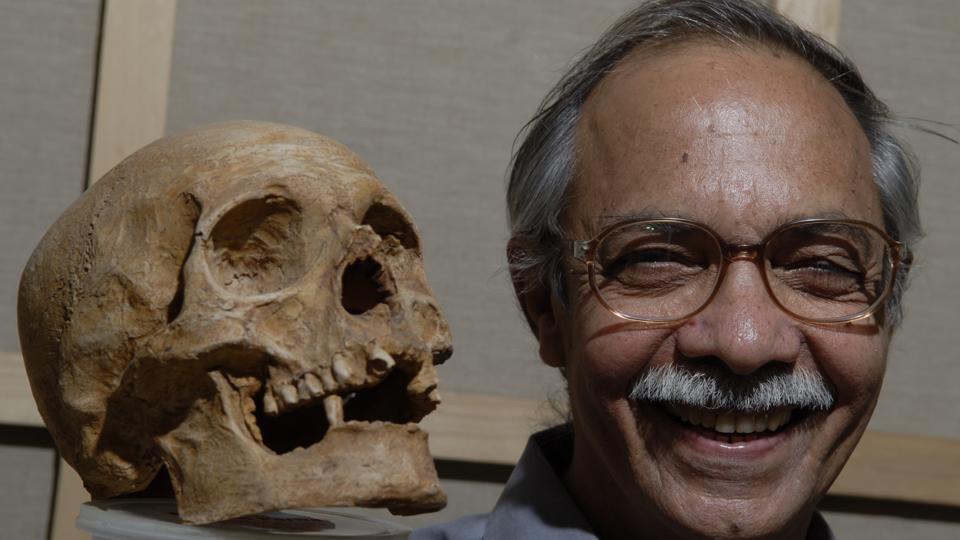
As a general physician, perhaps, Patel knew human anatomy only too well, so much so that it almost became a preoccupation of sorts.
At 83, this concern ended for Patel, when he dropped his body on Friday, after a brief illness.
My first introduction to Patel was when I was still in college. I met Patel, the playwright, when I played the central character of Dolly from his play, ‘Mister Behram’, for a drama exam.
The play was set in 19th Century south Gujarat where many members of the Parsi community own enormous estates. It’s also home to indigenous tribes including the Warlis, who used to work in the lands of the Parsi landlords.
Patel’s protagonist Mister Behram is a well-known lawyer and reformist. He adopts a young Warli orphan boy – Naval, whom he sends to study law in London, and even marries off his only daughter Dolly to him. As Naval comes into his own, Mister Behram feels threatened. There begins the tragedy of his own creation.
Though the play talked about the socio-political issues that plagued the community – Patel would often meet the Warlis when he would visit his grandfather in south Gujarat – the heart of the narrative navigated around the complexity of human emotions, which Patel captured beautifully in his plays, poetry and art.
Years later, as an art correspondent for a daily, I met Patel, the artist – first at a space in Napean Sea Road and the second time at his studio located inside an old building in the centre of busy Colaba, where Patel also lived. When people asked Patel if he painted in his bedroom, he often joked with them, “No, I sleep in my studio!”
A small typewriter sat at the corner of the room. Patel not only kept it for sentimental reasons, but also made steady use of it until very recently. He had used this to type all his plays, ‘Mister Behram’, ‘Princes’ and ‘Savaksa’, and poems such as ‘On Killing A Tree’ and ‘From Bombay Central’.
At his Colaba studio then, the artist was in the process of preparing for his upcoming solo show. Pointing to a painting titled Footboard Rider – the work itself lent the title of the show—Patel remarked, “Here, you see a sleeping figure juxtaposed with a man riding the train on the footboard. A common sight we see at the railways.”
Patel was fascinated by the Mumbai Railways and its dynamic imagery, which was a concurrent theme in his work. That particular show also included the theme of looking into a well (also a recurrent subject in Patel’s oeuvre), mourning figures as well as of those consoling mourners.
As an artist, Patel’s work was deeply influenced by his fascination with the human body. His canvases often depicted the human form in various states of existence, exploring the boundaries between life and death, presence and absence.
Being around his paintings, even when he wasn’t actively working on them, was critical to his practice. In their presence, he listened to stalwarts such as Bade Ghulam Ali Khan, Beethoven and Mozart. Music was essential to his studio time, as was poetry.
I encountered Patel the poet, while researching for a biography on Rudolf von Leyden. Patel recalled how the formidable art critic had invited him over to read his poems to a motley group, when he had just completed his MBBS. A young Patel sat in the esteemed company of his mentor and poet Nissim Ezekiel and R Parthasarthy. In that meeting, Patel also spoke about his role as an art critic for a leading Mumbai publication, where he worked briefly, and wrote pointedly with nuance.
A remarkable polymath, Patel’s long and diverse roles as a physician, artist, poet and playwright, sought to bridge the chasm between science and the humanities, in every sense -- a body of work still lives on.


