
 E-Paper



Talasari fishermen released from Pak jail, recount ordeal
On May 13, the Pakistani authorities released 198 Indian fishermen, who were languishing at Malir Jail in Karachi after being arrested for allegedly fishing illegally in the country’s waters, and handed them over to India at the Wagah border. Five fishermen are from Maharashtra’s Palghar district.


Talasari: “I never thought that I would come back to India, but on May 13 when I set foot in my motherland after three-and-a-half years, my eyes filled with tears,” said an emotional Jaywant Pachalkar, who lives in a one-room house in Kochai village, Patilwadi, 170 km from Mumbai. Along with Pachalkar, his 19-year-old son Jitesh, Vilas Kondhari (32) of Ghowarpada in Dahanu, Jitesh Diva (20) of Jambu village, and Arjun Daware (31) of Shaniwarpada also returned to India after spending 42 months in a Pakistani jail.
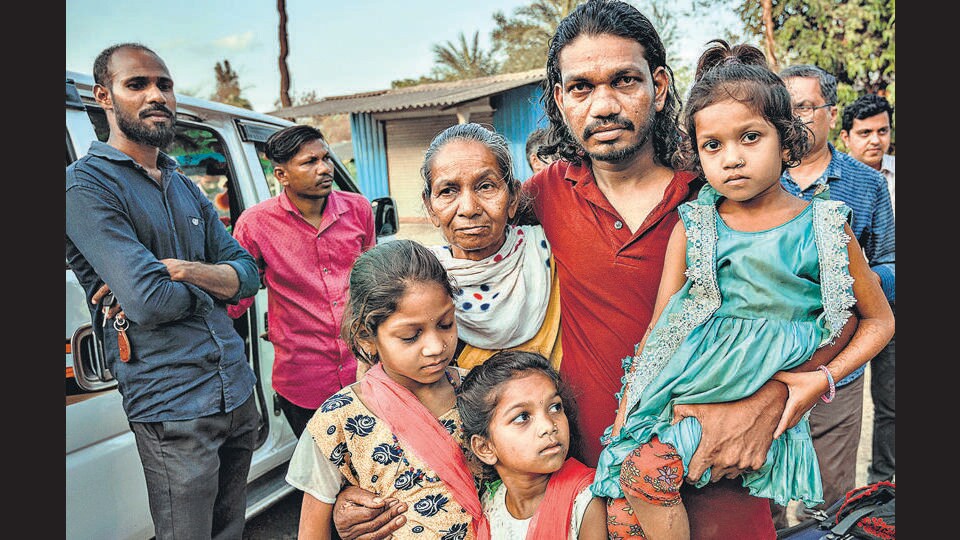
On May 13, the Pakistani authorities released 198 Indian fishermen, who were languishing at Malir Jail in Karachi after being arrested for allegedly fishing illegally in the country’s waters, and handed them over to India at the Wagah border. Five fishermen are from Maharashtra’s Palghar district.
Most of the tribal community living in the nearby villages of Talasari, Dahanu, earns its living on ships in Gujarat. The land in these barren villages has only paddy cultivation, and after the season is over, everyone proceeds to Gujarat to earn a living. The Pachalkars went to work on a ship in Gujarat in 2019 on a salary of ₹80,000 per annum.
“One day there was a storm at sea, and our ship went into Pakistani territory,” said Pachalkar. “Over 300 of us were arrested and kept in a Karachi jail. Jitesh added that every day in jail “felt like a year”.
Daware broke down when he saw his four-year-old daughter, who came with his mother and her brothers. “I went on the ship when my daughter was six months old,” he said tearfully. “While in jail, I found out that my wife had passed away due to Covid in 2020. My parents and brothers brought up my three children.”
In an emotional meeting with his 16-year-old son and other family members, Kondhari questioned the Gujarat government’s policy of not paying a stipend to the families of arrested fishermen from Maharashtra. “We are Indians too and we too were arrested from Gujarat,” he said. “Why did our families not get a salary of ₹9,000 for nine months like those of the fishermen from Gujarat did?”
The fishermen said that thousands of youths from Talasari taluka were working in Gujarat. “The Edhi Foundation in Pakistan helped us with ₹5,000 in Pakistani currency and clothes when we were released,” said Kondhari. “In the country, NGOs also helped, but we did not get the financial support we expected from the government.”
When asked if he was ever harassed in a Pakistani jail, Diva from Jambhugaon said, “We were from Maharashtra, so no one bothered us. We had two meals, medicine when needed, and did the assigned work. During the pandemic, both vaccines were also administered to us.”
A nephew’s fight
Pachalkar’s nephew, Naresh Bhekere, fought tooth and nail to free the Indian fishermen. “We had no idea that they had been arrested,” he said. “We had no contact for days and were worried. The local police refused to register a complaint. Then one day, the wife of one of my uncle’s shipmates came to our house and asked for his and his son’s documents.”
After making many calls, Bhekere finally got through to the owner of the ship, who said his uncle and others were in Pakistan. “In September 2020, after getting a letter from Pakistan, I came to know that six people from around our village were with him, so I went to their houses and prepared the necessary papers,” he said. Bhekere went to each village panchayat and got the documents together for the Pakistan jail authority. “The ship owner did not do what he should have,” he said. “He did not heed the suffering of the families either.”