
 E-Paper



Navi Mumbai Municipal Corporation’s NMMT suffers Rs8.51Cr loss on average every month this year
With almost ₹8.51Cr loss suffered by Navi Mumbai Municipal Transport (NMMT) on an average every month since March 2021, it is almost 50% more than what was recorded in the 2017-18 financial year, which was ₹3.96Cr


The losses incurred this year by Navi Mumbai Municipal Transport (NMMT) are the highest since 2017. With almost ₹8.51Cr loss on an average every month since March 2021, it is almost 50% more than what was recorded in the 2017-18 financial year, which was ₹3.96Cr and 27% more than 2019-20 financial year, when the loss recorded was ₹6.23Cr.
In the financial year 2019-20, prior to the lockdown, the average monthly income of NMMT was ₹10.27Cr, of which ₹6.41Cr was earned via the ticket fares, students pass and penalties while ₹56.41 lakh was earned via advertisements. The same was ₹11.61Cr in 2018-19 and ₹11.31Cr in 2017-18.
Meanwhile, in 2020-21, after the pandemic started, the income came down to ₹5.72Cr monthly average and this year, it is ₹5.87Cr.
The average monthly expenses of NMMT before the lockdown was ₹16.51Cr including the salaries, daily wages, fuel and other maintenance expenses. Even with the lockdown, the expenses had gone down only by 16% to ₹13.87Cr.
“The salaries had to be paid. The fuel prices kept increasing even though the usage was less and hence the expenses did not have any remarkable cut down while the income had,” an official from NMMT said.
During the lockdown period, NMMT was catering to only the people attached to essential services and around 10,000 people used the service to reach to the workplaces and return home. The service was extended to essential workers in Navi Mumbai, Thane, Kalyan, Badlapur, Ambernath, Dombivli, Panvel, Uran, Chembur, Govandi, Mankhurd, Dahisarmori, Kharghar and Ulwe. Besides, around 18 NMMT buses were also converted into ambulances to cater to Covid-19 patients in NMMC-run hospitals. Around 995 buses were also provided for 39,746 migrants from Navi Mumbai to go to the respective railway stations to travel to their hometowns.
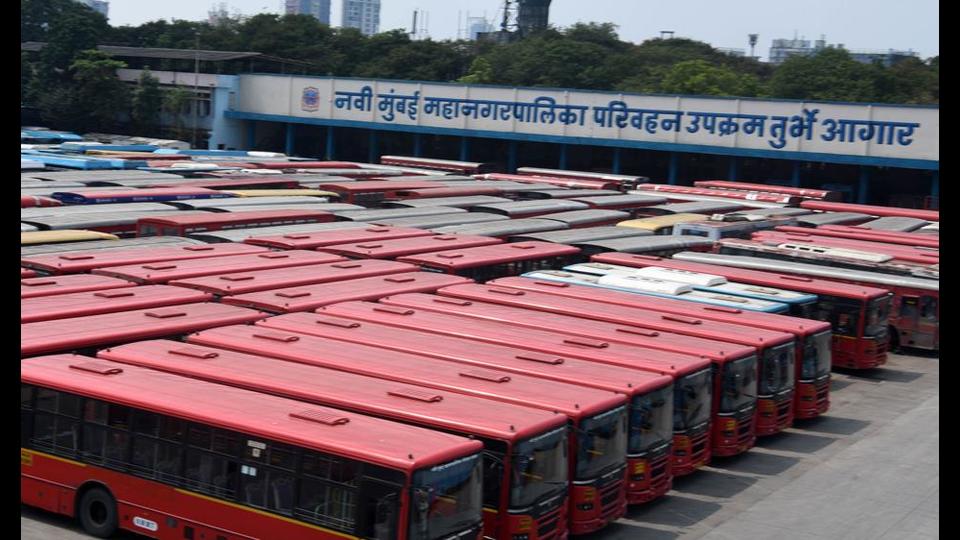
Currently, NMMT buses are running in full capacity on all the routes. As per the number of passengers increasing, the route trips are being added, the officer said. Around 300 buses are plying on the road, of which 50 are electric buses, 70 are CNG and 180 are diesel buses. The corporation has around 180 electric buses, of which only 50 are plying due to lack of passengers.
“In order to reduce the losses, we will now try to bring as many electric buses as possible on the roads. The work on the charging points at Turbhe depot is on and is expected to be over in the next ten days. After that, we can get more electric buses on the road. Reducing diesel buses and finding ways to convert diesel buses into CNG buses would be our agenda. We also plan to reduce the fare by 30%-40% so as to attract more passengers,” Yogesh Kaduskar, general manager, NMMT, said.