
 E-Paper



Assam: Illegal rat-hole mining taking place with govt support, alleges Opposition
Assam Jatiya Parishad (AJP) president Lurinjyoti Gogoi accused the state government of encouraging illegal mining of coal inside reserve forests


Assam is losing around ₹2,000 cr every month due to illegal rat-hole mining taking place in violation of the National Green Tribunal (NGT) directives, alleged the Assam Jatiya Parishad (AJP), a regional party.
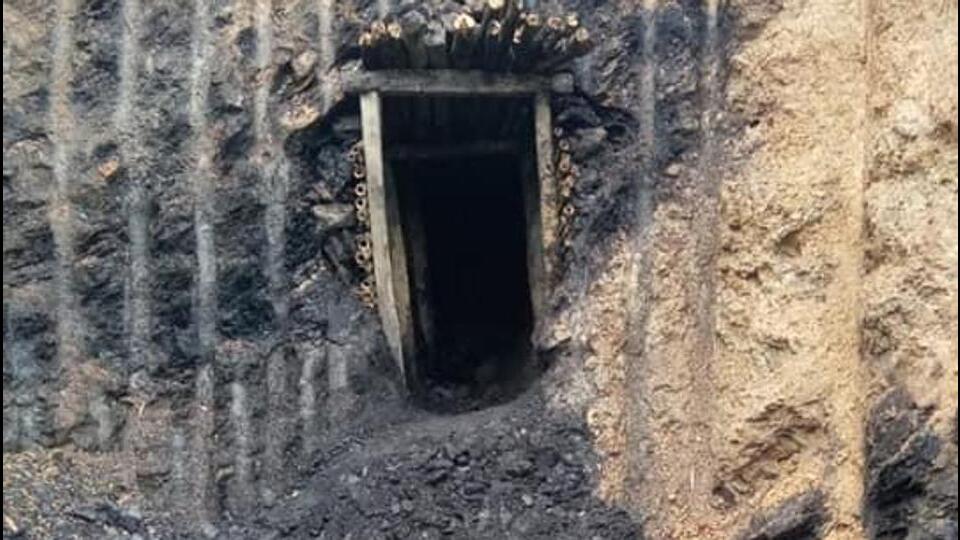
Addressing a press conference on Friday, AJP president Lurinjyoti Gogoi accused the state’s Bharatiya Janata Party (BJP)-led government of encouraging illegal mining of coal inside reserve forests and even benefitting from it.
“Despite the ban on rat-hole mining by NGT in 2014, large scale extraction of coal is taking place in Tinsukia and Karbi Anglong districts in areas which include reserve forests. Besides environmental damage and threat to lives of workers, the state is also losing revenue due to this,” alleged Gogoi.
Rat-hole mining is the process of extracting coal and other minerals by digging narrow tunnels deep into the earth and sending down workers using trolleys and ladders to remove the minerals manually. In 2014, NGT had banned it specifically in Meghalaya.
Gogoi presented several photos of alleged rat-hole mining taking place in Margherita and inside Ledo and Tipong reserve forests-all in Tinsukia district. Similarly, he gave names of a few places in Karbi Anglong where the illegal activity is stated to be underway.
Gogoi alleged that the illegally extracted coal is transported using trucks to other states and even Bangladesh allegedly in collusion with police and political leaders.
He stated that the illegally extracted coal is shown to be from legal coal mines and trucks are allowed to carry coal beyond permissible limits without paying the required taxes.
“Every truck is required to pay bribes to certain police stations in Tinsukia and Karbi Anglong and the amounts range from ₹65,000 to ₹1.60 lakh per vehicle,” he added while naming a few persons allegedly involved in illegal extraction and transportation of coal.
“We want the state government and its agencies to probe this irregularity and are ready to provide them with required evidence. If they fail to do so, we will approach the Centre and courts in due course,” said Gogoi.
Earlier this month, the sub-divisional magistrate of Margherita in Tinsukia, Preeti Kumari, had banned entry of unauthorised persons into three reserve forests—Lekhapani, Tirap and Tipong--in the area.
In order to “protect environment and maintain law and order”, the SDM stopped entry of vehicles including excavators and dumpers and restricted clearing of jungles, encroachment of forest land, poaching and illegal mining and transportation from the three reserve forests.
“Unauthorised persons may try to damage forest produce by clearing jungles… entering with the purpose of poaching of wild animals…and for illegal mining of coal and transportation of illegally mined coal,” the order stated.
Despite repeated attempts, Assam mines and minerals minister Nandita Gorlosa, secretary (mines and minerals) S Lakshmanan and deputy commissioners of Tinsukia and Karbi Anglong didn’t respond to the AJP allegations.
In September this year, the Gauhati high court directed a district judge to conduct survey of alleged illegal coal mining inside the Dehing Patkai rainforest in Assam’s Tinsukia district.
Spread across 937 sq km, Dehing Patkai Elephant Reserve falls in Tinsukia and Dibrugarh districts and is located within the periphery of the Dehing Patkai Wildlife Sanctuary, said to be the largest lowland tropical rainforest in India.
In April, 2022, the National Board of Wild Life (NBWL) recommended coal mining to be allowed in a portion of Dehing Patkai Elephant Reserve provided it fulfilled 28 pre-conditions.
NBWL allowed Coal India Limited (CIL) to conduct opencast coal mining in 98.59 hectares of the reserve forest. CIL had been carrying out mining in 57 hectares of the reserve and the fresh recommendation allowed it to do mining in another 41 hectares, which was unbroken.
Extraction of coal in the area had been suspended in June 2020 amid allegations of illegal mining in the eco-sensitive area. It resumed in March this year with the target to produce 1.4 million tonne of coal annually.
In July 2020, the Assam government constituted a one-man committee comprising retired judge of Gauhati high court, justice BP Katakey to probe allegations of illegal mining in Dehing Patkai.
The panel’s report, tabled in the state assembly in December, 2021, stated that North Eastern Coalfields, a subsidiary of CIL, had illegally extracted coal worth ₹4,872 crore from the mining sites inside Dehing Patkai between 2003 and 2020 without obtaining necessary permissions.
On September 18, three workers of an illegal coal mine located at Ledo in Tinsukia died due to inhaling toxic gas. The incident took place at a new rat-hole mine located inside a forest area on the Assam-Arunachal Pradesh border.
