E-Paper



Govt, AASU agree on forming panel to implement Assam Accord
The sub-committee will consist of three cabinet ministers of Assam government and five representatives of AASU. It has been given a timeline of three months (from the tie of formation) to prepare the accord implementation roadmap

 Prefer HTon Google


The Assam government and All Assam Students Union (AASU) have agreed on forming an eight-member sub-committee to formulate the implementation of the Assam Accord.
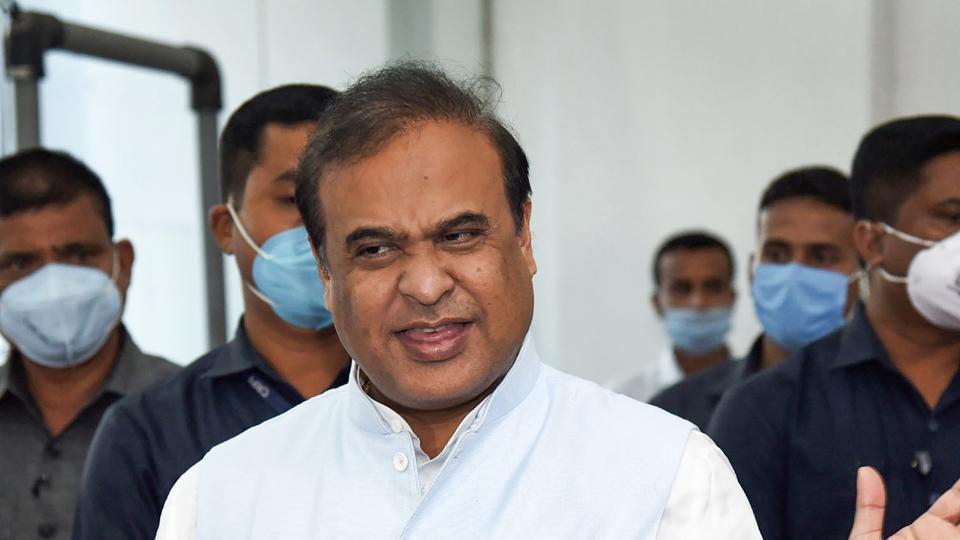
The decision was taken at a meeting on Monday evening attended by chief minister Himanta Biswa Sarma, senior ministers and bureaucrats with representatives of AASU, Assam’s premier student organisation that had spearheaded the six-year anti-foreigners stir that culminated in the signing of the accord in 1985.
“The meeting was held in a very cordial atmosphere and it was decided that in order to prepare a framework for implementation of the remaining clauses of the accord, the sub-committee will be formed,” minister for implementation of Assam Accord, Atul Bora, told journalists after the meeting.
The sub-committee will consist of three cabinet ministers of Assam government and five representatives of AASU. It has been given a timeline of three months (from the tie of formation) to prepare the accord implementation roadmap.
“The sub-committee will look into all aspects of the accord including Clause 6 that deals with providing constitutional safeguards to Assamese people, Clause 7 on economic development, Clause 9 on securing the India-Bangladesh border to prevent further infiltration, Clause 10 on prevention of encroachment of government lands,” AASU chief adviser Samujjal Bhattacharya said.
The implementation framework will also incorporate the demand for updating (re-verification) the NRC released two years ago, addressing flood and erosion problem, rehabilitation of martyrs’ and victims’ family of Assam Agitation etc.
The meeting also decided to prepare an action plan consisting of three demands of the AASU i.e. creating a chair in the name of Dr. Bhupen Hazarika in Tezpur University, Guwahati University and Dibrugarh University, beautification of Hazarika’s ‘Samadhi Kshetra’ in Guwahati and incorporation of cultural values and teachings of Hazarika in the school curriculum.
The Assam Accord was a tripartite agreement signed in 1985 between the Centre, the All Assam Students Union (AASU) and the All Assam Gana Sangram Parishad (AAGSP) that brought the six-year-long anti-foreigner movement in the state to an end.
While some provisions of the accord, which primarily sought detection and deportation of foreigners who entered the state after March 25, 1971, have been implemented several others including Clause 6 has remained unfulfilled.
Clause 6 of the accord states, “Constitutional, legislative and administrative safeguards, as may be appropriate, shall be provided to protect, preserve and promote the cultural, social, linguistic identity and heritage of the Assamese people”.
In February last year, a 13-member committee formed by Centre had submitted to the state government its recommendations of how to implement Clause 6. There has been no progress on that front after that.