
 E-Paper



Gujarat’s Banni grasslands get government nod for cheetah breeding centre
The government nod is only for setting up a breeding centre in the Banni grasslands and there is no proposal for releasing them in the wild

 Prefer HTon Google


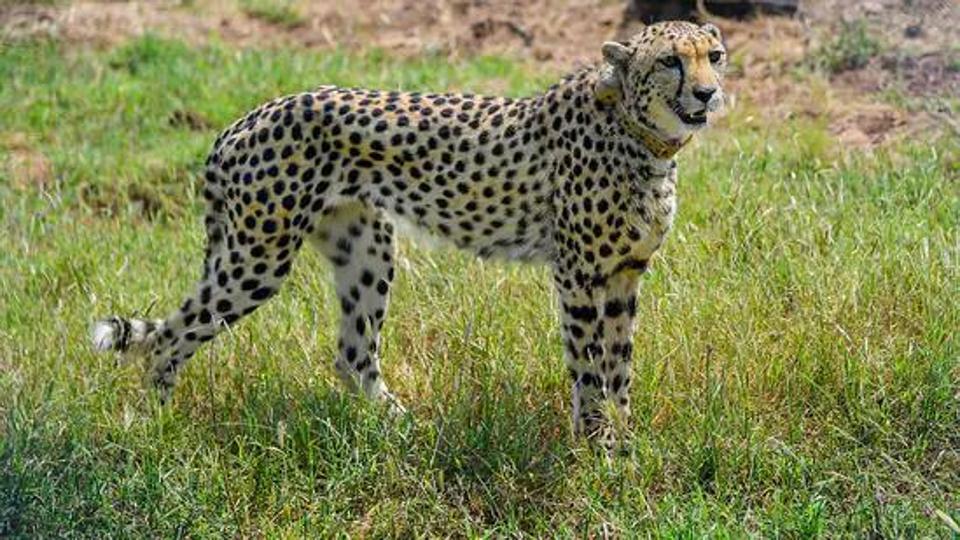
The Union government has granted approval for the establishment of a cheetah breeding center in the Banni grasslands of Gujarat’s Kutch district, the state’s minister for forests and environment, Mulubhai Bera, announced.
The proposal, initiated by the Gujarat government and submitted to the National Compensatory Afforestation Fund Management Authority (CAMPA) received the green light from the executive committee CAMPA during its meeting on Friday, he said.
The minister said that cheetahs once freely roamed the Banni grasslands but unfortunately became extinct in the wild within the state. “With the recent approval, we are hopeful that cheetahs will once again grace the wild landscapes of Kutch,” he added.
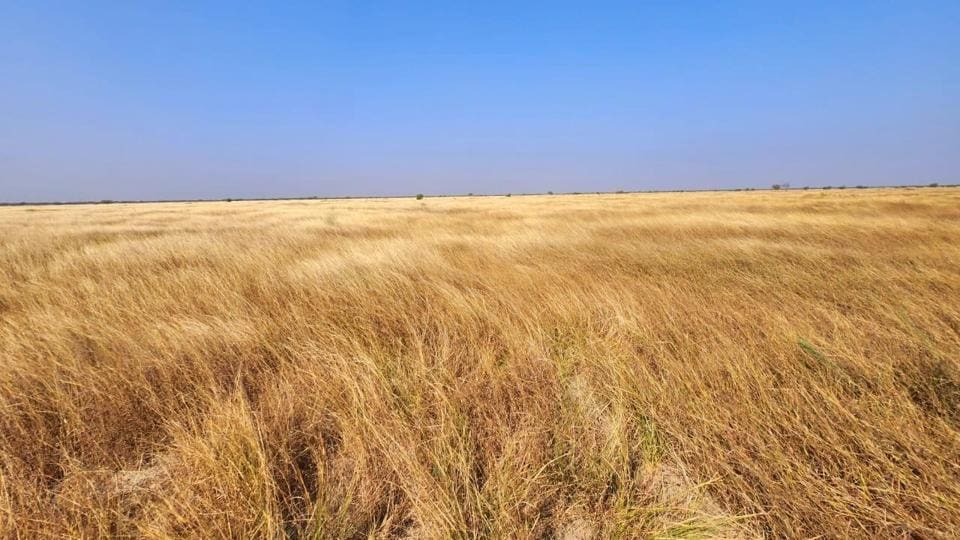
“This is a big achievement for us. We have got in-principle approval from the Centre for the cheetah project in Banni. We will have to get approval from the Central Zoo Authority (CZA) and work as per their guidelines in setting up an enclosure for the cheetah breeding programme. We have cleared a huge batch of about 15,000 hectares (150 square kms) of Prosopis juliflora (gando baval in Gujarati) and converted it into grasslands,” principal chief forest conservator Nityanand Shrivastava told HT.
He said that the area has a prey base including chinkaras and blue bulls for the cheetahs and that efforts would be made to increase herbivores in the region.
Shrivastava said that the number of cheetahs to be introduced for the conservation breeding project or the timeline for it will be known only after further discussions and approvals from CZA. He said that the last time the presence of cheetah was recorded in Gujarat was somewhere in the 1970s.
Once the breeding project takes off and is successful, a plan for the release of the cheetahs into the wild will be chalked out.
The hunt for a new home for the majestic cats in India comes more than a year after the inception of the cheetah reintroduction project in India on September 17, 2022. This reconsideration seems to stem from the realisation that Kuno National Park in Madhya Pradesh might not be the ideal counterpart to the vast South African savannas, according to experts.
“The import of cheetahs from African countries like Namibia highlights the pivotal role of grasslands, considering the cheetah’s natural habitat. Despite the challenge of an insufficient prey base in Banni, the absence of apex predators like leopards in the region presents a favourable environment for cheetahs to adapt to their new home in Gujarat. The forest department will, however, have to introduce some prey base for cheetahs first,” said a wildlife expert who spoke on condition of anonymity.
With the implementation of the Banni project, Gujarat will become the only state in India to become home to both Asiatic lions and cheetahs.
Banni grasslands along with the Kachchh Desert Sanctuary, cover approximately 5,000 km² area in the Kachchh district of north-western Gujarat.
The region lies south of the Rann of Kachchh mud-flats and parts of it get inundated by sea water during the rainy season. The area surveyed by experts for re-introduction of cheetahs in Banni, stretch from Hajipeer in the west to Dadar in the east and Khavda in the north, to Jura in the south. A small part of the Kachchh Wildlife Sanctuary around Kala Dungar on Pacham Island was also studied for this purpose.
“With the existing cheetah prey base, Banni grasslands can sustain only two cheetahs. However, the Banni area is flanked by the Narayan Sarovar Wildlife Sanctuary on the west and the Kachchh Wildlife Sanctuary on the east, encompassing over 5000 km² of area. With proper management strategies and plans to restore the habitat in this presently degraded system, ungulate densities can increase substantially. Under such conditions it would be possible for this region to support as many as 55 cheetahs, as per carrying capacity estimates,” according to a report ‘Assessing the Potential for Reintroducing the Cheetah in India’ prepared by Wildlife Trust of India and Wildlife Institute of India’ for the Ministry of Environment, Forest and Climate Change (MOEF&CC).
The carnivores found in the region include hyena, wolf, jackal, Indian fox, caracal and jungle cat. Great Indian bustards have been reported in Abdasa grasslands, about 40 km away. Lesser florican, and Houbara bustard are seasonal visitors to the Banni and fringes of the Kachchh desert. Around 32 species of palatable but salt-tolerant grasses have been reported from the Banni.
Present-day Banni was preserved as a grazing zone by the erstwhile ruler of Kachchh, Maharao Khengarji and agricultural operations in the area were prohibited. This was mainly for the benefit of the pastoralist community found in this region called ‘Maldharis’. This area is a completely flat terrain with salt encrustations, which makes agriculture an unviable option as a source of income for people. Locals in the area depend mainly on buffaloes and horses. They maintain a breed of buffalo, called the Banni buffalo that has high disease resistance ane high milk yield, which can survive on salt tolerant grass species. Banni is also famous for the Wagad breed of draught bullocks, the largest indigenous breed in India, according to the report.


