
 E-Paper



Amid fear of national energy crisis, government to turn to imported coal
Union power minister R K Singh has asked all the companies to operationalise their power plants at full capacity to reduce pressure on domestic coal demand.

 Prefer HTon Google


AHMEDABAD: To battle the looming energy crisis in the country due to constraints on domestic coal supply, the central government has decided to take a number of steps to increase the use of imported coal for power generation, including for blending purposes, officials familiar with the matter said.
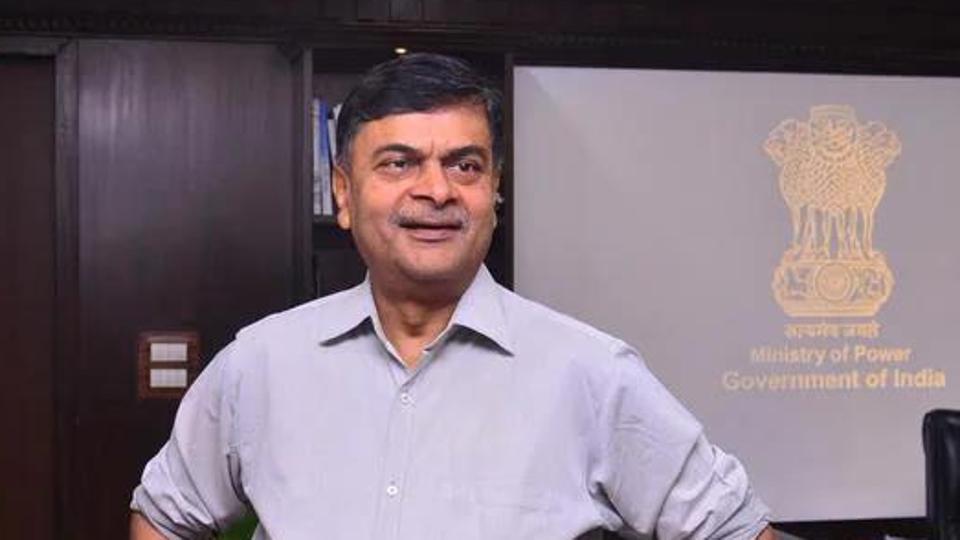
At a meeting chaired by union power minister R K Singh this week with officials of the Gujarat government and a few other states and also independent power producers (IPP) with imported coal-based (ICB) plants, the minister has asked all the companies to operationalise their power plants at full capacity to reduce pressure on domestic coal demand.
While the Centre has decided to allow the cost of imported coal as a pass-through till December 2022, it has asked all the states and IPP to use imported coal for blending purposes to the extent of 10% instead of only 4% to ensure maintaining adequate coal stocks at the power plant as per the advised coal stock norms, said an official present at the meeting.
“At the meeting, it was observed that the coal stocks at the power plant end were only 36% of the normative requirement which would be sufficient for only about 11 days,” said a Gujarat government official aware of the matter.
At the meeting, it was also suggested that the action taken by the Gujarat government to operationalise power plants that are lying idle or under-utilised, will be shared with the other procurer states like Punjab, Haryana, Maharashtra, and Rajasthan so that they can follow Gujarat’s methodology, the official added.
“A total of 7,980 MW capacity of ICB plants was not operational leading to more demand for domestic coal and thereby increasing pressure on the logistics for the domestic coal supply. The government has asked all ICB plants to operationalise at full capacity to reduce pressure on domestic coal demands,” said a company executive present at the meeting.
The meeting was to review capacities of 12,766 MW of power generation using imported coal for which power purchase agreements have been signed with various state Discoms. Of this total capacity, 8,676 MW is generated out of power projects based in Gujarat.
Minister Singh, in his opening remark observed that power demand had been increasing continuously due to revival of economy.
“It is expected that the peak demand may increase up to 210 GW in April’2022. Therefore, all the coal-based power plants need to have adequate coal stocks, enabling supply of coal-based power to the extent of about 160 GW during peak hours,” he was quoted as saying in the minutes of the meeting, a copy of which has been reviewed by HT.
The minister also advised states that scheduling for electricity be done one day in advance every day in the morning and non-indented power be sold in the power exchanges, officials said.
In the case of companies like Adani Power, Tata Power’s subsidiary Coast Gujarat Power Ltd and Essar Power, the government has decided that the entire cost of imported coal shall be allowed as pass through until December 2022 without any ceiling if the imported coal prices remain above the pre-Covid level. Essar Power, whose power plant at Salaya in Gujarat has been shut for a long time, has been advised to operationalise the plant at the earliest, officials added.
Companies in Gujarat who have plants running on imported coal have made several representations to the state government in the past that coal prices are presently at $200 and higher, and the government should remove the $90 ceiling for reimbursing coal costs as a temporary solution.


