
 E-Paper



India sends the BJP a message
The results suggest that the party has the backing of a majority of voters, but people would like it to change some aspects of its behaviour and policies

 Prefer HTon Google


In 2014, after a 30-year gap, the Bharatiya Janata Party (BJP) became the first party to cross the halfway (majority) mark in the Lok Sabha with 282 seats. In 2019, it bettered its performance, winning 303. This time, it has won 240, and is dependent on fickle allies such as Nitish Kumar’s Janata Dal (United), and N Chandrababu Naidu’s Telugu Desam Party to reach that mark. With 36.60% of the vote, it remains the single largest party, in terms of both seats and vote share, by a distance — the Congress, with 99 seats comes second, and it won 21.20% of the votes — but the BJP will likely see Tuesday’s outcome as sub-optimal. As it should — and not only because of the targets it set for itself (370) and the larger National Democratic Alliance (400-plus). Char sau Paar (beyond 400) was the rallying cry, but as it turned out, the alliance didn’t even cross 300.
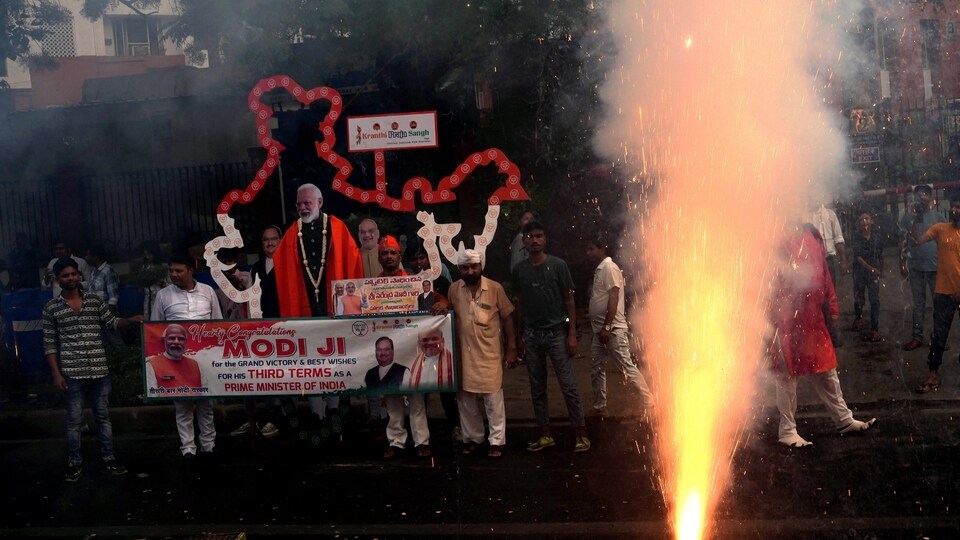
The result is the straightforward outcome of the BJP’s performance in the three states that send the most representatives to the Lok Sabha. In Uttar Pradesh, which sends 80, it won 33 to the Opposition INDIA bloc’s 43, its worst performance since 2009 (it won 62 in 2019) — the result of anti-incumbency (the BJP has ruled the state since 2017), a consolidation of the Muslim vote, and smart candidate selection by the Samajwadi Party that may have helped it rebuild its Other Backward Classes (OBC) base. In West Bengal, which sends 42, it won only 12, compared to the 18 it won in 2019, with Mamata Banerjee’s Trinamool Congress holding its own and managing the rare feat of repeating its showing in the 2021 assembly elections in the national elections. And in Maharashtra, which sends 48, with allies it won 18 to the INDIA bloc’s 29, with its successful efforts to split the Shiv Sena and the Nationalist Congress Party not really working to its advantage. Of these 170 seats, the BJP-led NDA won only 66 this time, compared to 123 in 2019, and in some ways, the story of its overall performance, is the story of these three states.
There are two ways in which the BJP, which will now need the support of allies — the larger NDA alliance won 293 seats, comfortably above the majority mark of 272, and 44% of the vote to be in a position to form the government (to be sure, the rival INDIA bloc says it is reaching out to some NDA constituents, but that is in the realm of the hypothetical ) — can interpret these results.
One, it could attribute the Opposition’s strong showing to the grouping’s success in selling the narrative that the BJP could take away the benefits of reservation for backward classes and Dalits, a consolidation of the Muslim vote, local issues trumping national ones, perhaps even an international conspiracy funded by inimical forces from outside the country (like those that came before it, the Modi government hasn’t been averse to blame the foreign hand). Some of these are indeed plausible explanations for its showing.
Or two, it could see the loss as the result of disenchantment among sections of voters arising from a variety of factors: Excessive and exaggerated attempts to polarise the electorate on the basis of faith; economic distress on account of a K-shaped recovery post Covid-19; an almost cynical approach to politics that has meant a dilution of its ideological position to take in defectors; and an effort to enforce its will on states ruled by other parties, usually with the help of pliant governors. And some of these too, are plausible explanations for its performance.
The BJP’s track record suggests it will prefer to pick the first set of reasons, but despite the overwhelming temptation to do so, the party would do well to also evaluate the second. The results of this election suggest that India (the country, not the alliance) is sending the BJP a message, with the numbers indicating that while the majority still believes in the party, people would like it to change some aspects of its behaviour and policies. Speaking of temptations, the option of even more cynical politics may look attractive to the party at this point in time, but, in the interests of not just the country but also of the party, the BJP would do well to overlook this. Just as it would do well to celebrate its growing footprint in the South; it now has a 10% share of votes in Tamil Nadu and a 16.68% share in Kerala.
A quick note on the Congress and the Opposition, especially the TMC and the SP. The first has reinvented itself; the second has staved off a challenge from what seemed like a superior force; and the third has perhaps set the template for post-Mandal social justice parties — and each of these perhaps warrants a separate editorial (and will get one, over the next few days).
Finally, despite all the scare-mongering about EVMs and possible efforts to steal the elections, the results show that India’s electoral democracy remains vibrant. And as the BJP has discovered, it is also one that knows how best to use votes to send a message.


