
 E-Paper



Limit of aunt, nephew politics
BSP's vote share has been falling, and now it stares at the prospect of being reduced to a vote cutter or spoiler in UP, its erstwhile stronghold.

 Prefer HTon Google


Six months after she anointed her nephew Akash Anand as her successor, Bahujan Samaj Party (BSP) Mayawati on Tuesday declared that she was divesting him of the post of national coordinator in the “larger interest of the party and the movement”. He also ceases to be her political successor, at least until he attains “full maturity”, as per the BSP supremo’s post on X. Anand had been the face of the BSP campaign in the first two phases, and his speeches were noted for the sharp attacks on the BJP and the Samajwadi Party (SP). On April 26, he was booked for allegedly using objectionable language during a campaign in Sitapur, Uttar Pradesh. Mayawati, reportedly, felt that these speeches strayed from the rules and policies set by the party.
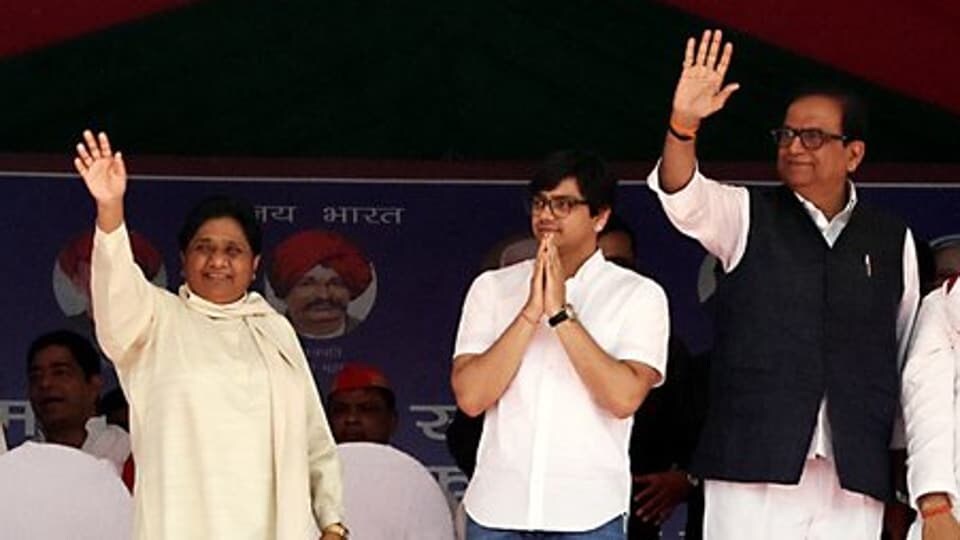
Mayawati is known for such whimsical responses. But the pertinent question is its impact on the fortunes of the party and the movement. Kanshi Ram, the founder of BSP, had kept his extended family away from the party and hand-picked Mayawati, no relative of his, as his successor for her leadership skills. This worked for the party as it won office in Uttar Pradesh, a state where Dalits constitute ~21% of the population, on its own strength in 2007. However, she failed to nurture the BSP as a party of the larger bahujan samaj and many of BSP’s founding leaders, who represented a galaxy of OBC, minority and Dalit communities, parted ways with her, ostensibly because of her leadership style. The BSP is today a pale shadow of the pan-Indian Dalit outfit it was once, even if Mayawati remains the tallest Dalit leader in the country.
Clearly, her choice to ignore BSP’s movement character and consolidate leadership within her family has worked against its growth. This, unfortunately, is the trajectory followed by many political parties, including those that arose from ideologically powerful mobilisations. This includes the DMK which grew out of the self-respect and Dravidian movements in Tamil Nadu, and the SP in UP, which claims the legacy of the Lohiaite socialist tradition and Mandal politics. These parties ossified in office and turned into family fiefs: Of course, the ideological inheritance, even in their diluted and compromised state, continues to lend credibility to their political claims.
In the BSP’s case, though, its decline has also been expedited by the rise of new Dalit voices, an outcome of the party’s retreat from agitational politics, and the overtures made by mainstream political parties keen on expanding their social base. The party’s vote share has been falling, and now it stares at the prospect of being reduced to a vote katwa (vote cutter) or spoiler in UP, its erstwhile stronghold.


