E-Paper



Number Theory: Four charts that help decode crucial Phase 4 of Lok Sabha elections
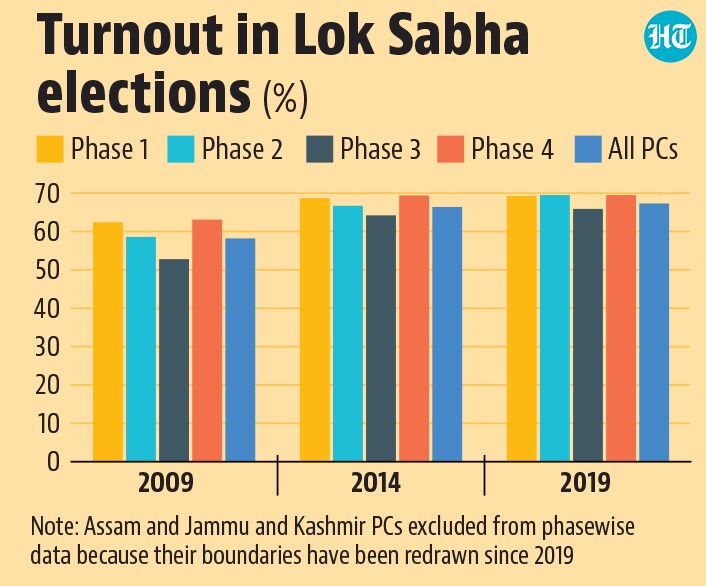
Among the PCs of the seven phases, the PCs of the fourth phase had the highest turnout in 2009 and 2014, but the second highest turnout in 2019.
Published on: May 13, 2024, 09:03:00 IST

 Prefer HTon Google
Share via


Copy link

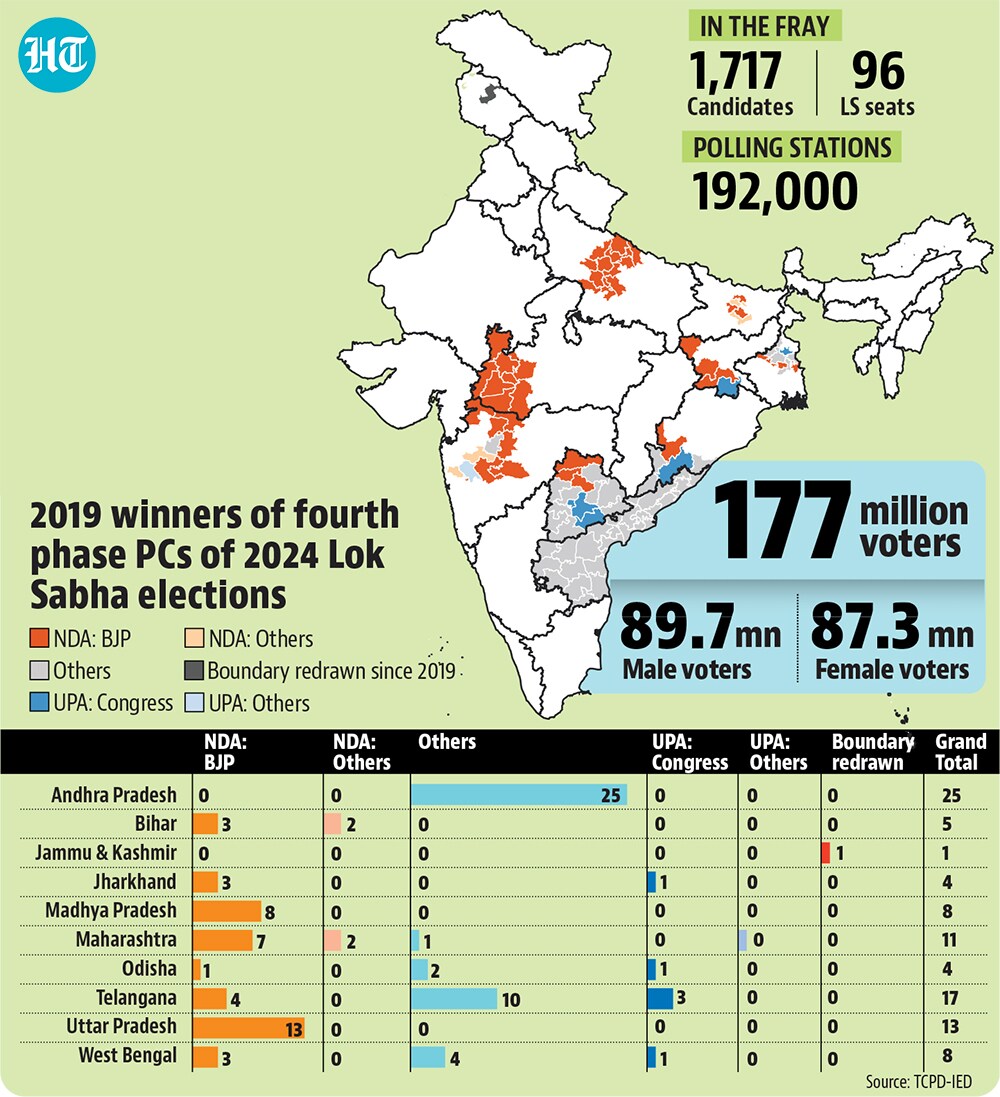
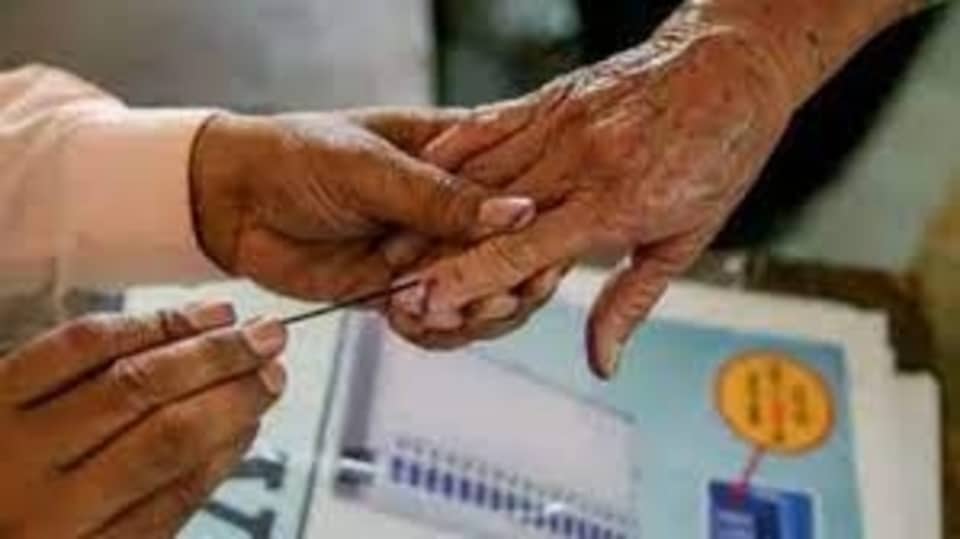
Ninety-six parliamentary constituencies (PCs) across nine states and the UT of Jammu & Kashmir will go to polls today in the fourth phase of the 2024 Lok Sabha elections. In terms of the number of PCs going to polls, this is the second largest phase in the 2024 election cycle. After today’s voting, polling will be over in another three states: Andhra Pradesh, Telangana, and Madhya Pradesh. On a cumulative basis, this will mean voting concluding in 379 parliamentary constituencies (PCs) across 23 states and UTs since the beginning of the elections. Here are some key facts about today’s phase of elections.
Four charts that help decode crucial Phase 4 of Lok Sabha elections
 A challenge and opportunity for both BJP and CongressIn 2019, the Bharatiya Janata Party (BJP) and the Congress along with their allies won just 53 out of the 95 PCs voting in this phase. The Srinagar PC is not comparable because Jammu and Kashmir PCs were redrawn in a delimitation exercise after the 2019 elections. The biggest gains for the parties not aligned with either the BJP or the Congress came from the states of Andhra Pradesh and Telangana. The Yuvajana Sramika Rythu Congress Party (YSRCP) won 22 PCs in Andhra Pradesh, the Telangana Rashtra Samithi (now Bharat Rashtra Samithi or BRS) won nine in Telangana, the Telugu Desam Party (TDP) won three in Andhra Pradesh and the All India Majlis-e-Ittehadul Muslimeen (AIMIM) won the Hyderabad PC in Telangana. All these parties, except the TDP, are still not aligned with either the BJP or the Congress. While the BJP would be looking to replicate its 2014 victory in alliance with the TDP in Andhra Pradesh, the Congress would be hoping to build on its 2023 victory in Telangana assembly elections. Another 12 PCs voting in this phase are in West Bengal and Odisha. The eight West Bengal seats have been important for BJP’s inroads in the state. It won zero out of eight in 2009 and three in 2019. Similarly, the four PCs of Odisha were divided equally between the Biju Janata Dal (BJD) and the Congress in 2009 and won by the BJD alone in 2014. In 2019, both the BJP and the Congress won one PC each and the BJD two.
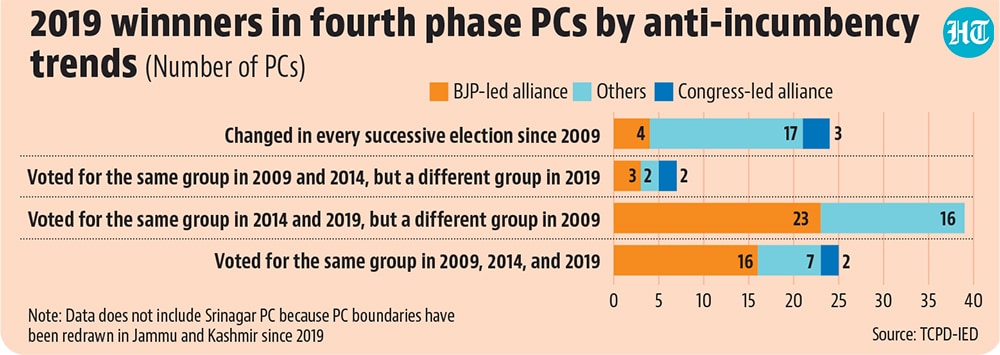
- Phase 4 seats have changed hands more often those in phase 2, 3As expected from the relatively recent origin and success of the YSRCP and the BRS in Andhra Pradesh and Telangana, there has been a significant PC-level churn in the seats voting on Monday. Only 25 of the 95 PCs (26%) for which this comparison is possible voted for the same group from 2009 to 2019, if parties are grouped as a BJP-led alliance, Congress-led alliance, or others. In the first, second, and third phase PCs of 2024, this fraction was 16%, 43%, and 53%. This trend – that of low long-term incumbency in fourth phase PCs – also holds true if incumbency trends are seen at party-level. What happened in PCs that did not vote for the same group from 2009 to 2019? 39 voted for the same group in 2014 and 2019, but not in 2009; seven voted for the same group in 2009 and 2014, but changed their group in 2019; and the remaining 24 PCs have changed hands between groups in every election since 2009. Who won the PCs across these four categories of PCs in 2019? As expected from the overall trends, BJP and allies were the biggest winner across each category except in the 24 PCs that changed hands in every election. Parties not aligned to the BJP and the Congress were the biggest winners in this category and the second-biggest winners in other categories. To be sure, these statistics needs to be read with the fact that the YSRCP was founded by the son of YSR Reddy, under whose leadership the Congress won 2004 and 2009 elections in Andhra Pradesh.
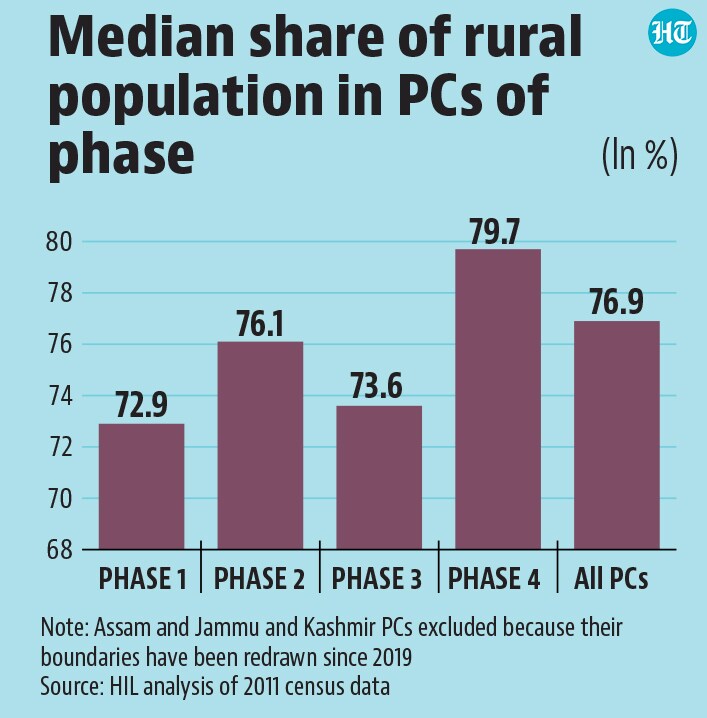
- One of the most rural phases of this election…This can be seen from both the overall proportion of rural population in the PCs voting today and the median (the middle value in a series) proportion of rural population across these PCs. According to 2011 census data aggregated to PC level by How India Lives, the overall share of rural population in the PCs voting today is 72.7% and the median share of rural population across PCs is 79.7%, second and third highest among the seven phases.
- …that has turned out enthusiastically to vote in the pastThe average turnout in the PCs voting today (this comparison is only possible for the 95 PCs other than Srinagar) has been higher than the national average in each of the past three Lok Sabha elections. To be sure, the gap in turnout between the PCs voting today and the national average has decreased over time. Among the PCs of the seven phases, the PCs of the fourth phase had the highest turnout in 2009 and 2014, but the second highest turnout in 2019.