E-Paper



Number Theory: Why crime against women remains a pressing concern
The brutal rape and murder of a doctor in Kolkata has led to protests that are comparable to those that followed the gang rape of a young women in 2012 in Delhi
Updated on: Aug 31, 2024, 10:30:32 IST

 Prefer HTon Google
Share via


Copy link

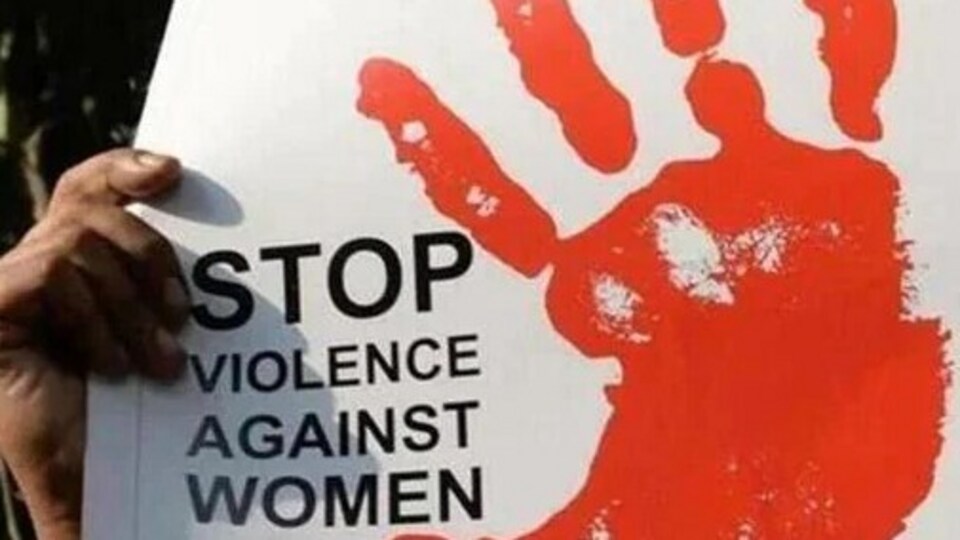
The brutal rape and murder of a doctor in RG Kar hospital in Kolkata has led to protests that are comparable to those that followed the gang rape of a young physiotherapy student in 2012 in Delhi. The 2012 protests led to efforts to make the criminal justice system more sensitive and better equipped to prevent crime against women. But as the Kolkata case shows, things have not really changed for the better. What explains this failure? Everything—from attitudes and apathy to scanty resources and a lack of accountability—is the short answer. Here are three charts to explain this.
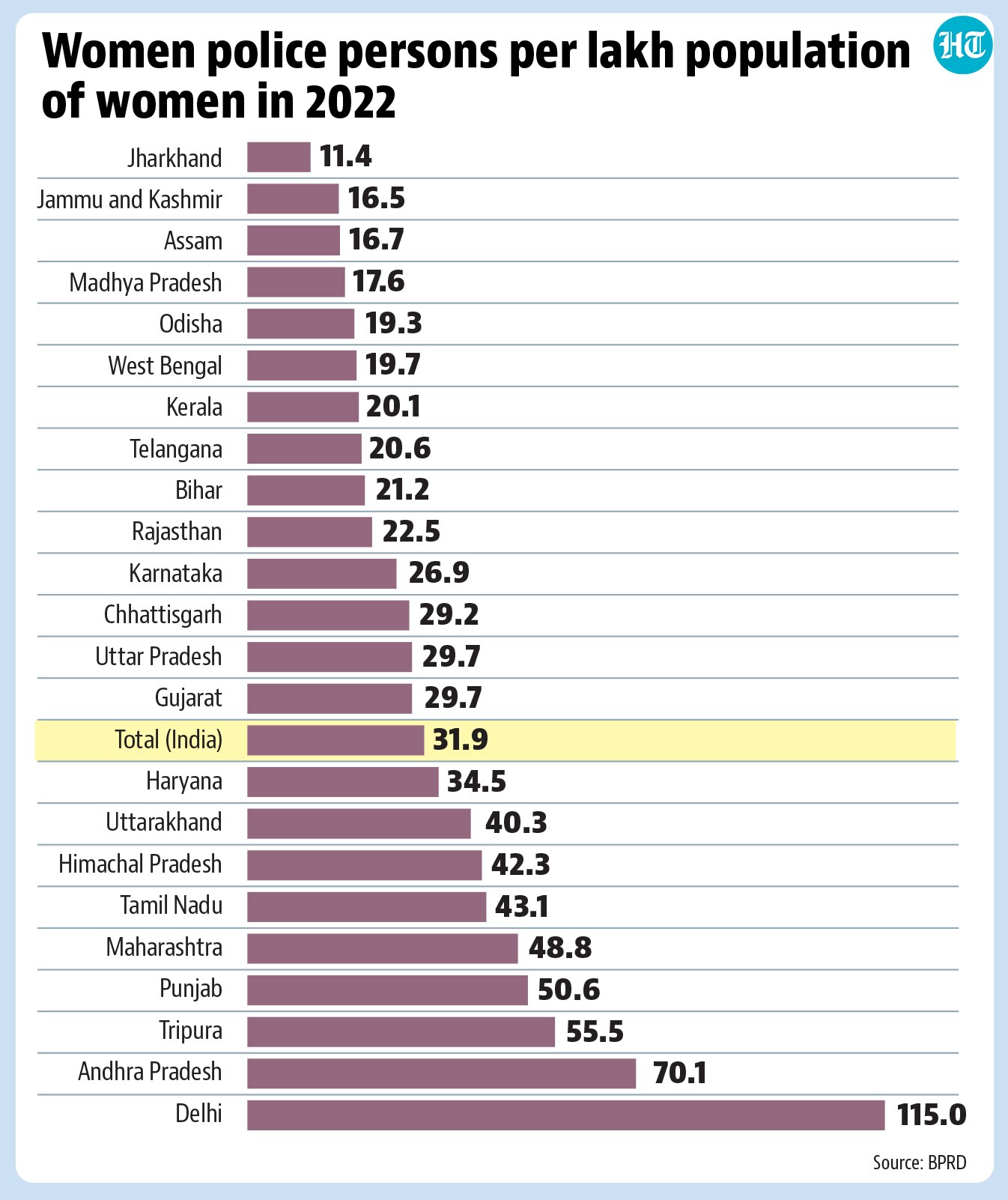
 India’s police have very few womenThe accused in the RG Kar case was a civic volunteer entrusted with looking after security in the hospital premises. Nothing can be a bigger indictment of policing and prevention efforts by the state when it comes to women’s safety. The Justice JS Verma Committee, which was formed in the aftermath of the 2012 protests, said in its report: “What is even more shocking is the incapability of the Government of India and of the various State Governments to implement even the most basic safety measures with any amount of efficacy,” pointing to a government memorandum about basic measures such as increasing the number of women police officers in mobile police vans. Such measures would require more women in the police. However, data from the Bureau of Police Research and Development (BPRD), which works under the Union home ministry, shows that the number of women police persons is very low compared to women’s population. There were only 32 women police persons per lakh women in India in 2022, the last year for which BPRD has published this data. In comparison, there were 103 police persons overall per lakh for the total population. West Bengal is worse than most states on this metric. The state had just 20 women policepersons per lakh women in 2022, the sixth lowest among all states and Union territories. To be sure, the state ranks fifth-lowest even if one is looking at total policepersons adjusted by total population.
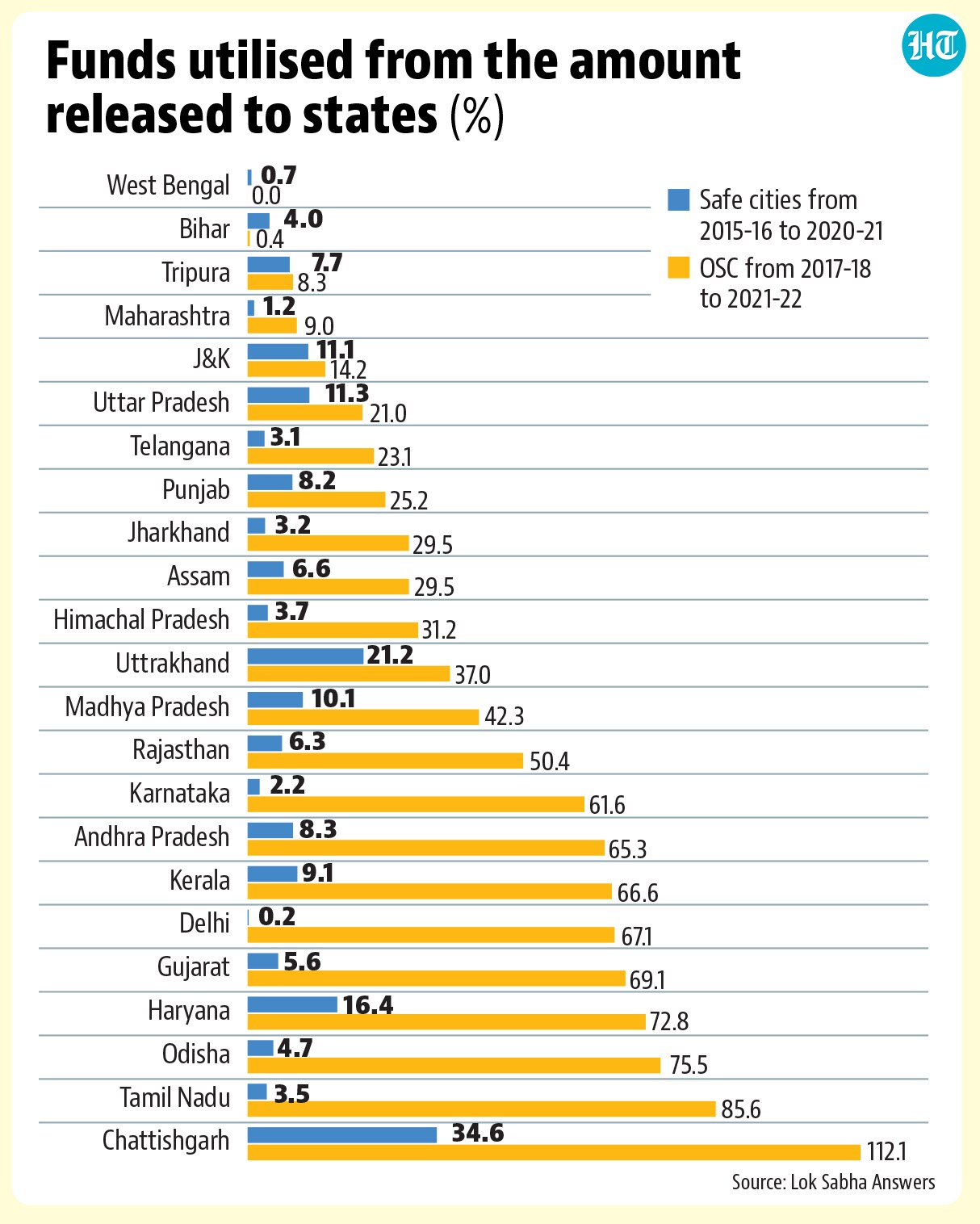
- Systemic deficiencies in women’s safety are not necessarily a result of lack of resourcesA lot of deficiencies in India’s state capacity, including the criminal justice system, are a result of the lack of fiscal resources. However, there is good reason to argue that money is not the only problem. An example of this is the Nirbhaya Fund, which was set up by the second United Progressive Alliance (UPA) government in 2013 to fiscally support measures for women’s safety. Lok Sabha answers show that 76% of the ₹7,212.85 crore allocated to the scheme up to 2023-24 has been released. The fund’s release depends on the demand for projects and their approval. West Bengal does not appear to be doing well in even utilising the released fund. While there is no consolidated database of the fund’s flows, Parliament answers suggest the state utilised almost no funds up to 2020-21 for two key schemes the fund pays for: One Stop Centres and Safe Cities Scheme. Even building women-centric infrastructure and human resources in the police might not necessarily lead to desired outcomes. A 2020 paper (https://tinyurl.com/39m7xx5d) in the American Political Science Review by Nirvikar Jassal, a political scientist at the London School of Economics, found that all-women police stations may have unintended consequences, such as regular police stations deflecting cases filed by women or increasing the cost of filing a complaint. “Regardless of whether (male) officers pass on cases for malign reasons (shirking) or in a benign effort to alert complainants to an alternate venue with a sincere belief that specialised institutions will better represent or prioritize women’s preferences, I show that the act of forwarding complainants adds travel (and likely other) costs. This may induce victims to reconsider registering a case at all, many of whom turn to the police as a last resort”, the paper said.
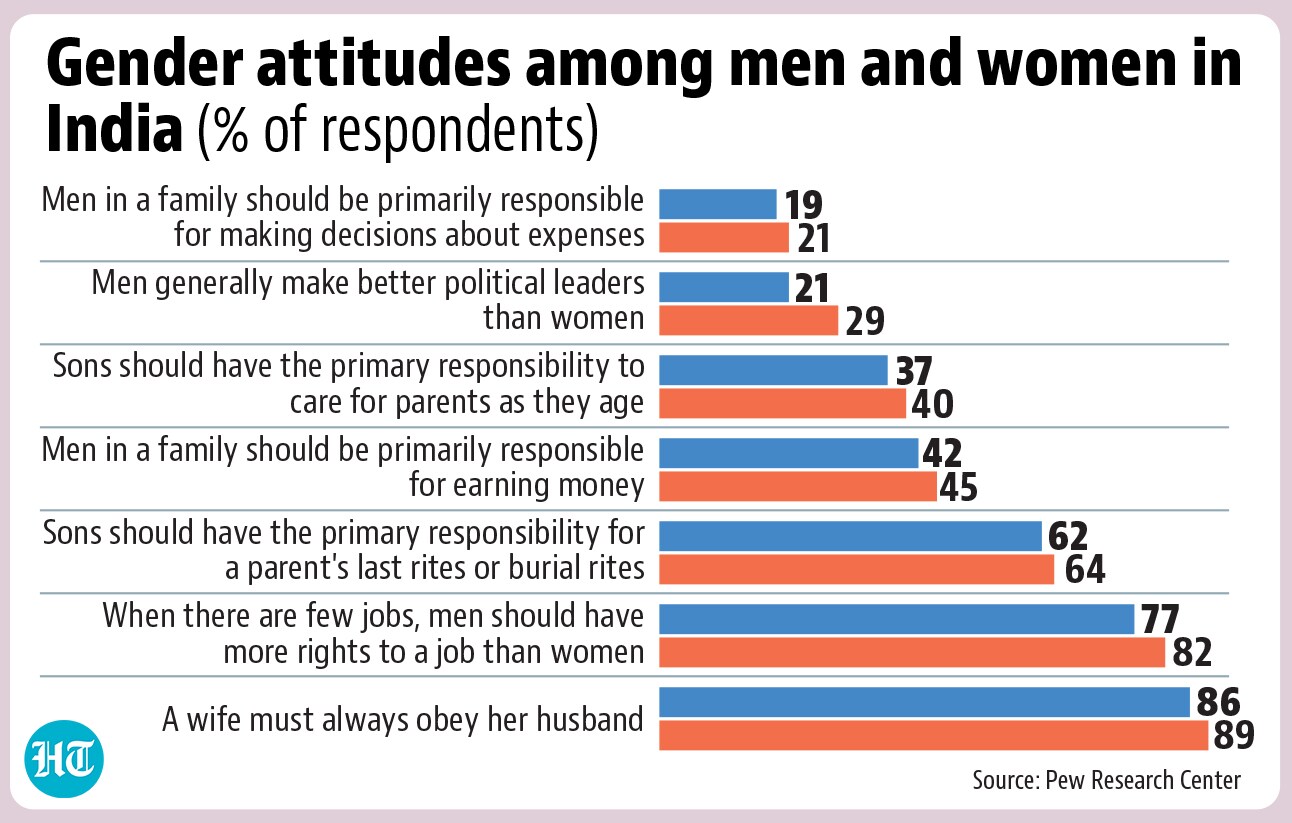
- Entrenched patriarchy is still the larger problemA 2022 research report by the Pew Research Centre (https://tinyurl.com/yc67h6wh) titled How Indians View Gender Roles in Families and Society shows a systemic discrimination and bias against women. While 72% of Indians agreed to equal rights for men and women in principle, 40% thought it was completely or somewhat acceptable for families to “get a checkup using modern methods to balance the number of girls and boys in a family”, which suggests a tacit approval for female foeticide. The survey also found that there was very little difference between attitudes of men and women when it came to gender equality. Unless these norms change, laws or policing alone are unlikely to lead to equality for women in India.