
 E-Paper



2024: Year when Bengaluru faced severe water crisis and recurring floods
The challenges tested the city’s infrastructure and governance, prompting innovative measures and long-term planning, albeit with mixed results.

 Prefer HTon Google


The capital city experienced a year of stark contrasts in 2024, oscillating between a severe water crisis and recurring floods. The challenges tested the city’s infrastructure and governance, prompting innovative measures and long-term planning, albeit with mixed results.
A severe water crisis loomed over Bengaluru during the summer, primarily affecting areas reliant on borewells and water tankers. The core zones served by the Cauvery river were relatively insulated, even as the city grappled with a protracted dispute over water-sharing with Tamil Nadu.
In response, Bengaluru’s water board mandated the use of treated wastewater for major construction and industrial projects, with supply rising sharply from 60,000 litres to 6 million litres daily. However, after rains arrived, the demand halved to 3.5 million litres per day.
Later in the year, the Cauvery V Stage project was inaugurated, introducing 775 million litres of water daily to the city’s outer zones. This development is expected to reduce dependency on borewells and tankers in the coming years, but steep connection fees have hindered uptake, leaving authorities hopeful for higher demand in the future.
After months of drought, Bengaluru was battered by heavy rains beginning in May, triggering widespread flooding. The deluge resulted in uprooted trees, submerged underpasses, and waterlogged streets.
May 6 saw the first major downpour, bringing down 126 trees in a single day. Despite improved coordination between civic bodies and traffic police to close underpasses during floods, issues persisted.
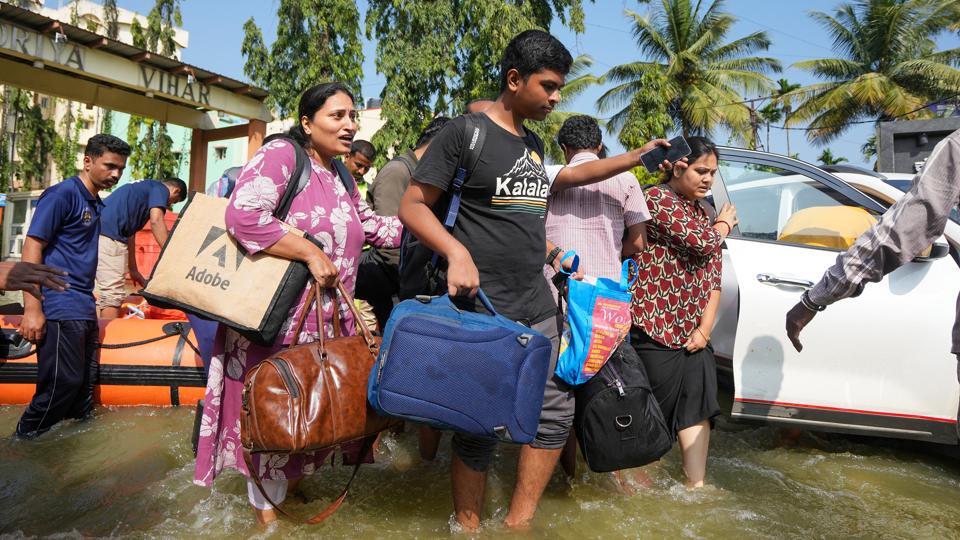
October was especially challenging, with several neighbourhoods inundated. Residents of Kendriya Vihar in Yelahanka had to be evacuated due to basement flooding, while over 100 homes in areas like Ramakrishna Nagar and Horamavu were swamped. Repeated downpours in subsequent months exposed gaps in the city’s flood preparedness, though officials reported a reduction in the overall impact.
According to the Bruhat Bengaluru Mahanagara Palike records, around 2,000 homes were affected by flooding in 2024. The rains also took a toll on Bengaluru’s roads, with over 10,000 potholes identified by the BBMP during the year. While most were filled, recurring problems revealed shortcomings in repair quality.
In December, the BBMP tested a new Ecofix mix technology, using industrial waste to fill waterlogged potholes. While the innovation shows promise, it underscores the need for durable road repair strategies to prevent repeated failures.
Heavy rainfall inundated Bengaluru, particularly its IT hubs like Manyata Tech Park and Whitefield, causing widespread disruption and sparking a political tussle between the ruling Congress and opposition parties. The rains paralysed traffic and flooded residential and commercial areas, drawing criticism from opposition leaders over the city’s inadequate infrastructure and poor water management.
Opposition leaders, including those from the BJP, accused the government of neglecting effective measures to tackle flooding and water-related issues in the state capital during the drought.
In response to these allegations of government letting water tank mafia thrive in the city, the Bengaluru city administration-initiated action against unauthorised water tanker operations during the water crisis.
The challenges of 2024 have spotlighted Bengaluru’s pressing need for sustainable solutions in water management, flood mitigation, and road maintenance. As the city braces for another year, the focus shifts from short-term fixes to long-term resilience.


