
 E-Paper



Ahmedabad civic body begins the removal of all non-veg food stalls
According to a press release, a large number of roadside carts selling non-vegetarian food and clothes were removed from Jodhpur, Satellite, ISCON Cross Road and SG Highway by the Ahmedabad civic body’s Estate Department on Tuesday, saying that they were “obstructing the smooth movement of traffic”


Ahmedabad The Ahmedabad Municipal Corporation (AMC) on Tuesday began the removal of all carts and stalls selling non-vegetarian food from the main roads, a day after chief minister Bhupendra Patel said his government had no problem with what people ate. The AMC is the fifth civic body in the state to issue such directives.
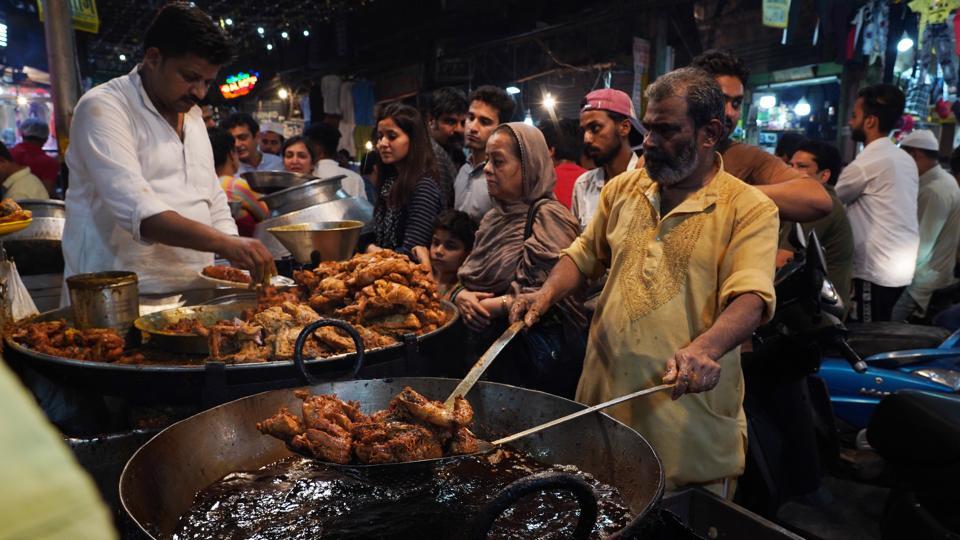
According to a press release, a large number of roadside carts selling non-vegetarian food and clothes were removed from Jodhpur, Satellite, ISCON Cross Road and SG Highway by the Ahmedabad Municipal Corporation’s Estate Department on Tuesday, saying that they were “obstructing the smooth movement of traffic”.
On Monday the AMC issued an oral order, banning stalls selling non-vegetarian food from public roads and those operating within 100-metre radius of schools and religious places.
“The smell near these stalls could be nauseating to the extent that one had to cover one’s nose” and therefore, action should be taken considering the impact it has on people’s health, the AMC’s town planning committee chairman, Devang Dani, had said.
Earlier, the municipal corporations of Vadodara, Rajkot, Junagadh and Bhavnagar,all ruled by the Bharatiya Janata Party (BJP), ordered shopkeepers and hawkers to cover non-vegetarian food, including eggs, saying that they hurt religious sentiments of Hindus.
Reacting to the ban, BJP’s president for Gujarat, CR Paatil, said: “We (the BJP) are not targeting eggs or non-veg joints. There is no such plan of the government either. We believe people have a right to have their food choices... Nobody would be disturbed just because he sells eggs or non-veg food. Only cleanliness and hygiene should be maintained. It was the decision of some municipal corporations.”
On Monday, CM Patel said that people were free to eat whatever they want to and the “decision about removing the non-veg and egg stalls was taken by the individual municipal corporations”.
“As for the state Government, we have no issues with the food choices of people, veg or non-veg, we have nothing to do with it. People only need to ensure that the quality of food is proper and does not harm their health,” he said, adding that: “The municipal corporations may remove any kind of stalls if they are an obstacle to traffic or are encroachments -- but this has nothing to do with veg or non-veg.”
Leader of Opposition at the Vadodara Municipal Corporation Ami Rawat said, “The move is illegal. Instead of implementing the Street Vendors Act, 2014, they are harassing small vendors who are already in a bad state after the lockdown.”
Meanwhile, the Laari-Galla Ladat Samiti -- a committee comprising 1.7 million street vendors across Gujarat -- has threatened to launch an agitation against the move and demanded that the Street Vendors Act, 2014, be immediately implemented in the state.
“We agree that there should not be such eateries near religious places, but summarily removing street vendors without providing any alternative arrangements was illegal and violated the Street Vendors Act,” said Ashok Punjabi, convenor of Laari-Galla Ladat Samiti of Ahmedabad, which is affiliated to INTUC.
“Instead of financially helping these vendors, who suffered the most during the Covid pandemic, the corporations are taking away their source of livelihood,” he added.
Speaking about the legal position, eminent human rights lawyer Anand Yagnik said, “The Street Vendors Act supersedes the Bombay Provincial Municipal Corporation Act, under which all corporations in Gujarat fall, and it does not discriminate what you sell. It is supposed to take care of the livelihoods of the street vendors, while also maintaining equitable principles of urban planning.”
“What they (the civic bodies) are doing is unconstitutional. And they are hitting at the very vitals of the mercantile ethos of Gujarat, which is inclusive, multi-cultural and so multi-cuisine and cosmopolitan. They are not only damaging the fabric of Gujarat but also of the country,” Yagnik asserted.