
 E-Paper



‘Back on track’: Economic survey pegs FY23 growth at 8-8.5%
The growth projection in the survey was more conservative than those made by other agencies, chief economic advisor V Anantha Nageswaran said at a media briefing.

 Prefer HTon Google


The Indian economy is estimated to have become bigger than its pre-pandemic size, according to the Economic Survey for 2021-22 presented in Parliament on Monday. It is projected to expand by 8-8.5% in 2022-23, the annual report card on the economy said, detailing what it termed India’s barbell strategy in successfully dealing with the Covid-19 pandemic.
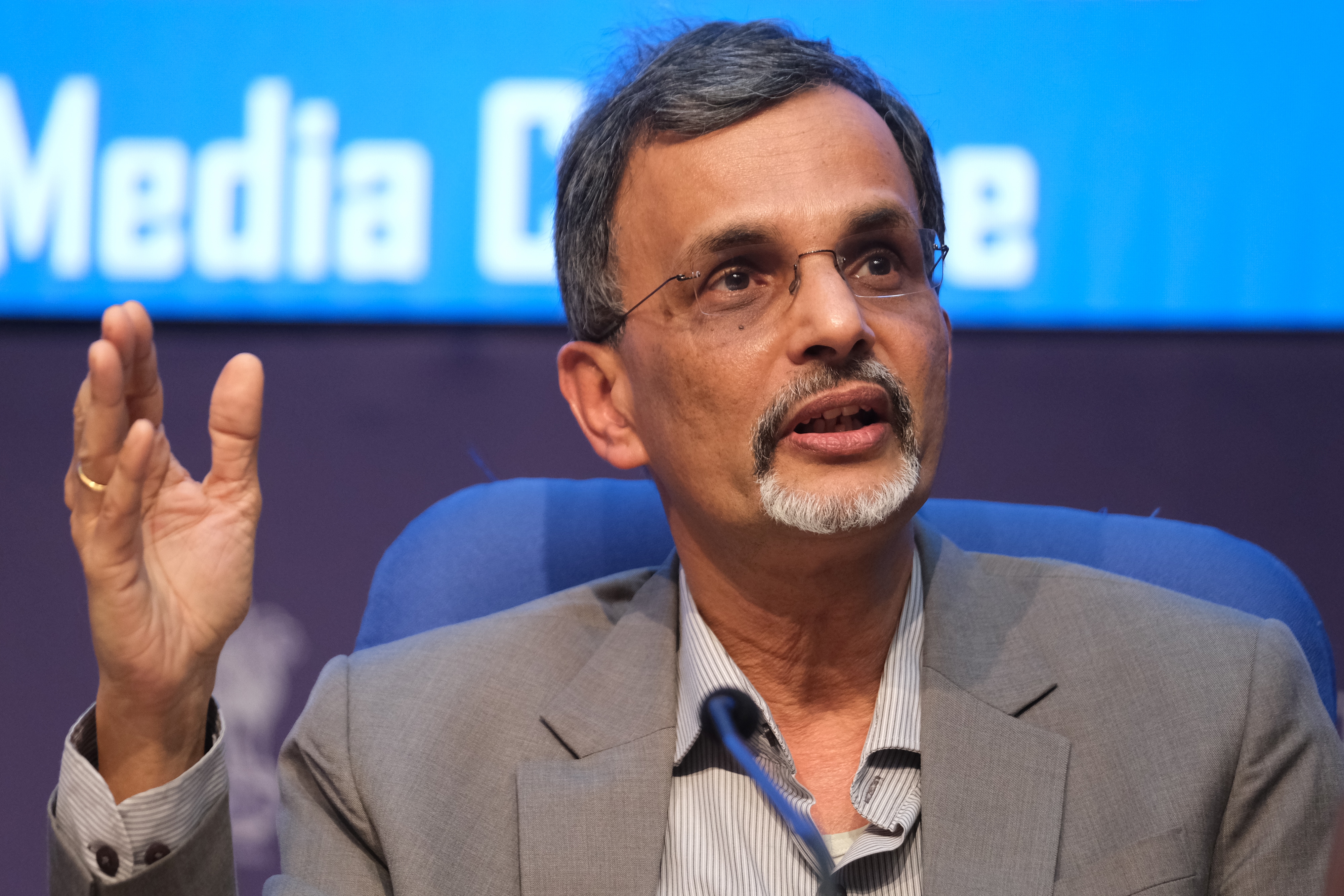
The growth projection in the survey was more conservative than those made by other agencies, chief economic advisor V Anantha Nageswaran said at a media briefing. The International Monetary Fund on January 25 predicted that the Indian economy will expand by 9% in 2022-23.
India’s gross domestic product in 2021-22 is estimated to be 1.3% higher than what it was in 2019-20, principal economic advisor Sanjeev Sanyal said.
More importantly, the Economic Survey expressed confidence that the government has adequate fiscal headroom to provide support to economic activity, steering clear of the actual fiscal trajectory for the next financial year starting in April, which is the budget’s prerogative. The survey is presented a day before the Union budget.
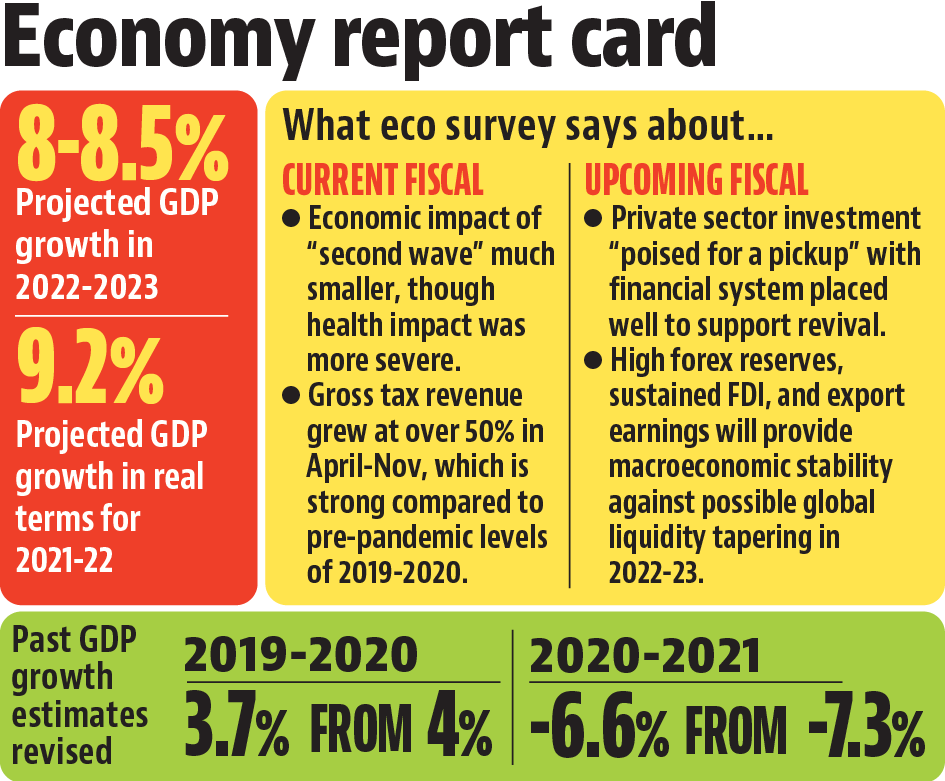
The survey also stuck to the National Statistical Office’s estimate of 9.2% GDP growth for 2021-22.
The barbell strategy in finance refers to a simultaneous focus on the short and long terms. In this case, it is about an immediate focus on providing succour to the most vulnerable, and larger (and more long-term) structural reforms. The overall theme of the Economic Survey was on short-term support, medium term fiscal stability, and without missing opportunities for long-term reforms, Nageswaran said.
With just a one-volume, sector-wise assessment of the economy (a second volume focuses exclusively on the statistical highlights), the survey’s central message is that India will continue to be the fastest growing economy in the world without jeopardising its macroeconomic stability.
The survey acknowledged the risk of inflation, but pointed to the fact that retail inflation, as measured by the Consumer price Index, has fallen to 5.2% in April-December 2021 from 6.6% in the corresponding period of the previous year.
Besides inflation, the survey flagged downside risks from external factors, especially rising crude oil prices and global supply chain disruptions, but underlined that the Indian economy is better placed on macroeconomic stability than it was during the 2008 global financial crisis, or the 2013 taper tantrum.
The survey has assumed an average oil price of $70-75 a barrel in 2022-23; crude oil prices at the moment are in excess of $90 a barrel.
Foreign exchange reserves touched $633.6 billion on December 31, 2021.
In an attempt to counter criticism that India’s fiscal response to the pandemic was lower than many advanced countries, the Economic Survey defended the government’s policy response.
“The Government’s initial measures in 2020-21 were mostly about making food available to the poor, providing emergency liquidity support for MSMEs (micro, small and medium enterprises) and holding the Insolvency and Bankruptcy Code in abeyance. Once these were in place, the Government made its way forward by regularly announcing packages targeted at specific challenges,” it said, contrasting this against the “approach adopted by many other countries pre-committing to a particular response path.”
“India’s salient external sector sustainability indicators are strong and much improved as compared to what they were during the global financial crisis or taper episode of 2013,” the survey pointed out. “For instance, the import cover and foreign exchange reserves are more than double now. The combination of high foreign exchange reserves, sustained foreign direct investment, and rising export earnings will provide a good buffer against any liquidity tapering/monetary policy normalisation in 2022-23.”
Central banks around the world are expected to increase interest rates, which will squeeze liquidity and possibly result in some foreign money making its way out of India.
“Continued reforms, focus on capital expenditure, continuous strengthening of our health care systems, and the micro containment strategy to ensure minimal supply chain disruptions will act as a booster dose for the economy,” said Chandrajit Banerjee, director general of the Confederation of Indian Industry, a lobby group.
Some experts, however said, there could be some downside risks to the economy.
The survey’s GDP projection was possibly at the optimistic end of the spectrum, given several underlying assumptions, according to Ranen Banerjee, partner and leader, economic advisory services at PwC India, a consultancy.
“It is quite likely that some of these assumptions may not hold and there could be other risks emerging from rising geopolitical tensions,” Banerjee said. “Therefore, we should realistically expect sub-8% GDP growth in financial year 2022-23.”


