E-Paper



GST collection zooms past ₹2L-crore barrier
GST revenues exceeded ₹2.10 lakh crore in April, reflecting actual business transactions made in March. The financial year ended on March 31

 Prefer HTon Google


India’s monthly Goods and Services Tax (GST) collections soared past the ₹2 lakh crore mark for the first time, reflecting a buoyant economy and better compliance, though the number was also boosted by the end of the financial year.
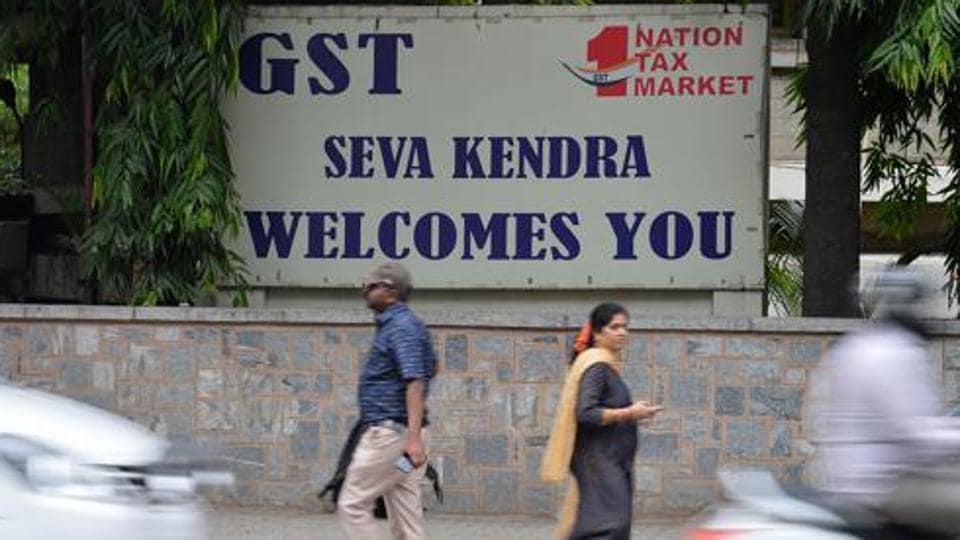
GST revenues exceeded ₹2.10 lakh crore in April, reflecting actual business transactions made in March. The financial year ended on March 31.
In a social media post, Union finance minister Nirmala Sitharaman said that the ₹2,10,267 crore GST collection for April 2024 was the “highest ever” since the new tax regime was launched by the Modi government in July 2017.
Experts said buoyant indirect and direct tax revenues are reflections of government’s economic management and tax reforms.
ALSO READ | March GST collections hit ₹1.78L crore, 2nd-highest ever
GST collections in 2023-24 surpassed the ₹20 lakh crore mark with revenues in the last month of FY24 (March) crossing ₹1.78 lakh crore, which was then the second-highest collection ever on heightened economic activity. The Reserve Bank of India (RBI) on April 5 projected India’s real gross domestic product (GDP) growth in FY25 at 7%. On April 11, the Asian Development Bank (ADB) predicted India’s GDP growth at 7% in 2024-25. And on April 16, the International Monetary Fund (IMF) raised the country’s growth forecast for the fiscal year to 6.8% from 6.5%.
The robustness of the economy is also reflected in direct tax collections (GST is an indirect tax). Direct tax data released on April 21 showed a 18.48% annualised increase in gross revenues to ₹23.37 lakh crore in 2023-24 with a 17.7% jump in net collections to ₹19.58 lakh crore.
Deloitte India partner MS Mani said the trend of robust tax revenue reflects India’s economic prowess.
Commenting on the April GST revenue, he added: “These collections which relate to transactions in goods and services during the month of March 24 could be the tipping point in the GST collection trajectory. While some part of the increased collection is attributable to the financial year’s end , it is also reflective of the significant improvements in GST compliance by businesses.”
ALSO READ | GST compensation cess may end before March 2026 deadline
The robust GST collections in April were driven by a “strong” increase in domestic transactions, the finance ministry said in a statement. After accounting for refunds, the net GST revenue for April 2024 was ₹1.92 lakh crore, reflecting a 17.1% annualised growth, it added.
According to it, there were “positive performance” in all heads during April 2024 – the central GST (CGST) was ₹43,846 crore, the state GST (SGST) was ₹53,538 crore, the integrated GST (IGST) was ₹99,623 crore, and the cess was ₹13,260 crore. GST compensation cess is levied on products such as automobiles, liquor, cigarettes, aerated water and coal. IGST is levied on interstate transfer of goods and services and is shared between the Centre and the state.
The finance ministry said that states have been paid their respective shares in the GST revenue. “An #IGST amount of ₹50,307 crore to Centre and ₹41,600 crore to states has been cleared. This #IGST settlement of ₹91,907 crore is ₹4,413 crore more than the actual net IGST collections of ₹87,494 crore and stands settled by the central government. There are NO DUES pending on account of IGST settlement to the states,” Sitharaman said in a post on X.
Saurabh Agarwal, tax partner at consultancy firm EY said, “The unprecedented milestone of surpassing ₹2 lakh crore in GST collections for April 2024 underscores the steadfast resilience of tax system amidst evolving economic landscapes. Every component of GST collection has contributed significantly.”
“The CGST, SGST, IGST, and cess segments have all demonstrated positive performance, further solidifying our fiscal position. The concerted efforts of the GST officials including zero tolerance for non-filers, coupled with rigorous measures to combat fake invoicing and the registrations has significantly bolstered GST collections in the state’s coffers,” he added.
Experts are expecting the government to take indirect tax reforms to the next level after polls. Partik Jain, partner at PwC India said: “With next wave of GST reforms expected after the formation of new government, the growth may be further accelerated. It may also enable the government to take bolder decisions such as rate rationalisation or bringing products such as ATF (aviation turbine fuel) and natural gas under the GST ambit.”