
 E-Paper



Haryana assembly polls: State elected only 87 women MLAs since 1966
Representation of women MLAs has always remained low in the state assembly. Even among a few women MLA's, many hail from influential or wealthy families.

 Prefer HTon Google


The state of Haryana is facing elections to its 90-member state legislative assembly to elect its next government on October 5.
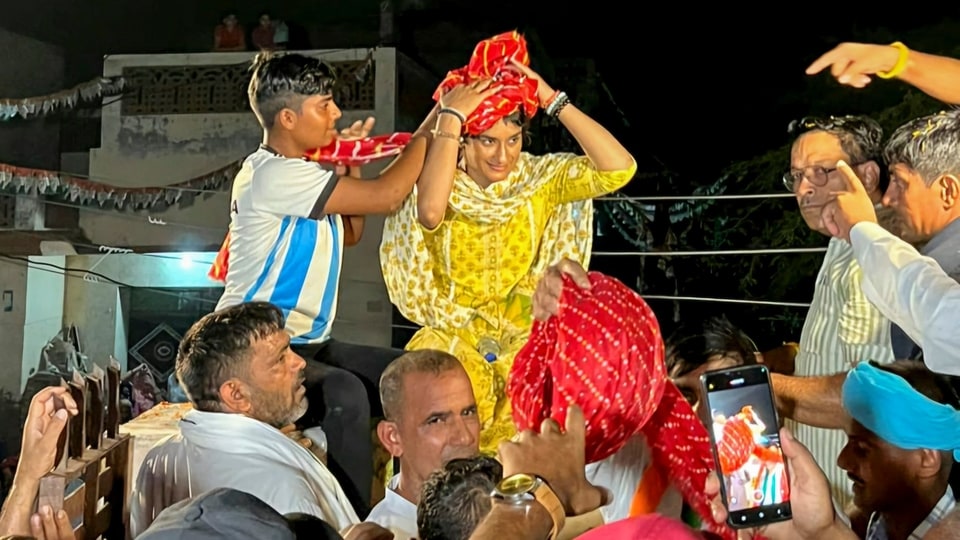
An analysis of historical data reveals that the state has elected only 87 women MLA's since it was carved out of Punjab in 1966. Among those 87 women, 47 was elected since the assembly elections in year 2000. Not just women MLAs, the state known for its skewed sex ratio has never had a woman chief minister.
With respect to recent elections to the state assembly, in 2019 a total of 104 women contested in the state, while only 9 managed to secure a victory. In 2014, a record number of 13 out of 116 women candidates was elected to become MLA's.
Child sex ratio in Haryana
The latest data on child sex ratio from the National Family Health Survey (NFHS-5) conducted in 2019-2021, child sex ratio in Haryana is 885 females per 1000 males. This is a significant improvement from the 834 females per 1000 males recorded in the 2011 Census.
However, while there has been progress, the child sex ratio in Haryana remains below the national average of 933 females per 1000 males. This indicates that there is still work to be done to address gender-based discrimination and ensure the equitable survival and development of girls in the state.
Also read | Panchkula residents boycott BJP candidate over absence from dump debate
Women candidates by parties
While the ruling Bharatiya Janata Party (BJP) has given tickets to ten women, the main opposition Congress party has fielded 12 women candidates, the highest among all political parties in fray.
Former state education minister and Jhajjar constituency candidate Geeta Bhukkal from the Congress said, “A Bill granting 33 per cent reservation to women in Parliament and state assemblies was passed but it will be implemented in 2029, which is also a joke with women”.
The Bahujan Samaj Party (BSP) and the Indian National Lok Dal (INLD) alliance has together fielded 11 women, while the Aam Aadmi Party (AAP) has given the opportunity to 10 women among its list of 90.
The new alliance between Azad Samaj Party and Jannayak Janta Party (JJP) has named eight women in the 85 seats it is contesting in this election.
A study by Ashoka University's Triveni Centre for Political Data (TCPD) says women's representation has always been a matter of concern in the state, given the state's history of social bias, crimes against women, and poor performance in gender-related metrics.
"The rising number of women candidates in the Vidhan Sabha elections over the years and their ability to outvote men comfortably from 2000 up to 2019 in the state elections comes as a plus for women in politics in Haryana. However, amongst the elected women MLAs in the said period, many hailed from affluent political families, leaving circumstances relatively unchanged," the study noted.
Key women candidates and their legacies
Arti Singh Rao - daughter of Union Minister Inderjit Singh, she is making her debut from Ateli constituency on a BJP ticket.
Shruti Chaudhary - Being the grand-daughter of former chief minister Bansi Lal, she switched loyalties from the Congress to the BJP and is contesting from Tosham constituency.
Vinesh Phogat - The champion wrestler is making her electoral debut on a Congress ticket from Julana constituency in Jind district. Phogat was the face of wrestler's protest against former Wrestling Federation of India Chief and BJP MP Brij Bhushan Sharan Singh, who the wrestlers accused of sexual harassment. She is facing against AAP's Kavita Dalal, the first Indian woman wrestler to compete in the WWE.
Savitri Jindal - She is Asia's richest women and the chairperson of OP Jindal Group. She rebelled against BJP to contest as an independent against Haryana minister and incumbent Hisar MLA Kamal Gupta. Savitri had said she is contesting to fulfil the wishes of people from her constituency Hisar.
Chitra Sarwara - she is contesting as an independent candidate from Ambala Cantonment seat against the BJP's Anil Vij -a six-time MLA and former home minister -and Parvinder Singh Pari of the Congress.
Sarwara is the daughter of former Haryana Chief Minister Bhupinder Singh Hooda's aide Nirmal Singh. She contested the 2019 election as an Independent after the Congress denied her a ticket. She finished second with more than 44,000 votes.
Rabia Kidwai - fielded by AAP, she is the first woman candidate from Nuh, a Muslim dominated seat. She is the grand-daughter of Akhlaq-Ur-Rehman Kidwai, the 13th governor of Haryana.
Kumudni Rakesh Daultabad - she is contesting as an independent in Badshahpur, the largest constituency in Haryana. Her husband and former MLA of the seat Rakesh Daultabad passed away earlier this year. He won the 2019 election as an independent.
Though the representation of women provides opportunities, the Ashoka University study notes that dominance of women from well entrenched backgrounds lead to concentration of power with the already resourceful political families.
A professor from the Central University of Haryana suggests that the state's politics is still rooted in patriarchy. "Tickets are allotted to women hailing from big political families only. It could be observed that it is also difficult for women to secure a victory when contesting independently or without strong political backing," she told news agency PTI.
"The same could be understood from the fact that there has been only one-woman Independent candidate, Shakuntla Bhagwaria, since 2000 until now to have won elections independently, in 2005," she added.
(With inputs from PTI)


