
 E-Paper



Jharkhand elections: BJP faces pressure from tribal groups over CM candidate
According to people aware of the details, BJP’s state unit is divided over its face for the upcoming polls.

 Prefer HTon Google


The Bharatiya Janata Party (BJP), which has remained tight-lipped about its chief ministerial candidate in Jharkhand, is facing pressure from various tribal groups to pick the party’s face from a Scheduled Tribe (ST) community for the upcoming assembly polls. STs are a politically significant group in the eastern state, comprising 26.2% of its population, as per the 2011 census.
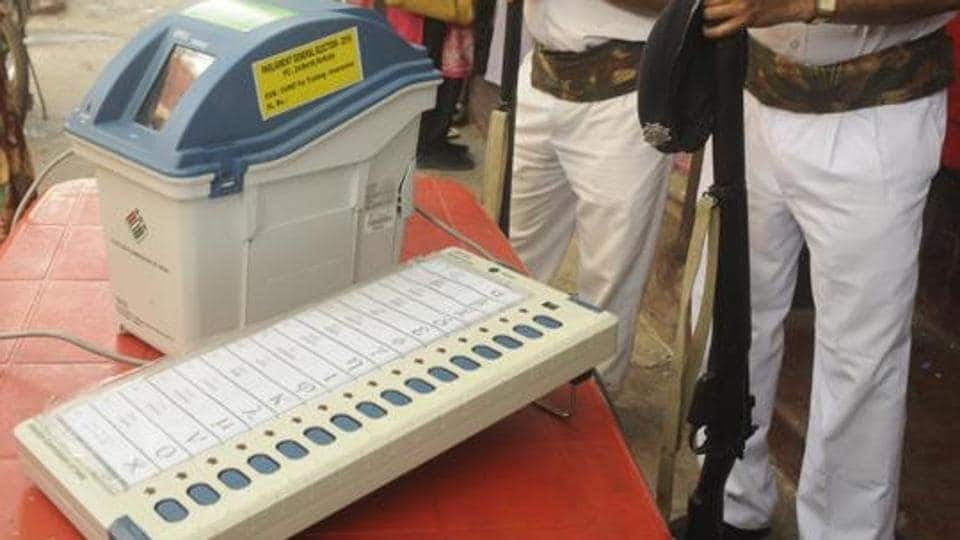
According to people aware of the details, BJP’s state unit is divided over its face for the upcoming polls. “In 2019, the party’s loss was largely attributed to the anger among the STs over a number of policy decisions and because they were not happy with the party appointing a non-tribal Raghubar Das as the CM (after 2014 elections),” a senior party leader said, requesting anonymity.
Maintaining that the BJP typically does not announce a CM-face unless it heads the incumbent government, the leader said the party finds itself in a predicament in Jharkhand as its main opponent, the Jharkhand Mukti Morcha (JMM) is led by chief minister Hemant Soren, a tribal.
“Soren was arrested for financial irregularities, but he has turned it into a campaign suggesting atrocities against a ST CM. It has become a sensitive issue in the state, and we did bear consequence of it in the Lok Sabha polls (BJP lost all five ST-reserved seats),” the leader added.
Read more: Will ensure implementation of NRC in Jharkhand: Shivraj Singh Chouhan
Soren was arrested by the Enforcement Directorate (ED) in January this year in a money laundering case related to an alleged illegal land case. He was granted bail by the Jharkhand high court on June 28. The assembly polls in Jharkhand are set to be held later this year.
“There is a schism between the tribals and the non-tribals. The BJP has a few tall tribal leaders, but there is a perception that the party unit in the state is a divided lot...there is no collective leadership and no consensus on who among the tribal leaders will be the face (CM candidate),” the leader cited above said.
Reports of differences between state unit president Babulal Marandi and former CM Arjun Munda have exacerbated the leadership corundum, the leader said.
Jharkhand was carved out in 2000 from Bihar with 81-membr assembly, of which 28 seats are reserved for STs. The BJP won the assembly polls in 2005 and 2014. In 2019, the JMM won 30 seats and formed the government in alliance with the Congress, which got 16 seats. The BJP won 25 seats in the previous state elections.
Since its loss in all five ST-reserved seats in the Lok Sabha polls this summer, the BJP has been reaching out to tribals with promises and sops and has also persuaded tribal leaders from other parties to switch sides. In August, Champai Soren, a veteran ST leader from JMM who took over the reins of the state while Hemant Soren was in jail, and his party colleague Lobin Hembrom joined the BJP. In 2020, former CM Marandi merged his Jharkhand Vikas Morcha with the BJP. Ahead of this year’s general elections, Hemant Soren’s sister-in-law Sita Soren and former CM Madhu Koda’s wife Geeta Koda, along with several others, also joined the BJP.
The party is banking on these new inductees to strengthen its presence in ST-dominated areas, though both Sita Soren and Geeta Koda lost the Lok Sabha polls despite the BJP winning eight of the 14 seats in the state.
The BJP is also hopeful that presence of Champai Soren and Geeta Koda will help it in the Kolhan region, once considered the party’s stronghold. “The Kolhan region has predominantly Santhal, Munda and Ho tribes (and) a bulk of the 28 ST seats are here, (the remaining are in Santhal Pargana and North Chotanagpur division),” the leader quoted above said.
A second leader, also declining to be named, said the pressure to announce a tribal leader as the CM-face has been accentuated by the party leadership’s own assertions of empowering the marginalised. In Chhattisgarh and Odisha, where tribals constitute 30.6% and 22.8% of the population, respectively, the party appointed ST CMs.
“In Chhattisgarh and Odisha there are CM from the ST community. Both the states have sizeable ST population and therefore, there is expectation among the tribals in Jharkhand of being similarly given recognition and respect,” the second leader said.
Vishnu Deo Sai, a tribal leader, was made the Chhattisgarh CM late last year, while Mohan Charan Majhi became the Odisha CM in June this year.
The BJP — which has announced a spate of sops including monthly cash assistance of ₹2,100 to women; monthly stipend of ₹2,000 for two years to graduates and postgraduates; LPG cylinders at ₹500 to all households, in addition to two free cylinders per year on festivals; and 500,000 jobs to the unemployed over the next five years — will pivot its election campaign in the state on “the poor governance record of the state government and the corruption by chief minister Hemant Soren”, a state functionary said.
Whether the BJP manages to win back the support of tribal communities, whose apathy in the 2019 assembly polls and the 2024 Lok Sabha polls dealt a blow to the party, only the results of the upcoming polls will tell.


