
 E-Paper



Judiciary can’t be compromised, or else rule of law will become illusory: CJI
N V Ramana, who was delivering the 17th Justice PD Desai Memorial Lecture on the title ‘Rule of Law’, said the concept of law is defined by four principles, mainly strong and independent judiciary, clear and accessible law, equality before law, and people’s right to participate in the creation and refinement of laws.


Judiciary cannot be controlled, directly or indirectly, by the legislature or the executive, or else the ‘rule of law’ would become illusory, Chief Justice of India N V Ramana said on Wednesday.
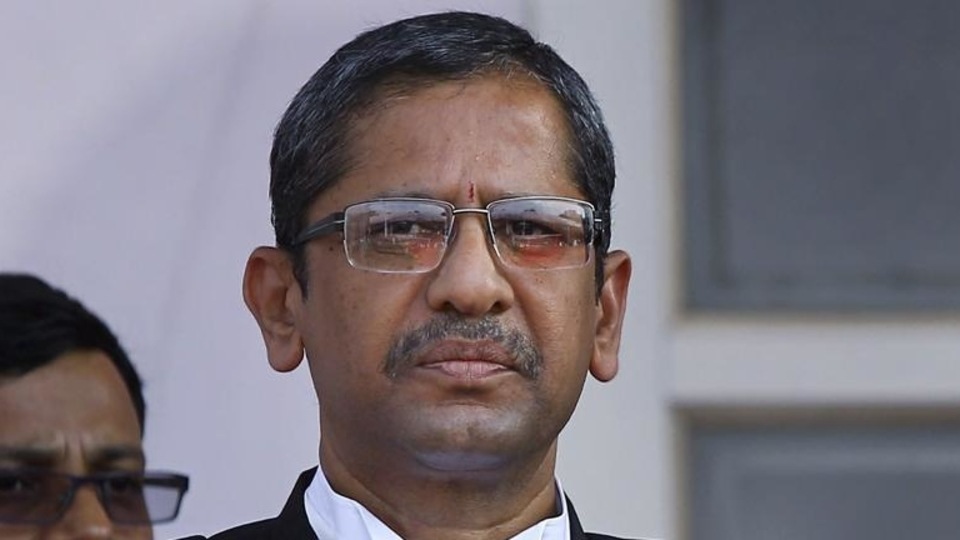
Ramana, who was delivering the 17th Justice PD Desai Memorial Lecture on the title ‘Rule of Law’, said the concept of law is defined by four principles, mainly strong and independent judiciary, clear and accessible law, equality before law, and people’s right to participate in the creation and refinement of laws.
“For the judiciary to apply checks on governmental power and action, it has to have complete freedom. The judiciary cannot be controlled, directly or indirectly, by the legislature or the executive, or else the rule of law would become illusory,” he said.
“At the same time, judges should not be swayed by the emotional pitch of public opinion either, which is getting amplified through social media platforms,” the CJI added.
Taking note of recent trends wherein social media platforms raise an emotional pitch to influence judges, he said: “The new media tools that have enormous amplifying ability are incapable of distinguishing between the right and wrong, good and bad and the real and fake. Therefore, media trials cannot be a guiding factor in deciding cases.”
“It is therefore extremely vital to function independently and withstand all external aids and pressures,” the CJI said.
“While there is a lot of discussion about the pressure from the executive, it is also imperative to start a discourse as to how social media trends can affect the institutions,” he added.
However, he added, judges should not dissociate completely from what is going around them. “Judges cannot stay in ‘ivory castles’ and decide questions which pertain to social issues,” he added.
He also stressed on the equal role of other organs of the state – executive and judiciary – and urged lawyers to play a constructive role in removing economy, caste, class, or gender barriers in ensuring justice.