
 E-Paper



Law, policy, contract: Why SC junked ruling on credit card interest
The court held that the July 7, 2008 decision of the NCDRC lacked the jurisdiction to deal with a matter which was a private contract


The Supreme Court last week struck down a decision of the apex consumer forum that directed banks not to levy penal interest of above 30% on credit card users who either default or delay payment of dues within the stipulated time.
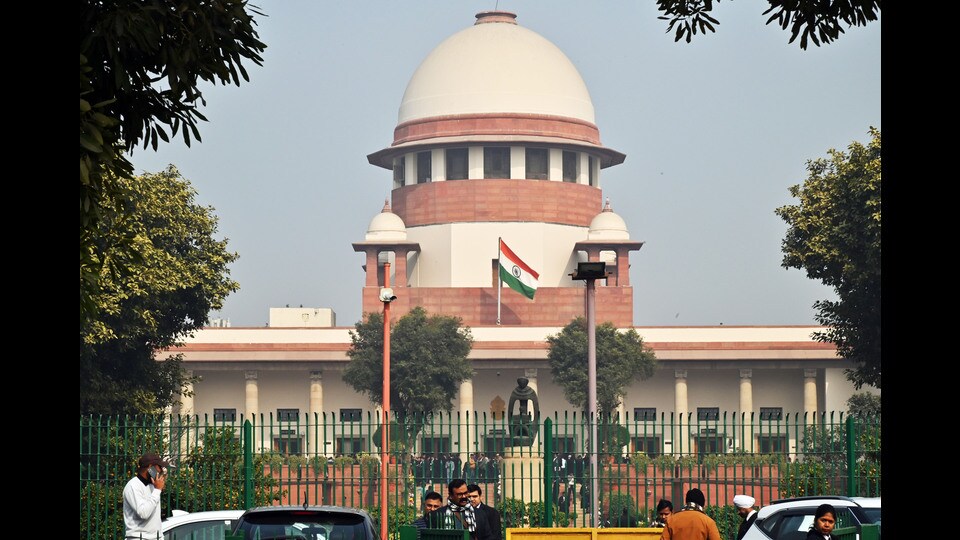
The court held that the July 7, 2008 decision of the National Consumer Disputes Redressal Commission (NCDRC) lacked the jurisdiction to deal with a matter which was a private contract entered between the credit card user and banks. Credit card holders are largely educated people who are aware of their obligations of timely payment and penalty in the case of delay, the top court said. The discretion to levy the quantum of interest was left to the banks by the Reserve Bank of India (RBI), the statutory authority that regulates banking business.
The court ruled that the NCDRC judgment to be unsustainable on three fronts — law, policy and contract.
Though the commission’s order was not in force after a stay by the top court in February 2009, the court’s decision must be understood in the context of how the case came up before the commission, the arguments made by RBI and banks, and the statutory framework that governs the case in hand.
‘No unfair practice’ The case before NCDRC was filed by two NGOs -- Awaz and Jagrut Nagrik -- in a representative capacity based on an illustrative case of a man named Pradeep Thakur, a credit card holder with Citibank, against whom a claim of ₹90,000 was levied towards excess interest by the bank.
The two NGOs claimed that banks in general are charging credit card users interest at the rates of 36% to 49% per annum for defaulting on timely payment. They argued that, on the face of it, such excessive interest is usurious and RBI has not acted despite receiving several complaints. It was further argued that considering the prime lending rates fixed by various banks, RBI must issue a circular directing that interest rates should not be unreasonable.
The Consumer Protection Act, 1986 under which NCDRC is constituted, seeks to protect consumers against “unfair trade practice”. Under Section 2(r) of the Act, unfair trade practice means any practice which adopts unfair method or any unfair or deceptive practice for promoting sale, use or supply of any goods.
The commission held that charging of interest rates beyond 30% from credit card holders upon delay or default in payment constitutes an unfair trade practice. It further held that penal interest could be charged only once for one period of default and should not be capitalised.
Only RBI and Citibank were present before the commission. After hearing arguments, NCDRC concluded that the charging of annual interest rates ranging from 36% to 49% is “exorbitant” and amounts to the exploitation of the borrowers and is usurious.
The decision of the commission was challenged in the top court by private banks - HSBC, Citibank, American Express and Standard Chartered, along with an intervention filed by HDFC.
The banks argued that NGOs could not institute a consumer complaint and the case brought before the commission was a public interest litigation (PIL) guised as a consumer dispute. They submitted that the lone case agitated by the commission was of a credit card user who was aggrieved by ₹90,000 interest. According to Section 21(a) of the Consumer Protection Act, NCDRC can entertain claims only above ₹1 crore. On this ground itself, the banks said that the commission was barred from entertaining the complaint. Also, not all banks were given notice for the complaint to be entertained in a representative capacity.
The top court held that Awaz was a trust that cannot be treated as a “person” to institute a complaint. The bench of justices Bela M Trivedi and Satish Chandra Sharma found that the complaint failed to disclose any “deficiency in service” and agreed that the complaint was a PIL in the guise of a consumer dispute.
Holding that policy decision on rate of interest falls within the regulatory domain of RBI, the court ruled that the commission could not assume RBI’s jurisdiction by entertaining a complaint based on vague allegations and no cause of action. “An endeavour to cap the rate of interest charged by banks and dictating the need for a Benchmark Prime Lending Rate (BPLR), drawing parallels with other economies across the world, whilst failing to trust the prudence of RBI, which has been entrusted with the fundamental responsibility of regulation of the monetary system and banking business, is unwarranted,” the top court held.
The banks got a clean chit as the court held that in no manner banks have made any misrepresentation to deceive the credit card holders. “In the present context, the preconditions of ‘deceptive practice’ and unfair method’ are manifestly absent,” the court ruled.
RBI has final say The Banking Regulation Act of 1949 places a bar on courts to scrutinise rates of interest charged by banks. As a matter of policy, RBI submitted to the court that pursuant to the liberalisation of the economy and consequent deregulation of interest rates, RBI issued various circulars, the last one being in July 2007, which said: “Credit card dues are in the nature of non-priority sector personal loans, and as such, banks are free to determine the rate of interest on credit card dues without reference to their BPLR and regardless of the size.”
The 1949 Act placed a specific bar contained in Section 21A which stated, “A transaction between a banking company and its debtor shall not be reopened by any court on the ground that the rate of interest charged by the banking company in respect of such transaction is excessive.”
The banks relied on this provision along with Section 35A of the same Act. which gives power to RBI to issue directions to banks. These directions could be guided by public interest, banking policy, in the interest of securing interests of depositors or secure proper management of any banking company, which the banks are bound to comply with.
In this legal framework, RBI submitted to the court that there was no material before it or the commission to establish violation by banks of any of its policy directives. Hence, it said, the question of directing RBI to act against any bank does not arise. Also, the banking regulator further stated that imposing any cap on the rate of interest did not arise in the light of Section 21A of the Act. RBI told the court that interest rates on advances are determined by individual banks as per their internal policies approved by their board of directors, which is subject to the regulatory guidelines issued by RBI from time to time.
The top court order relied on these legal parameters, and said: “The decision of NCDRC to unilaterally hold that any interest above 30% p.a. is usurious, is in contrary to the legislative intent of section 21A and is an encroachment upon the domain of RBI.
It even refused to appreciate the commission’s observations accusing RBI of leaving the issue of fixing interest rate to the “absolute discretion of the banks”. The court held, “The rate of interest, charged by the banks, is determined by the financial wisdom and directives issued by RBI, and is duly communicated to the credit card holders from time to time, cannot be in any manner unconscionable or unilateral. The credit card holders are duly educated and made aware of their privileges and obligations, including timely payment and levying of penalty on delay.”
It held that the commission overstepped its jurisdiction to review the laws and circulars, a power given solely to the Supreme Court and high courts. RBI’s argument was accepted by the court that the commission was bound to accept the policy as valid without questioning the central bank’s decision not to impose any ceiling.
Binding terms of contract The terms and conditions for charging rates of interest or other charges are part of a contract between the credit card user and the banks. The banks argued that the terms of contract were duly informed to all customers by way of the standard set of conditions for the issuance and usage of credit cards.
These set of conditions define the responsibilities of the card issuer and the cardholder, and contain information on fee, charges applicable on credit cards, finance charges and withdrawal limits, and are provided with each monthly billing statement. The banks argued that the customer is aware of these conditions as also the provision for interest on delayed payment. They objected to the commission supplanting itself as the regulator of the banking systems and rewriting the terms of contract.
The top court agreed with this view as it held, “The commission, whilst making observations, has made stipulations to the terms of contract agreed between the parties, so much so it has supplanted itself as the custodian of the terms and conditions between the parties.”
The court held that when a party to the contract disputes the binding nature of the signed document, it is for that person to make out a case. “Hence, NCDRC had no jurisdiction to rewrite the said terms of the contract,” the bench said.
While it may be true that unsuspecting customers who are lured to buy credit cards can end up as debtors forever to the banks, the decision of the court reveals how matters of private contracts covered by laws cannot be given a go-by even in matters of public interest.