E-Paper



Odisha train crash: Locals among 1st respondents, worked with bare hands
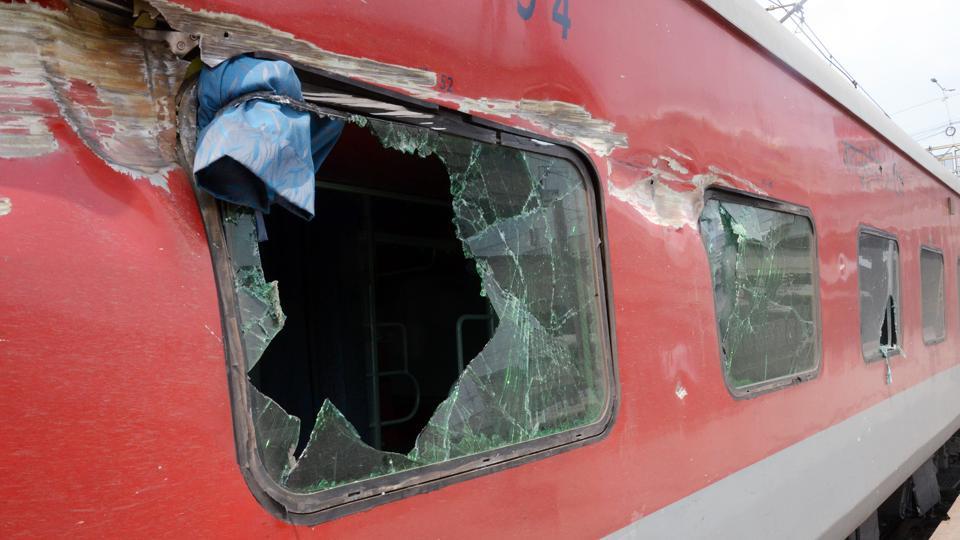
Purna Chandra Mallik, a farmer, said they used the flashlights of their mobile phones and broke window panes of the Coromandel Express to rescue passengers

 Prefer HTon Google


Purna Chandra Mallik, a farmer, was talking to his friends after returning from a market when he heard clanging followed by smoke as the Kolkata-Chennai Coromandel Express went off the tracks and hit another one before crashing into a parked freight train near Odisha’s Balasore.
His first reaction was to run to the crash scene where it was all dark after the trains collided. “...passengers were crying in pain,” said Mallik, who was among the first group of local respondents.
The group used the flashlights of their mobile phones and started breaking window panes of the Coromandel Express. “I entered the mangled coaches and tried to rescue the passengers. But all I could get was bodies soaked in blood with many of them with hands and legs severed. My clothes were soaked in blood.” Mallik said they could take out at least 30 bodies from the train compartments.
Sudarshan Das, a daily wager, said they used ladders to enter the coaches of the Coromandel Express and pulled out survivors. “After the initial shock, we did not waste any time in rescuing people.”
Das said by the time National Disaster Response Force (NDRF) and Odisha Disaster Rapid Action Force (ODRAF) teams arrived, they had rescued dozens of people many of whom had suffered previous injuries.
Ranjan Murmu, who was among the local respondents, said for the first half an hour after the accident, he tried to rescue as many people as possible. “But I was numb as soon as they started dying before me. I would take out a man or a kid from the train and they would die in no time. I could not even offer them water in their last moments as I was too focussed on rescuing passengers,” said Murmu.
Ganesh Prasad Nayak, a former sub-inspector with the Railway Protection Force, was doing a routine bhajan at an Iskcon temple near the accident scene when he saw the three trains crashing into each other. He ran to the tracks to get the injured passengers out of the mangled coaches.
“Every time I would take out injured passengers from the coach with the help of my fellow Iskcon devotees and bring them to the road before the temple premises, they would succumb.”
After counting 71 bodies, he gave up. “I could however manage to save a woman, but she kept on asking me about her 18-year-old son in the same coach. I looked around the dark compartment with mobile flashlight but found her son dead.”
Apart from local responders, seven NDRF, five ODRAF, and 24 Odisha Fire Service units with gas-cutter worked throughout the night to pull out survivors and the dead from the mangled trains.
Over 100 personnel of the army cut through the two mangled general bogies of the Yeshwantpur-Howrah Express that the Coromandel Express crashed into. “As getting cranes to the spot where the two bogies fell into a ditch was an impossible task, our jawans using special cutters could tear their way through,” said an army commandant.
In Balasore and Bhadrak, hundreds of residents lined up at hospitals to donate blood. “We [about 25 volunteers] have come here to the Balasore District Hospital to donate blood voluntarily. If our blood can save someone’s life, no other thing can bring us more happiness,” said a volunteer.
Odisha chief secretary Pradeep Kumar Jena thanked the volunteers for donating blood. “500 Units of blood collected overnight here at Balasore. 900 Units in stock at present. This will help in treating the accident victims. I’m personally indebted & grateful to all the volunteers who’ve donated blood for a noble cause,” Jena said in a tweet.
NDRF director general Atul Karwal said over 300 people have been rescued. “We hope to complete the rescue operations by today [Saturday]. The coaches were mangled because of the impact of the collision. We hope to find more survivors.”
He said the accident was unique because three trains collided. “The coaches were mangled. We are cutting the mangled remains of the coaches and ensuring that no harm is caused to the survivors.”
The NDRF has fielded teams, which trained with railways and took part in over 50 such mock drills last year for rescue missions.