
 E-Paper



PM Modi heads to Brunei, Singapore to bolster ‘Act East’ policy of India
Singapore is currently India’s largest trade partner within the Asean countries, while Brunei has a special place in New Delhi’s space programme.

 Prefer HTon Google


Brunei and Singapore are important partners in India’s ‘Act East’ policy and the vision for the Indo-Pacific, Prime Minister Narendra Modi said on Tuesday as he began a visit to the Southeast Asian nations aimed at bolstering cooperation in areas ranging from semiconductors to hydrocarbons.
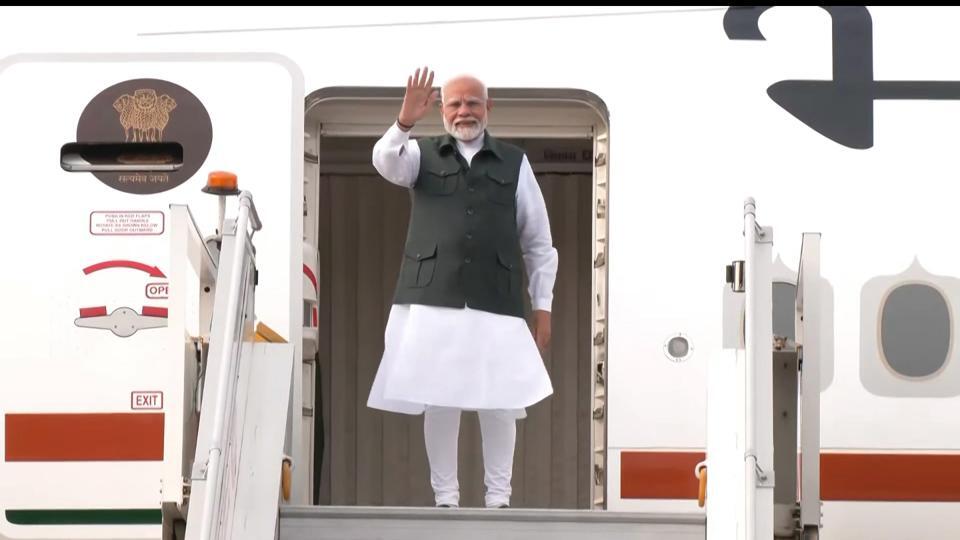
Modi will first travel to Brunei during September 3-4, becoming the first Indian premier to make a bilateral visit to the tiny country located on the island of Borneo that is home to an Indian diaspora of about 14,000. The Indian side has said it is keen to shore up long-term and predictable arrangements for gas supplies from Brunei.
Both Brunei and Singapore are “important partners in our Act East policy and the Indo-Pacific vision. I am confident that my visits would further strengthen our partnership with Brunei, Singapore and the larger ASEAN region”, Modi said in a statement ahead of his departure.
“As we celebrate the 40 years of our diplomatic relations, I look forward to my meetings with His Majesty Sultan Haji Hassanal Bolkiah and other esteemed members of the Royal family to advance our historical relationship to new heights,” he said.
From Brunei, Modi will travel to Singapore on September 4. India and Singapore are set to unveil about half a dozen agreements during the visit, including one on cooperating in creating a semiconductor ecosystem. Modi’s visit will build on a recent meeting of the India-Singapore Ministerial Roundtable, which identified advanced manufacturing and connectivity as new areas for collaboration.
Modi said in the statement that he looks forward to meeting President Tharman Shanmugaratnam, Prime Minister Lawrence Wong, senior minister Lee Hsien Loong and emeritus senior minister Goh Chok Tong. “I will also meet with leaders of the Singapore’s vibrant business community,” he said.
“I look forward to my discussions to deepen our Strategic Partnership with Singapore, particularly in new and emerging areas of advanced manufacturing, digitalisation, and sustainable development,” he added.
Singapore is currently India’s largest trade partner within the Association of Southeast Asian Nations (Asean) and the sixth largest trade partner worldwide. Besides, Singapore was the largest source of foreign direct investment (FDI) into India in 2023, and its cumulative investments since 2000 are worth $160 billion.
Brunei has a special place in New Delhi’s space programme. The two sides have signed three MoUs in this field and in 2000, India established a telemetry tracking and command station in Brunei that allows it to track and monitor all eastward launches of satellites and rockets. Officials said the discussions in Brunei will focus on enhancing cooperation in the field of space.
Modi was originally scheduled to visit Singapore after travelling to Thailand to attend a summit of the Bay of Bengal Initiative for Multi-Sectoral Technical and Economic Cooperation (Bimstec). After Thailand put off the summit, Brunei was added to his itinerary.



