
 E-Paper



PM Modi underscores importance of ties with Central Asian nations in meeting with FMs
The minister jointly met the foreign ministers of Kazakhstan, Kyrgyzstan, Tajikistan, Turkmenistan and Uzbekistan


India attaches importance to its relations with the five Central Asian states, which are part of the country’s extended neighbourhood and connectivity is key to enhancing economic cooperation with the region, Prime Minister Narendra Modi said on Monday.
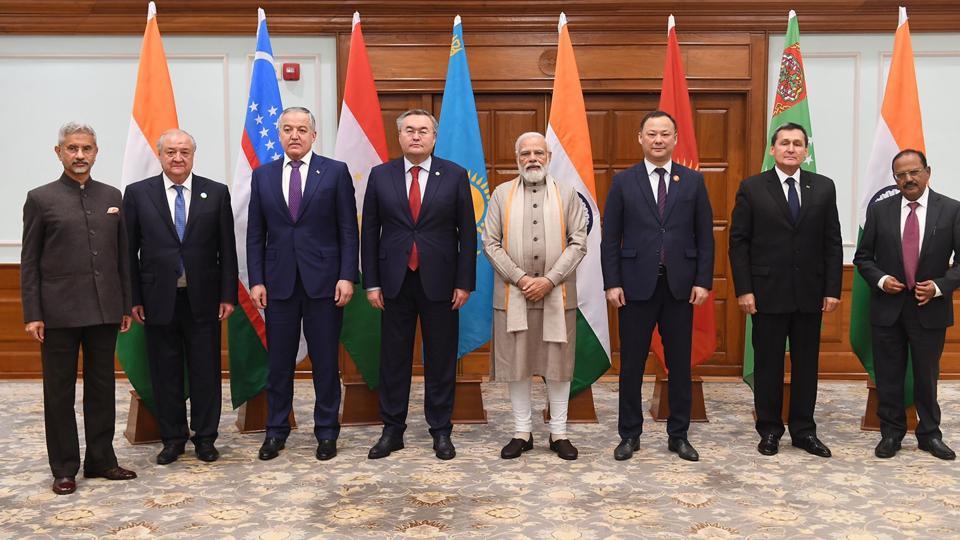
Modi spoke of the importance of India’s relations with Kazakhstan, Kyrgyzstan, Tajikistan, Turkmenistan and Uzbekistan when the foreign ministers of the five countries jointly met him. The foreign ministers were in India for the third edition of the India-Central Asia Dialogue with their counterpart S Jaishankar.
Jaishankar and National Security Adviser Ajit Doval were also present at the meeting between Modi and the foreign ministers.
Modi “emphasised the importance that India attaches to its long-standing relations with [the] Central Asian countries, which are part of its ‘extended neighbourhood’”, an official statement said.
“He also underscored the potential of enhanced economic cooperation between India and Central Asia, and the role of connectivity in that regard,” the statement added.
Modi also conveyed his felicitations to the ministers on the 30th anniversary of the independence of the Central Asian states. He recalled his visit to all the Central Asian states in 2015 and subsequently to Kazakhstan, Uzbekistan and Kyrgyzstan.
He also pointed to the importance of maintaining cultural and people-to-people contacts between India and Central Asia, in view of the popularity of Indian films, music and yoga in the region.
The India-Central Asia Dialogue has given impetus to the “excellent bilateral relations between India and Central Asian countries”, the statement said. The visiting ministers briefed Modi on their deliberations during the dialogue, which focused on trade, connectivity, development partnership and regional developments, including the situation in Afghanistan.
According to a joint statement issued after the dialogue on Sunday, India and the Central Asian states pushed for concerted action against all terror groups, saying Afghanistan’s soil must not be used for planning or financing terror attacks. They also pledged to provide immediate humanitarian aid to the Afghan people.
The fallout of the Taliban takeover of Kabul on regional security, post-pandemic recovery and measures to boost regional connectivity and trade were discussed during the dialogue. India welcomed the interest shown by the Central Asian states in using a terminal at Iran’s Chabahar port, which is operated by an Indian company, for trade.
Top security officials of all the Central Asian states attended a regional conference on Afghanistan hosted by India on November 10. The leaders of the five Central Asian countries are expected to be chief guests at next year’s Republic Day celebrations, reflecting the importance attached by India to the region.
