
 E-Paper



Rafale’s Make-in-India plans get shot in the arm
Dassault Aviation SA is in the process of acquiring land near Jewar international airport for a maintenance, repair and overhaul (MRO) facility for India’s Mirage 2000 and Rafale fighters

 Prefer HTon Google


French Aviation major Dassault Aviation SA is in the process of acquiring land near Jewar international airport for a maintenance, repair and overhaul (MRO) facility for India’s Mirage 2000 and Rafale fighters, setting the stage for the local manufacturing of latest versions of Rafale fighters in the country to meet the Indian Air Force’s long-pending requirement of around 100 twin-engine multi-role fighters that will be needed over the next two decades, according to two people familiar with the matter.
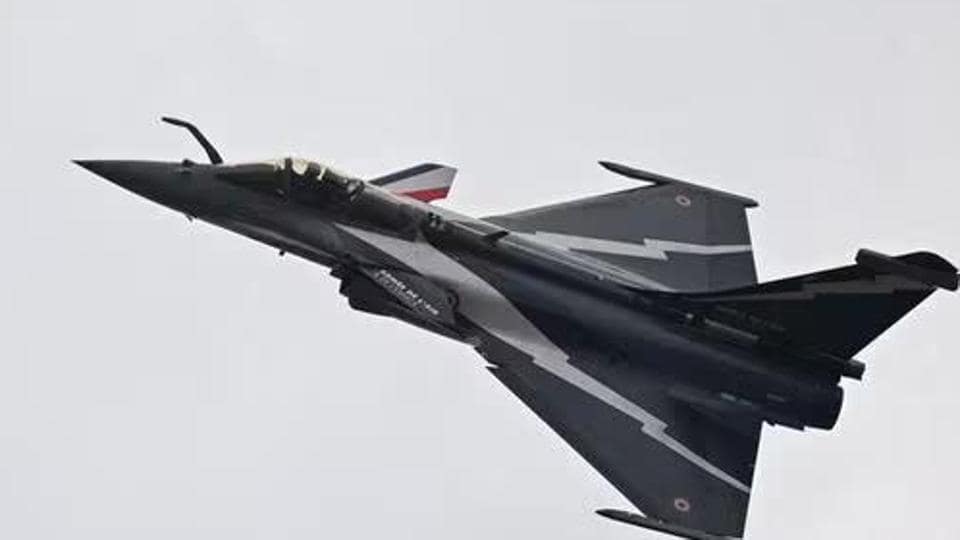
Notwithstanding the political ferment in France – the French far-right front National Rally won the first round of voting for the National Assembly, with 33% of the votes, ahead of the ruling coalition’s 20% – the Emmanuel Macron government and Dassault have offered in writing to manufacture Rafale fighters in India under the “Make in India” rubric with locally sourced components to meet IAF’s demand, the two people added, asking not to be named. This comes even as engine maker Safran SA is setting up a MRO facility to handle Rafale fighter engines (if numbers are enough) at Hyderabad adjacent to the company’s LEAP engine facility for civilian aircraft, which will be ready by 2025. Safran, the people added, has conveyed that if there is a Rafale order for IAF, it is willing to manufacture the M-88 engines in India.
Also Read:‘Negotiations on’: Why India-France didn’t announce new Rafale, Scorpene deals
Given that HAL’s LCA Mark II with GE-414 engines, which will replace the Mirage 2000, will not be ready before the middle of the next decade, the Rafale fighter will not only meet India’s requirement but also allow India to export the same fighters to third countries. Dassault has already started sourcing titanium parts from companies in India for manufacture Rafale fighters and plans to add more local vendors to the supply chain list.
According to the two people, the manufacture of Rafale fighters in India is a win-win for both close allies as Dassault already has some 300 fighter orders in hand from Croatia, Greece, Serbia, Egypt, Qatar, UAE and Indonesia and has no capacity to manufacture extra planes for India. The company is also in talks with Saudi Arabia for supply of fighters and the French Air Force has asked it for 42 more Rafales.
IAF is already operating 36 Rafale fighters with Hammer and SCALP missiles with the Indian Navy currently involved in price negotiations for 26 Maritime Strike Rafales for the INS Vikrant aircraft carrier. India already has base maintenance depots, repairs, training and simulators for Rafales in its Ambala air base.
Given the gestation period for fighters and engines is over decades, the Modi government has also taken reassurance from France’s stable licensing policy which will ensure there is no hiccup -- like Russia, France has been supplying aircraft to India since the Toofani fighter in 1953.
The people added that Safran is also ready for a joint venture with an Indian company for manufacture of engines for Indian Multi-Role Helicopters (IMRH) so that India does not have to look for a third country for urgent supplies.
With the Chinese PLA in an aggressive mood on the land and sea with India and equipped with its own fifth generation J-20 fighters, the Indian Air Force needs to be bolstered as its force levels are below its projected requirement. China has developed the WS-15 engine, reverse engineering it from the Russian AL-31, and is rapidly expanding its force levels on land, air and sea. “India can ill afford to further delay the acquisition of advanced multi-role fighters as the Chinese challenge will increase by the day,” said a national security planner.


