
 E-Paper



SC dismissal of Devas plea to help India in global arbitration
Today’s judgment in favour of the Union of India bolsters its case against Devas internationally, especially against the arbitration award for Devas that is under consideration with the judiciary of the Netherlands.

 Prefer HTon Google


The Supreme Court’s dismissal on Monday of the appeal filed by Devas Multimedia against the decision of the National Company Law Appellate Tribunal (NCLAT), which had upheld the National Company Law Tribunal’s decision to wind up the company, has significant political and economic ramifications -- and it is likely India will use it while fighting against an international arbitration award won by Devas, whose enforcement the company has been pushing for in some geographies.
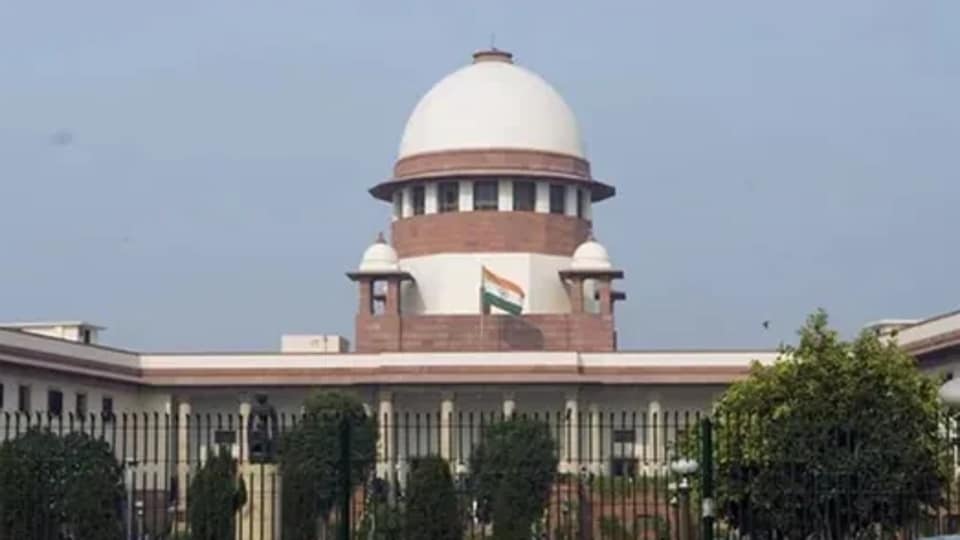
Recently, a Canadian court ordered the attachments of assets owned in that country by Air India as part of this. The judgment, delivered by a bench comprising justices Hemant Gupta and V Ramasubramanian dismissed Devas’s and its minority shareholder Devas Employees Mauritius Private Ltd’s appeal, upholding the order passed by NCLAT, which stated that Devas was incorporated with a fraudulent motive to collude and connive with some officials of Antrix Corporation, the commercial arm of the Indian Space Research Organisation (ISRO).
The judgment is the latest chapter in a controversial deal during the previous UPA regime, when, in 2005, Devas entered into an agreement with Antrix, the private sector arm of ISRO to provide high-speed data services using S-band satellite spectrum from Antrix.
The deal was terminated amid allegations of corruption by the Manmohan Singh government in 2011.
This resulted in commercial arbitration before an ICC Tribunal in the Netherlands and investment arbitration under the India-Mauritius and India-Germany bilateral investment treaty. Each of these proceedings have led to adverse awards against the Union of India.
Today’s judgment in favour of the Union of India bolsters its case against Devas internationally, especially against the arbitration award for Devas that is under consideration with the judiciary of the Netherlands. This may also help the Modi government in limiting the enforcement proceedings globally on grounds of fraud. The apex court’s order also embarrasses the previous regime ahead of state elections in Uttar Pradesh, Uttarakhand, Goa, Manipur and Punjab.
The decision to file a petition seeing the winding up of Devas Multimedia Ltd on grounds of fraudulent conduct of affairs was taken in January 2021, and a decision provisionally approving it was passed by NCLT the same month. Shareholders of Devas approached NCLAT seeking to prevent the winding-up petition in February, but the appellate tribunal dismissed their suit.
The shareholders later impleaded themselves as part of the winding up petition. In March, they challenged the constitutionality of the winding up petition in the Karnataka high court, but this suit too was dismissed.
On May 25, NCLT approved the winding up of Devas Multimedia. This order was challenged by Devas shareholders and the company’s former directors before NCLAT, which dismissed their appeal on September 8.
The shareholders and the former directors appealed to the Supreme Court, which delivered its decision on Monday.
“If the seeds of the commercial relationship, between Antrix and Devas were a product of the fraud perpetrated by Devas, every part of the plant that grew out of these seeds, such as the agreement, the disputes, arbitral awards, etc are infected with the poison of fraud,” the Supreme Court said in its judgement.
The order further added that “allowing Devas and its shareholders to reap the benefit of their fraudulent action, may nevertheless send the wrong message...”
It is very likely that India will be using these points while challenging the arbitral awards.
Interestingly, Antrix’s deal with Devas in 2005 was signed without the Space Commission , which is the apex policymaking body on all matters related to space.
The deal was cancelled in 2011, when inconvenient questions were asked about it, and in the wake of the 2G scam. The government did not even invoke the national security clause.
Still, two questions remain unanswered: one, why was the agreement with Devas executed without any due diligence? And two, if the winding up was on grounds of fraudulent conduct, why did the then government use that reason to scrap the deal?
After all, by 2009, questions were already being asked about the deal.
In 2015, the Narendra Modi government asked the Central Bureau of Investigation to look into the agreement. The Enforcement Directorate is also involved in the investigations that are still on.
Analysts also point to three missteps by the UPA that went against India in the arbitration proceedings: one, not invoking the national security issue while scrapping the deal; two, not focusing on the fraud; and three, being lax in responding to the arbitration panel.
Nor did it do anything to ring-fence the S-band spectrum (which has military use) till 2013.
While the UPA government at the time claimed that no decision was taken to allocate space segments using S-Band spectrum to Antrix or Devas, the 2005 agreement clearly states the contrary.
It reads: “…agreed to the request of Devas and has decided to make available to Devas, on lease basis, part of a space segment capacity on Primary Satellite 1 or PS1 and an option to gain additional capacity on Primary Satellite 2 or PS2 to be manufactured for similar services without any immediate back-up in the S-band, for such purpose under appropriate terms and conditions.”
There is documentary evidence to indicate that the UPA government was advised to annul the agreement in July 2010, but for inexplicable reasons waited for nearly a year to scrap the deal.


