
 E-Paper



SC gives Nagaland Nov 10 deadline for 33% women quota in local body elections
Nagaland assured the Supreme Court that the law giving women 33% quota in municipal elections will be passed by the assembly before the next date of hearing, November 10


NEW DELHI:The Supreme Court on Tuesday gave the Nagaland government time till November 10 to pass the legislation to give women 33% reservation in urban local bodies, reminding the state that the “proof of the pudding is in the eating”.
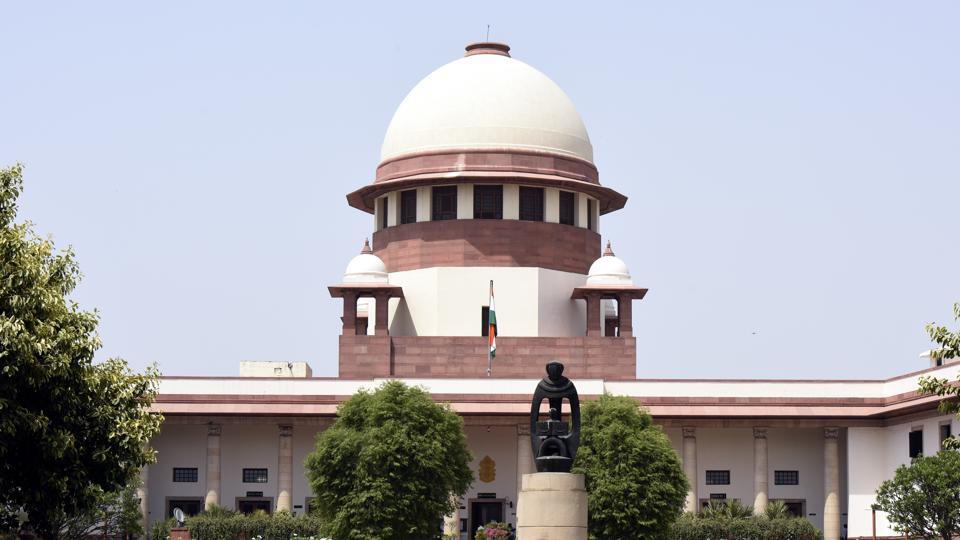
“This matter has been pending now for several years. We understand the state has to take many factors into consideration. But the proof of the pudding is in the eating. So when will we have it,” the bench of justices Sanjay Kishan Kaul and Sudhanshu Dhulia said.
Nagaland’s advocate general KN Balagopal told the top court that the bill, which sought to introduce 33% reservation in 36 town councils and three municipal councils, was expected to become a reality before the next hearing. He said tribal leaders of 16 major tribes and 7 minor tribes have been taken into confidence by the state government and the bill, currently pending before a select committee of the assembly, will be passed before the next date.
Balagopal told the bench that he wanted the final order to be passed by the bench before justice Kaul demits office in December. The bench led by justice Kaul has passed a string of orders over several months to prod the state into action, warning that the court will step in if the state government fails to resolve the issue.
Balagopal said that he will prepare a blueprint along with the schedule to show how the state intends to go about executing the 33% reservation to women in urban bodies.
The women’s reservation issue in Nagaland has long been tied up in a web of traditional laws, customs and local political dynamics.
The 33% women’s reservation in urban local bodies was introduced in the Constitution in 1992, but the municipal laws in Nagaland did not provide for it. It was added in 2006 and since then, the tribal groups have objected to its implementation citing the provisions were not in consonance with Naga tribal customary laws. In October 2011, the Gauhati high court directed the state to hold urban local body elections, demarcating seats for women. This led to the Nagaland assembly in September 2012 resolution not to implement the 33% reservation for women under Part IX-A of the Constitution in the state. This resolution was challenged by PUCL in SC in 2016.
When the top court pushed the state to implement women’s reservation in urban local body elections scheduled in May this year, Nagaland repealed the municipal law under which elections were to be held. The move provoked the top court to warn the Centre and the state to take remedial measures, ruling that if customary laws were standing in the way of implementing the constitution, it would not hesitate to hold them unconstitutional. The bench also initiated contempt proceedings against the chief minister and chief secretary.
The state took defence under Article 371A, which states that any central law passed by Parliament in respect of religious or social practices of the Nagas, Naga customary law and procedure, administration of civil and criminal justice involving decisions as per Naga customary law, and ownership and transfer of land and its resources, cannot apply to the state unless the Nagaland assembly adopts it by passing a resolution.
Nagaland also reasoned that introducing reservations in urban bodies would lead to an “anomalous” situation as women in urban local bodies would get reservations while those in villages, governed by Panchayati Raj institutions, would be denied the benefit. This was because the operation of Panchayats under Part IX of the Constitution is specifically excluded for Nagaland by Article 243M of the Constitution.