
 E-Paper



SC issues SOP for summoning govt officials
SC said that the presence of officials may not be necessary if the concerned issue can be addressed through affidavits or other documents

 Prefer HTon Google


New Delhi Constantly summoning government officials in judicial proceedings runs contrary to the scheme envisaged by the Constitution, the Supreme Court said on Wednesday as it laid down a standard operating procedure (SOP) for all courts to address the issue.
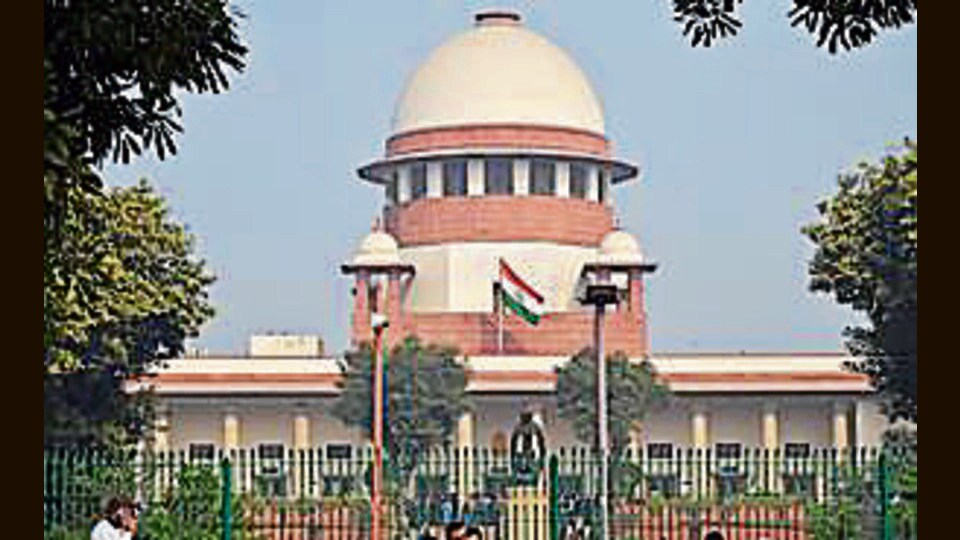
A bench headed by Chief Justice of India (CJI) Dhananjaya Y Chandrachud directed judges across the country to exercise caution while summoning government officials, and also refrain from making oral remarks which have the potential to humiliate the concerned official. The court also said that the presence of officials may not be necessary if the concerned issue can be addressed through affidavits or other documents.
“Constantly summoning officials of the government instead of relying on the law officers representing the government runs contrary to the scheme envisaged by the Constitution,” the bench, also comprising justices JB Pardiwala and Manoj Misra, said.
“The use of the power to summon the presence of government officials must not be used as a tool to pressurise the government, particularly under the threat of contempt,” the bench said, adding: “The appearance of government officials before courts must not be reduced to a routine measure in cases where the government is a party and can only be resorted to in limited circumstances.”
The top court was deciding on an appeal filed by the Uttar Pradesh government against an order of Allahabad high court in April last year that ordered the arrest of two officials – finance secretary SMA Rizvi and special secretary (finance) Sarayu Prasad Mishra – after it issued show-cause notices of contempt and bailable warrants over non-compliance of a decision to provide facilities to retired high court judges.
Although the top court ordered the release of the two secretaries after they were taken into custody, solicitor general (SG) Tushar Mehta, appearing for Centre, and additional solicitor general (ASG) KM Nataraj, for Uttar Pradesh, doubted the high court’s power to initiate contempt and requested for an SOP to deal with frequent summoning of officials to the court.
The SOP framed by the top court said the presence of officials may be required in evidence-based adjudication (such as documents or statements), summary proceedings and non-adversarial matters where a complex policy issue needs to be understood by courts, or where the court is, prima facie, satisfied that specific information has been denied or withheld by the government or it being suppressed or misrepresented.
In other cases, the courts can rely on affidavits and other documents, and statements of law officers, and personal appearance of an official may not be needed, the SOP said.
“Courts across the country must foster an environment of respect and professionalism,” the bench said, adding that the SOP emphasises the critical need for courts to exercise consistency and restraint.
“It (SOP) aims to serve as a guiding framework, steering courts away from the arbitrary and frequent summoning of government officials and promoting maturity in their functioning,” it added.
The guidelines also said that officials cannot be summoned “solely because the official’s stance in the affidavit differs from the court’s view”. “If the issues can be addressed through affidavits and other documents, physical presence may not be necessary and should not be directed as a routine measure,” it said.
It also said that courts must send a notice to the summoning official in advance, citing a reason behind the need for their appearance.
An option to appear online through videoconferencing should be provided, besides a specific time slot designated for the hearing, it said. Officials need not stand throughout the hearing, except while making any statement in court, it added.
“Oral remarks with the potential to humiliate the official should be avoided,” it said, adding that courts must also “refrain from making comments on the physical appearance, educational background, or social standing of the official appearing before it.”
The SOP also talked about contempt proceedings where presence of officials is needed.
“The court should exercise caution and restraint when initiating contempt proceedings, ensuring a judicious and fair process,” it said.
Courts must first seek an explanation from the official concerned and depending on the severity of the allegation, direct for personal presence. The option to appear via videoconferencing will also be available in contempt cases, it said.
The SOP also asked courts to be liberal in giving time to the government to comply with its orders. “Ensuring compliance with judicial orders involving intricate policy matters necessitates navigating various levels of decision making by the Government. The court must consider these complexities before establishing specific timelines for compliance with its orders,” it said.
In case the government seeks more time, “the court may entertain such requests and permit a revised, reasonable time frame” for compliance of its orders. Even in cases of contempt, the court should permit the contemnor to submit an application for extension or stay before the higher court, the SOP said.
The bench directed its order to be followed by all courts while requesting high courts to frame guidelines based on the SOP issued.
Meanwhile, the top court said the Allahabad high court “acted beyond its jurisdiction” by arresting the two Uttar Pradesh government officials. “It is clear that the actions of the government did not constitute even civil contempt let alone criminal contempt,” it said.
The Supreme Court also held that the high court chief justice had no power to frame rules pertaining to “Domestic Help to former CJs and former judges of Allahabad HC” under Article 229 of the Constitution, as this relates to officers and servants of high courts, and not judges. It was for these rules, the state government faced the ire of the HC, which insisted upon the same to be notified.
“The high court cannot use its judicial powers to browbeat the state government to notify the rules proposed by the chief justice.... The conduct of the high court in frequently summoning government officials to exert pressure on the government, under the threat of contempt, is impermissible,” it said.


