
 E-Paper



Scrutiny of money laundering law is in national interest: Apex court
More than 200 petitions were listed before the court challenging Sections 50 and 63 of the PMLA that deal with the power of the agency to summon witnesses.


A scrutiny of the money laundering law is in national interest, the Supreme Court said on Wednesday as it set the ball rolling for the reconsideration of its July 2022 verdict that upheld contentious provisions of the Prevention of Money Laundering Act, 2002 (PMLA), brushing aside objections by the Centre.
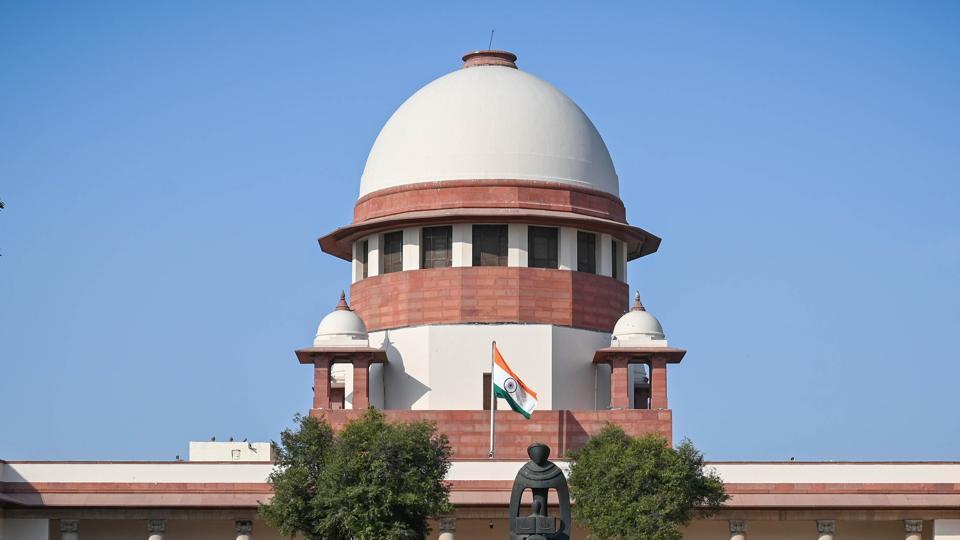
A three-judge bench headed by justice Sanjay Kishan Kaul set the matter for hearing on November 22, indicating that if the petitions before it make out a case to reconsider its past verdict in the Vijay Madanlal Chaudhary case, it will not hesitate to refer the matter to a larger bench.
The July 27, 2022 order, also by a three-judge bench, upheld the ED’s powers relating to arrest, attachment of property involved in money laundering, and search and seizure under the PMLA.
More than 200 petitions were listed before the court challenging Sections 50 and 63 of the PMLA that deal with the power of the agency to summon witnesses and requiring them to give true information since providing false information attracts punishment under Section 63.
READ | Be transparent, not vindictive in probes: SC to ED
The Centre and Enforcement Directorate (ED), represented by solicitor general Tushar Mehta and additional solicitor general (ASG) SV Raju, argued that a judgment of the top court can be reconsidered only in a review petition or curative petition and not in this manner, where a writ petition is entertained at the instance of a citizen seeking a judgment reconsidered. The government claimed reconsidering the past order could have significant repercussions nationwide.
The bench, also comprising justices Sanjiv Khanna and Bela M Trivedi, said, “Prima facie, we feel if there is a lacuna (in the judgment) it can be revisited. This court will show circumspection while looking at its own judgment but there cannot be a bar. Nothing is written on stone that a decision of this court cannot be looked into.”
Mehta said the hearing in these petitions coincided with a mutual assessment review by the Financial Action Task Force (FATF), whose team comprising representatives of seven-member countries will arrive on November 4 to test India’s preparedness to tackle money laundering and terror financing. “It may be in national interest to await the review,” SG said, adding, “The team will arrive on November 4 and putting question mark on the PMLA law has serious repercussions for the country.”
He submitted that such matters must cause “alarm and alert” as the court is not called upon in these petitions to undertake any academic exercise.
The bench said, “Everything is in national interest. Even scrutiny of this law is in national interest,” and responded to Mehta saying, “We are certainly alert but not alarmed. This is not the language to be used for the court.”
The court said judges are not infallible while referring to instances of how the curative petition was admitted at the instance of Centre seeking enhanced compensation claim or the recent decision by a five-judge bench to refer a Constitution bench decision on validity of unstamped arbitration agreements to a bench of seven judges for reconsideration.
Senior advocate Kapil Sibal who represented one of the petitioners told the court that his petition filed by Congress leader Govind Singh, who is the Leader of Opposition in Madhya Pradesh will be the lead petition and along with it, he will rely on three other petitions to highlight the broad canvas of challenge against the July 2022 decision.
The court recorded the objections of the Centre that the current proceedings amount to “misuse and abuse of the process of law” as a review petition against the 2022 judgment is pending before the court filed by Congress MP Karti P Chidambaram and others. The court told Mehta to raise this preliminary objection as part of its submissions on the next date.