
 E-Paper



2 HC chief justices elevated as judges of the apex court
Justice Bhuyan was serving as the chief justice of the Telangana high court and justice Bhatti was the chief justice of the Kerala high court

 Prefer HTon Google


New Delhi The Union government on Wednesday notified the appointment of two high court chief justices, Ujjal Bhuyan and SV Bhatti, as judges of the apex court, a week after the Supreme Court collegium made the recommendation for their elevation. Justice Bhuyan was serving as the chief justice of the Telangana high court and justice Bhatti was the chief justice of the Kerala high court.
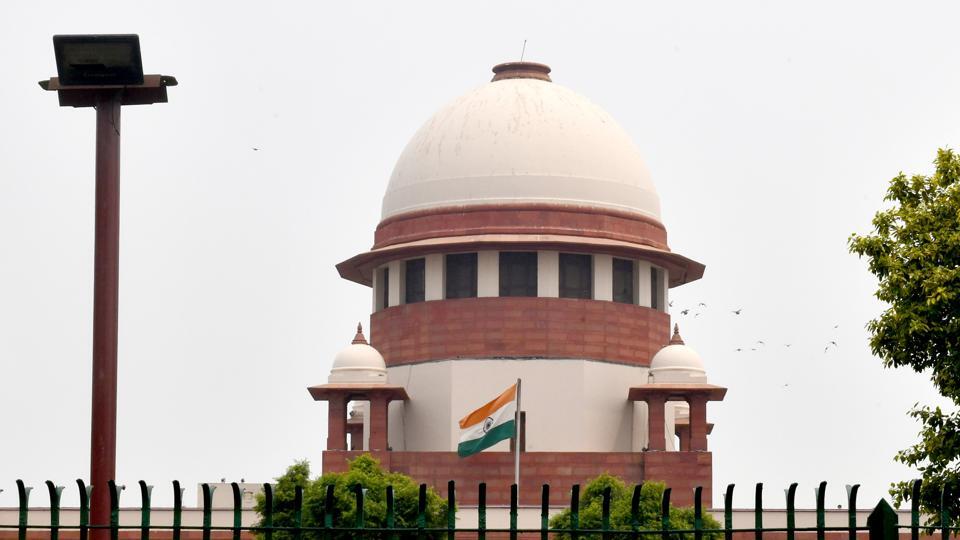
The Supreme Court, which has a sanctioned strength of 34 judges, was currently short of four judges. With the appointments of justices Bhuyan and Bhatti, there will be two vacancies left to be filled. According to people aware of the matter, the collegium is likely to make recommendations for the other two names by next week.
Late on Wednesday evening, Arjun Ram Meghwal, the Union minister of law and justice, tweeted about the Centre clearing the names of justices Bhuyan and Bhatti as Supreme Court judges.
“In exercise of the powers conferred by the Constitution of India, the Hon’ble President, after consultation with the Hon’ble Chief Justice of India, is pleased to appoint the following 02 Chief Justices of High Courts as Judges of the Supreme Court of India - Justice Ujjal Bhuyan; Justice SV Bhatti,” Meghwal tweeted.
Justice Bhuyan’s parent high court is Gauhati while justice Bhatti is from the Andhra Pradesh high court.
“During his long tenure as a judge of the high court, Mr Justice Bhuyan has acquired significant experience in diverse fields of law. He has acquired specialisation and domain knowledge in the law of taxation,” said the collegium’s resolution on July 5, when it recommended the two names.
About justice Bhatti, the collegium said that apart from according representation to the state of Andhra Pradesh, his appointment will provide a value addition in terms of his acquired knowledge and experience.
In making the recommendations to the Union government, the collegium takes into account a variety of factors, including all-India seniority of judges, merit and integrity, representation of high courts, regional representation, and diversity. Apart from the plurality of factors, the collegium resolution added, the judges’ selection body in the apex court also considers appointing persons from marginalised and backward segments of society and focuses on gender diversity and representation of minorities.
On Wednesday, the collegium also released its resolution on the transfer of three high court judges. Notably, the resolutions record the collegium’s rejection of the requests made by all three judges to be either sent to a neighbouring high court or be not transferred at all.
Delhi high court judge Gaurang Kanth was proposed to be shifted to the Calcutta high court by a resolution on July 5. On July 7, he sent a representation for transfer to the high court of Madhya Pradesh or Rajasthan or any other neighbouring state.
“We have carefully gone through the request made by Mr Justice Gaurang Kanth in his representation, and bestowed our thoughtful consideration to the contents thereof. The collegium does not find any merit in the request made by him. The collegium, therefore, resolves to reiterate its recommendation dated 5 July 2023 to transfer Justice Kanth to the high court at Calcutta,” said the resolution released on Wednesday.
Similarly, a request made by Allahabad high court judge Dinesh Kumar Singh to reconsider his transfer to the Kerala high court instead of a neighbouring state was turned down by the collegium.
Punjab & Haryana high court judge Manoj Bajaj requested to stay put at the same high court, but the collegium reiterated its July 5 recommendation to move him out to the Allahabad high court.



