
 E-Paper



‘Will have to listen to youth, believe in their power’, says Union home minister Amit Shah
Shah said Prime Minister Narendra Modi came up with several schemes with the understanding that only the youth can create an India of the future.

 Prefer HTon Google


Union home minister Amit Shah on Saturday said that for India to be developed, one will have to listen to the youth, understand their choice, give an action plan to their aspirations, and believe in their power.
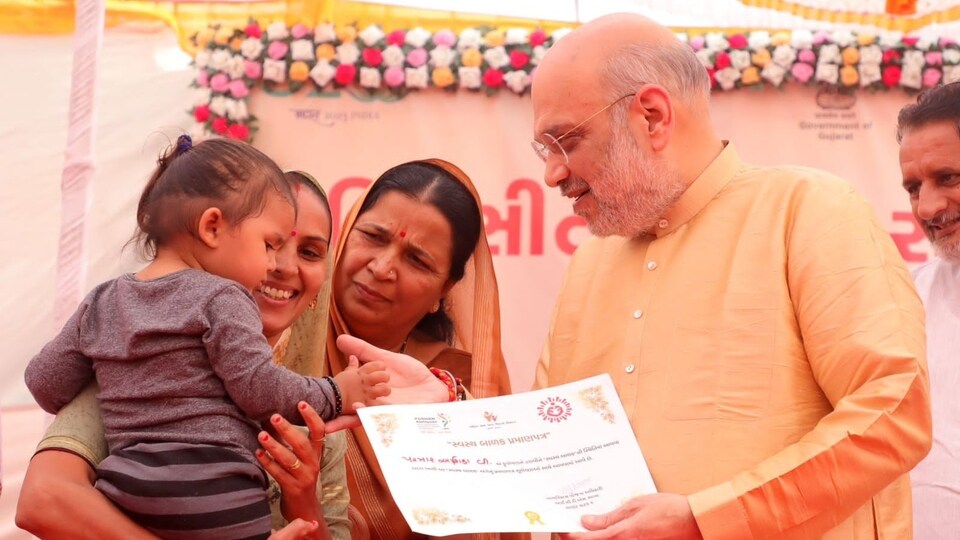
Shah, while addressing the 66th convocation of Sardar Patel University at Anand in Gujarat, said Prime Minister Narendra Modi came up with several schemes with the understanding that only the youth can create an India of the future.
Recalling India's first deputy PM and home minister Sardar Vallabhbhai Patel, the home minister said that abrogation of Article 370, which bestowed a special status on the erstwhile state of Jammu and Kashmir, was a tribute to him, and the previous Congress governments denied the kind of respect that a personality like him deserved.
“If you want a developed India to come to fruition, you will have to listen to the voice of the youth, understand their choice, give an action plan to their aspirations, and believe in the power of the youth,” Shah was quoted by PTI as saying.
“The policy of the Narendra Modi government is to listen to the voice of the youth, understand their choice, give a platform to their aspirations, and believe in their power. Narendrabhai has come up with several schemes with an understanding that only the youth of India can create the India of future,” he added.
‘Without Sardar Patel, India would not have existed’
Shah said it was only after he entered national politics in 2012 and toured different parts of the country that he realised that had Sardar Patel not been there, the country would not have existed (as it is now). Without him, the map of the country was not possible, he said.
“Students might be knowing about the problems of Kashmir and Hyderabad, but if Jodhpur, Junagadh, Hyderabad and Lakshadweep are today parts of India, then it is because of Sardar Patel,” the home minister said.
The home minister said that when he studied historical documents after PM Modi decided to abrogate Article 370, he realised that Sardar Patel accepted the Article giving special status to Jammu and Kashmir with great sadness .
“Narendra Modi abrogated Article 370 to fulfil the imagination of Sardar Saheb It is a matter of sadness that the kind of respect Sardar Patel's works deserved was not given even several years after independence. Until the Congress government ended, he did not even get Bharat Ratna. Hurdles were created in every process of giving him respect,” Shah said.
“When Modi became PM, he established the world's tallest statue of Sardar Patel at Kevadia, which has emerged as a major tourist attraction,” he said.
The 182-metre-tall Statue of Unity, dedicated to Sardar Patel, was inaugurated at Kavadia by PM Modi on October 31, 2018.


