Tokyo 2020 was many kinds of Olympic Games: the Pandemic Games a year delayed, the Protest Games, the Gender Balance Games, the “Can we have two golds?” Games. For Indians, the Neeraj Chopra Games.
Two separate notes rang out around Tokyo as well; distinctly separate but in the future, who knows, perhaps in sync. Along with its push for gender parity, Tokyo 2020 was the International Olympic Committee’s (IOC) first sustained outreach toward youth culture.
Three of its four new disciplines — surfing, skateboarding and sport climbing (the fourth was karate), and a new format (3x3 basketball) belonged to urban culture from streetsides, rooftops and beaches. In 12-year-old park skateboarding silver medallist Kokona Hiraki stood the youngest Olympic medallist and in skateboarding Momiji Nishiya, 13 years, 330 days, the youngest-ever Olympic gold-medallist.
From May 12 to June 23, IOC also ran The Olympic Virtual Series, turning some disciplines (baseball, cycling, rowing, sailing and motorsports events) into video games — a precursor, many believe, to introducing esports by LA 2028.
The choice of Naomi Osaka to light the Olympic flame, while contentious (surely Japan’s greatest female wrestler, 37-year-old Kaori Icho, the first woman to win golds in four consecutive Olympics, deserved to do it), remained a perfect fit for contemporary symbolism. Osaka straddles ethnicities, being half-Japanese, half-Haitian. She is currently the world’s best-known female athlete, the 23-year-old articulating both social causes and inner conflicts.
The flip side of tapping into the zeitgeist is that Tokyo 2020 faced youth resistance and rebellion, which IOC must keep finding new ways to handle.
Tokyo witnessed several athletes making statements, both political and personal, in a follow through of Osaka’s walking out of the French Open as a protest against mandatory media duties when not in the best frame of mind.
PUSHING BACK
When athletes make statements on the world’s biggest sporting stage, they crank things up a notch. Amid the easing of what were once iron-clad rules about protest during the Olympics, teams took the knee before matches. Hammer thrower Gwen Berry, 32, raised a fist before competition, following through on her turning away from the US flag at a medal ceremony at the 2019 the Pan American Games. In 2019, she was not punished but was put on probation by the US Olympic committee.
American shotputter Raven Saunders, 25, delayed her podium protest until the end of the Chinese national anthem out of respect for her gold-medallist rival. She then crossed her arms above her head to represent unity of all oppressed people, and as a tribute to her many communities, as a gay black woman. The IOC suspended its inquiry into whether her gesture had potential breached its rules about political protest, following news that Saunders’s mother had passed away during the Games.
This pull and push witnessed in Tokyo is a fresh extension of a familiar tussle: the old order trying to flex patriarchal muscles in order to command and control athletes, particularly women. It occurred across less-publicised sports and with athletes not as famous as Osaka.
Let’s explain international sporting hierarchy here. Every sport at an Olympics is run by its International Federation, whose bosses are predominantly male and middle-aged or older. In India, that demographic is called Uncles. A July 2021 study by the University of Chichester and Norwegian University of Science and Technology found that from a sample of 60 international sports bodies, only 7% of presidents / chairs and 22% of executive boards were women. The consequences of such unequal numbers are felt most by female athletes.
Even if Tokyo 2020 hosted the most gender-balanced Olympics, athletes, particularly women, always run into Uncles. Just before Tokyo, the European Handball Federation earned international notoriety, slapping a 1,500 Euro fine on the Norwegian women’s team for “improper clothing” at a beach handball event. The women, like the men, wore shorts. The dress code said, “Female athletes must wear bikini bottoms... with a close fit and cut on an upward angle toward the top of the leg.”
Back in Tokyo, it took a ruckus by competing breast-feeding mothers for organisers to announce a change in rules allowing athlete-mothers to travel with infants.
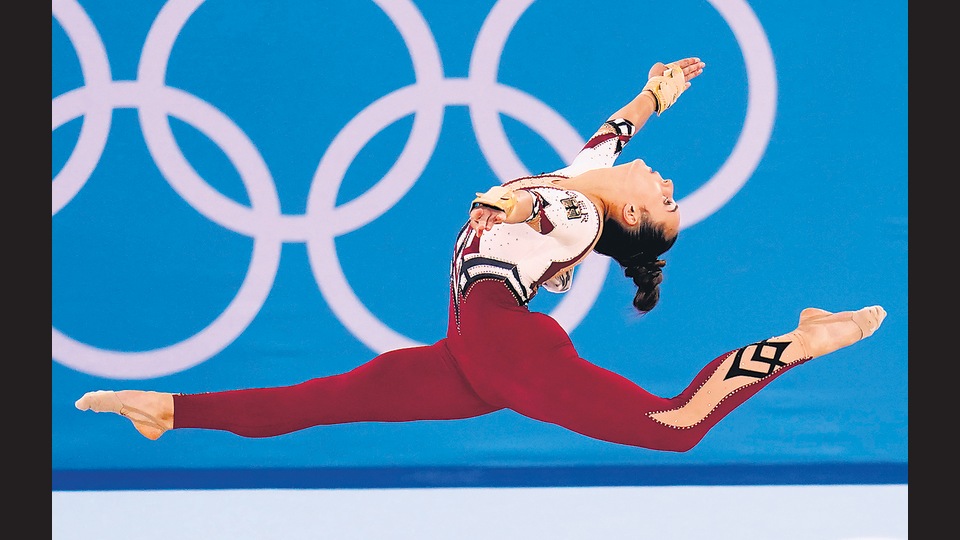
The sight of the German women’s gymnastics team competing in unitards became a ceiling-buster Olympic moment. Unitards are the norm for male gymnasts. Most women wear leotards, with the obsessively policed International Gymnastics Federation 2017-2020 dress code stating, “The leg cut of the leotard may not extend beyond the hip bone (maximum). The leotard leg length cannot exceed the horizontal line around the leg, delineated by no more than 2 cm below the base of the buttocks.”
The German women first wore unitards at the April European championships in Basel, Switzerland, an act of defiance against the sexualisation of their sport. The unitards, said gymast Sarah Voss, was meant to send out a message to young gymnasts who didn’t “feel very safe in every situation” that competing comfortably was their right. Remember, gymnastics is recovering from the most terrifying sex abuse scandal around US doctor Larry Nassar, found guilty of having abused more than 250 female gymnasts under his care across 14 years.
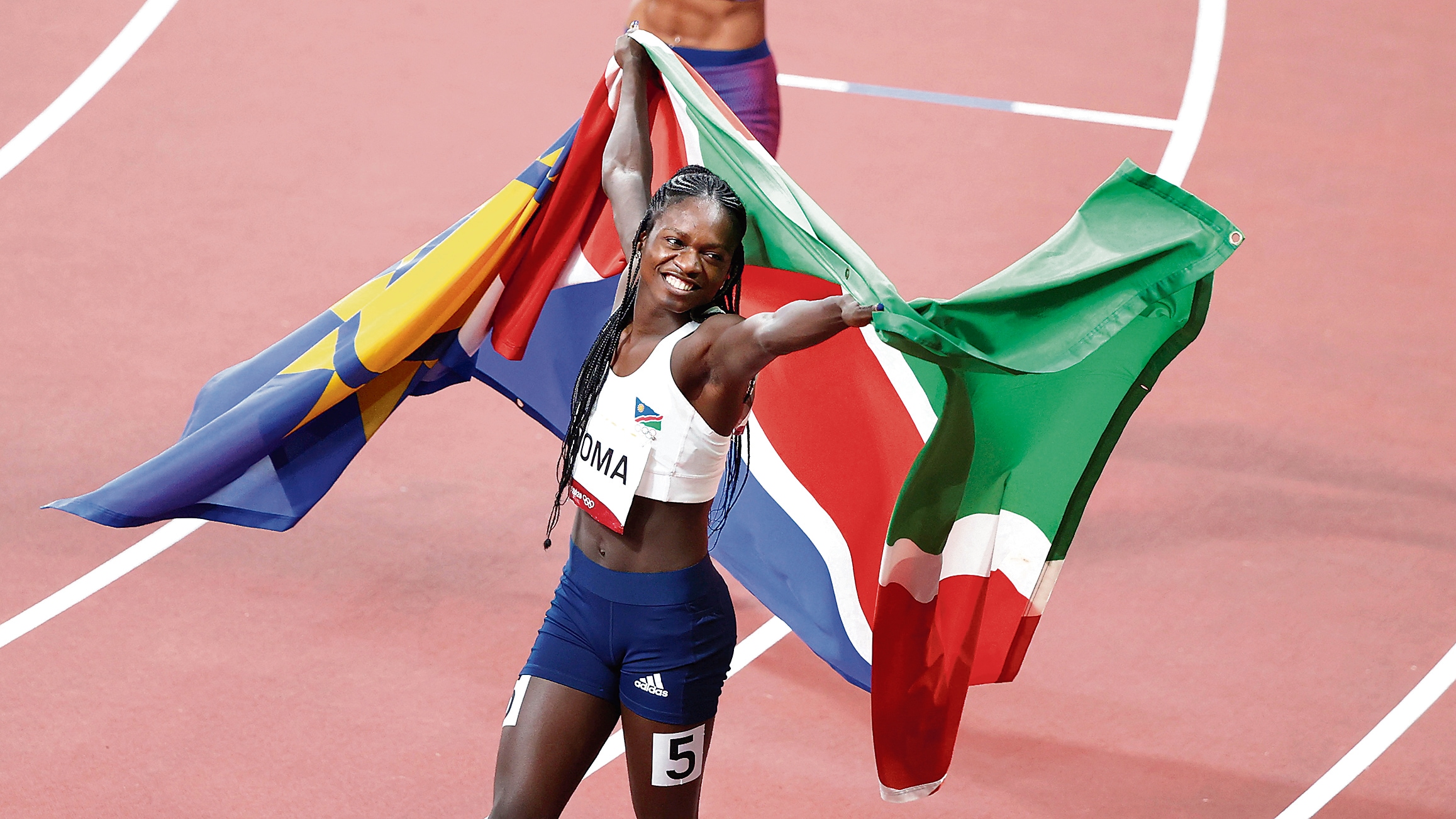
There is a clear dissonance between what Uncles expect and how athletes today respond across many matters. But nowhere is there more ruthless control than on the track, through its controversial testosterone regulations. Two Namibian teenagers, who ran four of the fastest 400m times this year, could only compete in the Olympic 200m because of those rules. When Christine Mboma won the 200m silver in an afterburner burst, World Athletics boss Sebastian Coe said it “vindicated the decision” to impose testosterone regulations, which ban the 400 to 1600m from being run by women with testosterone above a particular level. The levels must be reduced, the rules go on to state, through hormone therapy or surgery. There are no such caps for men.
Olympian gender parity and trendy undertones notwithstanding, as long as Uncles and their twisted canons are around, conflict between generations in sport is a given.

 E-Paper