
 E-Paper



Sheikh Hasina’s polemics underlined how beleaguered the Awami League was
Hasina’s outburst against Prothom Alo and the US, then, is a serious problem.


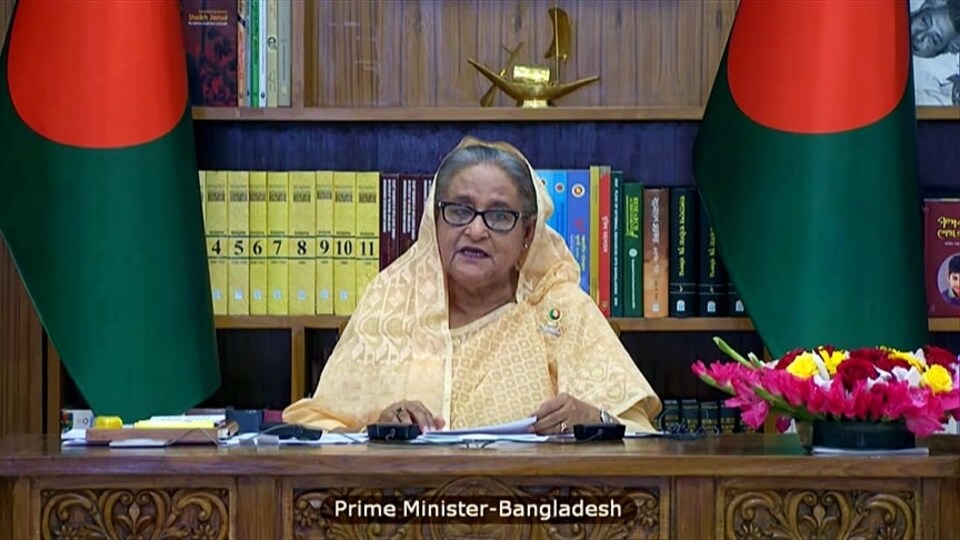
Prothom Alo, an independent Bangladeshi daily, is “an enemy of the Awami League, democracy, and the people of Bangladesh,” thundered Bangladesh Prime Minister (PM) Sheikh Hasina in Parliament last week. She then criticised the United States (US) for “trying to eliminate democracy and introduce a government that will not have a democratic existence.” Far from signalling strength, Hasina’s polemics underline how beleaguered the Awami League (AL) is. From targeting her political rival, the Bangladesh Nationalist Party (BNP), to selectively co-opting Islamists, Hasina is now going after dailies and countries seeking accountability.
With elections due in eight months, it is unsurprising that Hasina wants Prothom Alo, the largest read newspaper in Bangladesh, to fall in line. But her tactics may be backfiring. This is visible in the government’s inability to indefinitely detain the newspaper’s correspondent Samsuzamman Shams who reported on a recent food price hike. Pushback from international institutions and the media appeared strong enough for Hasina to change her mind. Prima facie, such pushback indicates that Bangladeshi civil society is beginning to assert itself.
But closer scrutiny offers pause. Polities undergirded by dynasties, lack of accountability, privileging macro-economic stability over equitable distribution of wealth, a politicised security establishment, and a turbulent history of interventionism, famine, coups, and countercoups don’t become democratic even if multiple mutinies like Samsuzamman’s release make it seem so. That Hasina exhausted her goodwill over a string of electoral controversies and is now caught in a geopolitical contest between China, the US, and India is understood. But what is less understood is how her arch-rival, the BNP’s Tarique Rahman (not his ailing mother and former PM Khaleda Zia), is at the heart of this contest. Tortured and exiled in London since 2008, Tarique faces several charges, including corruption and terrorism. And still, he seems to be a threat to Hasina.
The BNP’s recent protests buried the twin myths that the party has lost its base and that Rahman is ineffective. The BNP’s worker base and leadership bench are intact, and Rahman has a cult following among the hardened BNP cadre. This ensures that despite his centralising tendencies, BNP factions have rallied behind Rahman. But this is where risks kick in because Rahman in Opposition could be different from — if ever — Rahman in power. There are two dilemmas here.
The first is urgent, domestically oriented, and loaded with risk for all Bangladeshis. The BNP, and other Opposition parties, are clear that they’ll not participate in elections under Hasina’s tutelage. Disillusioned by past allegations of electoral malpractices, the Opposition says it has zero trust in Hasina delivering an honest election. But if Hasina refuses to entertain an interim caretaker set-up, this’ll lead to a standoff and the ball will be in the Opposition’s court. Will the BNP’s protests, peaceful till now, then turn violent in informal coordination with the Jamaat-e-Islami? Though none of the stakeholders desires such an outcome, an outbreak of violence in the coming months cannot be discounted. It’ll test Hasina’s ability as PM and Rahman’s as prime opposer to assert control over the street and establish calm. But the risk with such fires is that they’re easier to light and tough to extinguish. Large-scale violence will, almost certainly, destabilise one of India’s last neighbours not currently roiled by a crisis. Whether that’ll lead to a repeat of 2007, wherein the military stepped in (unlikely but not impossible), is hard to say.
But if there is indeed a fair and free election and the BNP wins, then the second dilemma emerges. With its fortunes tied to the West, how will Rahman engage with India? The oddity is that despite being aligned in the Indo-Pacific, India and the US diverge on Bangladesh. Both expect Dhaka to limit the Chinese footprint. But as Hasina’s tenure demonstrates, this is easier sought than done. Bangladesh’s precarious economic situation means that Rahman in power might struggle to deliver on these expectations. But even if he succeeds, he has other struggles.
India prefers Hasina not because of emotional reasons but because New Delhi enjoys leverage over her. India has little leverage over Rahman in Opposition, and, thereby, limited confidence in his rise. This will be a problem for Rahman in power because, as history shows, a government’s longevity in Dhaka is inversely proportional to anti-Indianism. Western powers might help Rahman’s rise to power but can’t promise sustenance.
From guaranteeing protection to Hindus, sidelining Pakistan-linked Islamists, denying sanctuary to Northeast rebels, and limiting the Chinese footprint, the list of India’s asks is specific. The BNP’s record on most, if not all, of these aspects, is complicated. It’ll be an uphill task, if not an impossibility, for Rahman to convince New Delhi that he’s serious about respecting India’s interests without limiting Dhaka’s autonomy.
Hasina’s outburst against Prothom Alo and the US, then, is a serious problem. This is not because the US is hypocritically using the human rights and democracy cards to pile pressure on a lesser power or because India risks losing an ally in Dhaka. A peaceful transition of power is in everyone’s interest, barring perhaps Beijing. China has made good of instability in Myanmar and might see instability in Bangladesh as an effective method to keep the US away and India off balance. The best, and perhaps the only way to prevent this is to support a serious, urgent dialogue between Hasina and her opponents.
Avinash Paliwal teaches at SOAS University of London and is the author of My Enemy’s Enemy: India in Afghanistan from the Soviet Invasion to the US Withdrawal (New York: Oxford University Press, 2017)
The views expressed are personal