
 E-Paper



Pride Matters | Finding the queer icon in Sridevi: Losing control is hard work
I did a deep dive into the world of Sridevi and Madhuri, reflecting on the cinematic universes they created, and on how their movement sat in my own body. Here's what I found:

 Prefer HTon Google


What lessons on moving through the world might we harvest from the film dances of Sridevi and Madhuri Dixit? A few days ago, I used Instagram to ask friends a highly charged question: Sridevi or Madhuri Dixit?
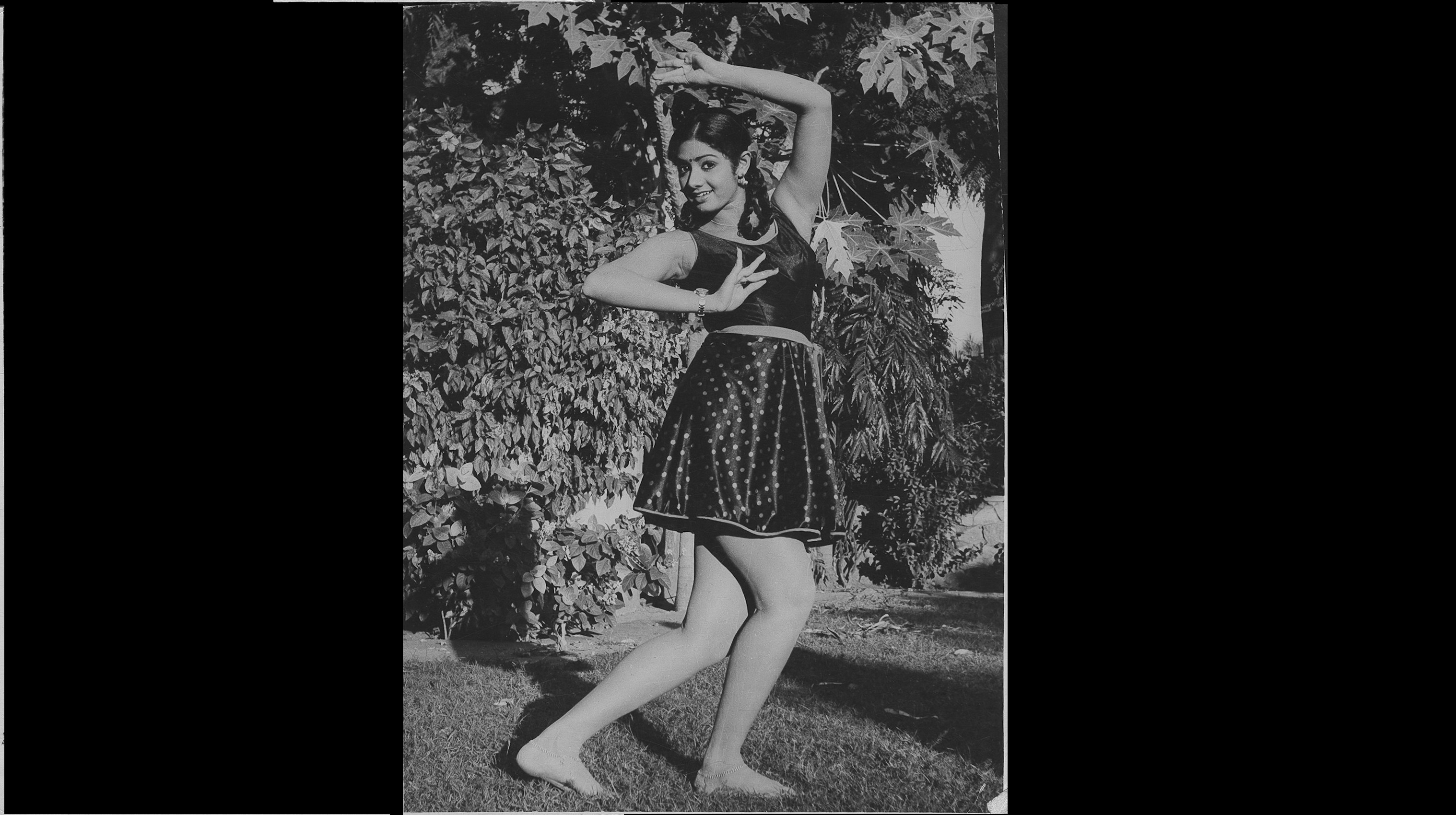
Specifically, I was interested in how they were perceived as queer icons. The responses weighed overwhelmingly in favour of Sridevi, though both actors had passionate fans. Sridevi created surreal and absurd figures, who are rather like the theorist Donna Haraway’s cyborg in their rejection of rigid taxonomies or boundaries. She would take camp 80s costuming to new heights as she portrayed unreal characters doing unreal things in unreal spaces.
Madhuri Dixit was the fresh-faced girl-next-door, whose characters stood out for tiny sparks of rebellion, yet often returning, ultimately, to safe, plausible conformity. Her dancing, though, was singled out for praise, for its fluidity and effortlessness, whether she danced for a lover on a dark night or for a crowd of appreciative people. In dancing, she was at home in her body and at ease with the world. Dance like her, and perhaps you could find a home in the body too, feeling utterly secure in your own skin.
Over the weekend, I did a deep dive into the world of Sridevi and Madhuri, reflecting on the cinematic universes they created, and on how their movement sat in my own body. Growing up in the 90s, I was obsessed with embodying the exaggerated femininity of Bollywood dancing, and each filmic reference — a televised song, a photoshoot in the Bombay Times, or a magazine interview with an actor — assumed an amplified significance.
Though I had little access to full-length films and was expected to devote my time to schoolwork, Bollywood was ubiquitous enough for fantasy embodiments to go unchallenged and unnoticed. Aged eight, I channelled my inner Madhuri in a spirited but not very age-appropriate performance of mera piya ghar aaya (my lover is home) from Yaarana (1995) for an enthusiastic audience of family elders on Raksha Bandhan. This hip-thrusting, bosom-heaving femininity was, quite thrillingly, at odds with how I was instructed to behave and dress in school, the contours of my body obscured by a pleated pinafore that mandatorily ended two inches below the knee.
I was never proficient with the lyrics and the steps, and sought to make up for the absence of textual and choreographic form with an excess of speed. Clad in limp nightclothes, I manifested an umbrella-cut ghagra whirling around me as I spun, the speed of my movement keeping gravity at bay. When I stopped, there was a thrilling and unfocused transition between the end of the movement and the reappearance of gravity, as I struggled to find my balance. Sometimes, to recover, I would spin the other way, almost as if I were unspooling myself from the fantasy I had just embodied. Bollywood dancing, in its ubiquity and unfamiliarity, offered an escape from steady composure and poised verticality.
As an adult, this recklessness is what I look to Bollywood dancing for. My primary movement training is in the classical dance style of Odissi. Except in snippets of stylised movement or narrative, Odissi is relentlessly vertical, made up of a vocabulary of movements across space — footwork, spins, gaits, and leaps.
Your relationship to gravity is reinforced as you spring out from the earth to project a performative presence, outwards and upwards, your feet stamping sharply to punctuate this relationship and tether you to gravity, balance, and control. Conversely, “Bollywood dancing”, for me, as an evolving pastiche of borrowed and improvised movement, offers a counterpoint to the pressures of verticality. Danced mostly in familiar or private spaces, it affords a heady loss of control. The body is constantly playing catch-up, simultaneously embodying and feeling the after-effects of that embodiment.
I write this after a pandemic that has given us a new awareness of how our bodies perform social codes. Through instruction and observation, we learn how to be in social spaces. Stay at a distance when you speak to someone. Spread out your arms and stand still as you are frisked at security points. Stand up for the national anthem. We are constantly being told how to occupy space. The loss of verticality, then, is the possibility of temporarily resisting this relentless instruction.
I am mindful of my privilege in finding safe spaces for the loss of verticality and control within Bollywood dancing. Yet, I am also fascinated by how my body can shake off decades of somatic, social and cultural conditioning to move recklessly. What does it mean to rehearse recklessness as resistance?
Classical dance spends a great deal of time training the body to move effortlessly. Performance is framed as the pointed absence of effort; it takes a lot to be dancing, but the audience needn’t know that. Madhuri’s dancing epitomises that effortlessness; it looks so easy and feels so good, even if your body doesn’t hold the movement quite like hers does.
Sridevi is all about the effort. You see the toll the dancing takes on her body as she spins deliriously in Chaalbaaz, the movement continuing to reverberate through her body as she comes to an abrupt stop after slapping her uncle mid-performance. This sense of studied effort persists in the awkwardness of Hawa Hawai from Mr India (1987), where she pretends to be a Hawaiian dancer. She seems to try out the movement instead of dancing it, and that highlights how fragile the pretence is. There is a treacherous chasm between the actor and the character she portrays, and you are constantly reminded of it — in how she crashes into guests at the party, or teeters forwards and backwards, testing the limits of her balance.
The loss of verticality, of human-centric control, might also be a means of considering interdependence and shared ecologies, beyond human exceptionalism. Many humanities scholars, including the British anthropologist Tim Ingold, speak of “leaky bodies”. We are driven by action, Ingold argues, and the moment we stop doing, or breathing, we’re done — bluntly put, dead.
I was reminded of this leakiness as I blitzed through decades of Sridevi’s films in the span of a few days. In Nagina (1986), Sridevi plays an icchadhari nagin (shape-shifting cobra) who falls in love with the man she set out to kill. On hearing the been (a wind instrument), she is drawn back into her snake form, her eyes changing colour as her human body accommodates a tussle between the happy wife and the vengeful serpent. She is the leaky body of Ingold’s writings, seamlessly reconciling past and present, or the human and non-human.
To leak is to give of oneself, and as a dancer, I am drawn to what it takes to move as she does. My body unconsciously goes through the motions of finding out; my abs crunch as Sridevi yanks herself up from a deep backbend, and I sense the tautness in my upper back when she slithers across a length of the carpet. Losing control is hard work.
Ranjana Dave is an artist and writer based in New Delhi. She is the editor of Improvised Futures: Encountering the Body in Performance (Tulika Books, 2021)
This is part of a special HT Premium series, spanning personal essays, reportage and analyses, to mark Pride Month
The views expressed are personal


