
 E-Paper



RSS: An ambitious agenda for the future
Dattatreya Hosabale’s appointment as the Sangh’s general secretary comes at a time when the RSS is planning to expand its organisational footprint, and has to reconcile diverse views within the family


The Akhil Bharatiya Pratinidhi Sabha (ABPS), the Rashtriya Swayamsevak Sangh (RSS)’s parliament, at its annual meeting, selected a set of senior officials who will manage ambitious goals that will impact the functioning of the RSS over the next decade and beyond. The most prominent among them is the new general secretary charged with the day-to-day operations of the RSS, the 66-year-old Dattatreya Hosabale, formerly one of its six joint general secretaries. Three of the remaining five joint general secretaries are new and, like Hosabale, relatively young and likely to serve for 10-15 years to implement the RSS’s ambitious agenda. The RSS has an unwritten understanding that officers should consider retiring at about 75.
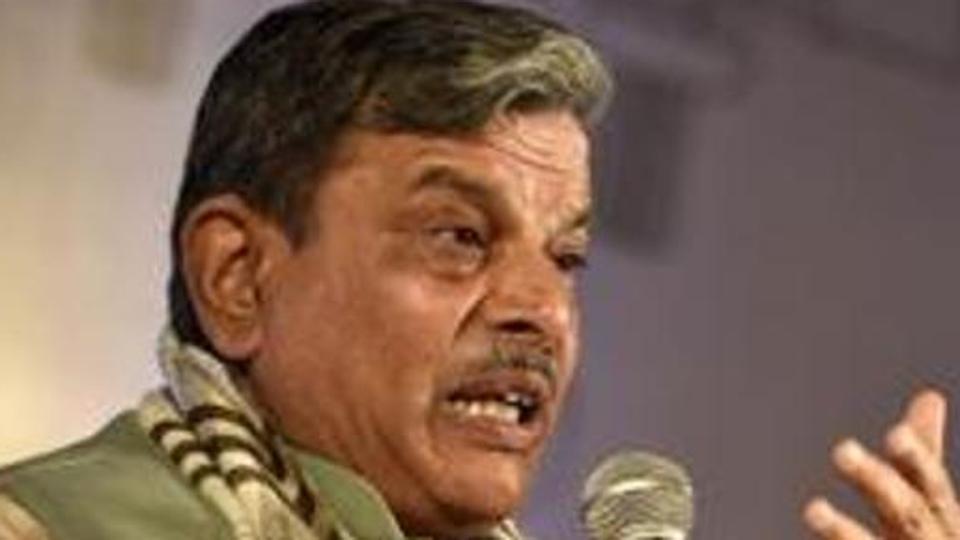
Hosabale’s years at the national level have given him a close familiarity with the broad range of activities — and internal debates — within the 34 members of the RSS family of affiliated organisations that cover fields as diverse as education, labour and politics, among others, and with their senior personnel, including the prime minister, himself a former RSS full-time worker, as well as the senior Bharatiya Janata Party (BJP) leadership, the large majority of whom are RSS members.
Hosabale himself replaces the 73-year-old Suresh Bhaiyyaji Joshi who moves to the Karyakari Mandal, the executive council of the RSS, as does Ram Madhav, a former spokesperson of the RSS who was seconded to the ruling BJP in 2014 as a national general secretary. Joshi, following four three-year terms as general secretary, opted to retire for health reasons. National officials of the RSS — which demands an arduous travel schedule to give them an opportunity to adopt policies that meet the wishes and demands of the grassroots — require good health and now, even more so, given the group’s future ambitious agenda.
Decisions in the RSS and its affiliates are by consensus, and so the national leadership needs to have a comprehensive understanding of important issues at the local level, such as the current debate over agricultural reform, where there are significant differences of opinion within the RSS. This form of decision-making has made the RSS both cautious about change and remarkably free of internal fissures.
Hosabale, like Joshi and most national RSS functionaries, is a full-time RSS pracharak, multilingual and with a college education, a Master of Arts in English Literature. He has been affiliated with several activities of the RSS — as a member and later organising secretary of its student branch, the Akhil Bharatiya Vidyarthi Parishad (while active, he was imprisoned for opposing the 1975-77 Emergency); then in 2003 as the RSS’s joint intellectual secretary (Sah Baudhik Pramukh), in charge of the daily discussions held in the thousands of its daily meeting places across the country; and then as joint national secretary of the RSS in 2009 when Mohan Bhagwat was selected to head the RSS.
During Hosabale’s two-day September 2018 visit to the Washington DC area, he demonstrated a desire to hear diverse political opinions about South Asia and its place in the world. I was asked to organise briefings for him on United States (US) foreign policy at my institution, the School of Advanced International Studies of Johns Hopkins University, as well as chair a meeting on Capitol Hill at which he spoke on international relations from the perspective of the RSS. Many of the participants were pleasantly surprised by his request for briefings from a range of American foreign policy experts. One frequent comment to me from the various audiences was that he seemed open to new ideas.
Mohan Bhagwat’s annual Vijayadashmi speech in October 2020, which is meant to highlight the organisation’s mission for the future, set the ground for the RSS agenda over the next decade or so. It gave primacy to overcoming the Covid-19 pandemic and supported the government’s lockdowns as necessary. India was praised for fulfilling its historic notion of “Vasudhaiva Kutumbakam (the world is one)” by dispatching serums and medical equipment to other countries. But the situation has since deteriorated with the second wave of Covid-19 hitting India.
Bhagwat’s speech pointed out the adverse economic and educational consequences of the lockdown and praised the RSS family of organisations for providing food, shelter, and medicines on a massive scale. The RSS leadership was aware of the adverse consequences of the pandemic on its activities. Its daily shakhas (meeting sites) closed nationally when India locked down and only began to reopen in November 2020; the ABPS report in March 2021 claimed that some 90% were functioning, though the number of members participating is still relatively low. Its affiliated school system, the largest private school system in the country, was also shut down and is only beginning to be reopened. Its sewa (welfare) activities still require massive effort, especially with the recent surge of the pandemic. ABPS recognises that domestic and national security require reducing the threat.
Running through the document is a barely disguised sense that the pandemic had its origins in China and that Chinese assertiveness in eastern Ladakh may have been timed to exploit a perceived Indian weakness.
The effort to revive — and expand — the RSS presence has resulted in a plan to establish shakhas in every region and every mandal (local administrative centre) within three years. This requires a special effort in the south and in rural areas where the RSS is relatively weak. It will also need to expand officer training to prepare for the anticipated growth in demand (over 6,000 full-time workers now serve in the RSS, its affiliates and overseas).
Still another effort at expansion is the campaign to raise money for the proposed Ram Temple in Ayodhya, an effort led by the affiliated Vishwa Hindu Parishad. Thousands of RSS members have been recruited to help. That effort has captured public attention, with a doubling of the initial goal of ₹1,100 crore. And another key mobilisation effort is directed at the forthcoming 100th anniversary of the founding of the RSS in 1925. The RSS also intends to involve itself in efforts to address the scarcity of water and improve soil quality with a range of pilot projects from April 13.
Both the Vijayadashami speech and the reports of the proceedings of the most recent ABVP conclave focus on strengthening the family, which the RSS considers the source of stability. This range of activity plays to Hosabale’s organising capacity and is certainly a reason that the senior leadership turned to him and other activists selected to lead the RSS over the next several years.
Walter Andersen is a recently retired member of faculty at the School of Advanced International Studies of Johns Hopkins University, and the co-author of The Brotherhood in Saffron: The Rashtriya Swayamsevak Sangh and Hindu Revivalism and The RSS: A View to the Inside
The views expressed are personal