
 E-Paper



Women voters lead the fight against misogyny
The exclusion of women is one part of the problem. The other is the inclusion and patronage of men accused of serious gender crimes, including rape.

 Prefer HTon Google


A prestigious constituency in the Capital is offering voters a curious choice: A first-time woman candidate versus a man once accused by his wife of physical violence.
It’s infuriating. Do political parties think so little of women that a man accused by his wife of domestic violence is still considered a suitable candidate? To be sure, an accusation is not a conviction. That is the logic Union finance minister Nirmala Sitharaman used to explain why the BJP gave the Kaiserganj ticket to Karan Bhushan Singh, the son of former Wrestling Federation of India president Brij Bhushan Sharan Singh against whom a Delhi court has ruled there is “sufficient material” to frame charges of sexual harassment.
In Karnataka, the Bharatiya Janata Party (BJP) is scrambling to contain the fallout of charges of mass rape against a leader of alliance partner Janata Dal (Secular), Prajwal Revanna. Prime Minister Narendra Modi, who had personally campaigned for Revanna, has raised questions about the timing of the leak. Certainly, there are other valid questions such as what is being done to protect the identity of the 400 or so women in the videos. But the primary question remains: If Prajwal Revanna’s reported sexual perversions were known (his driver says he alerted the Karnataka BJP leadership), how on earth did he even get the ticket? Sexual assault rumours have also dogged the Trinamool Congress (TMC) and its strongman, Sheikh Shahjahan in Sandeshkhali, who’s being investigated by the CBI. The TMC claims that the charges are cooked up and a “conspiracy”.
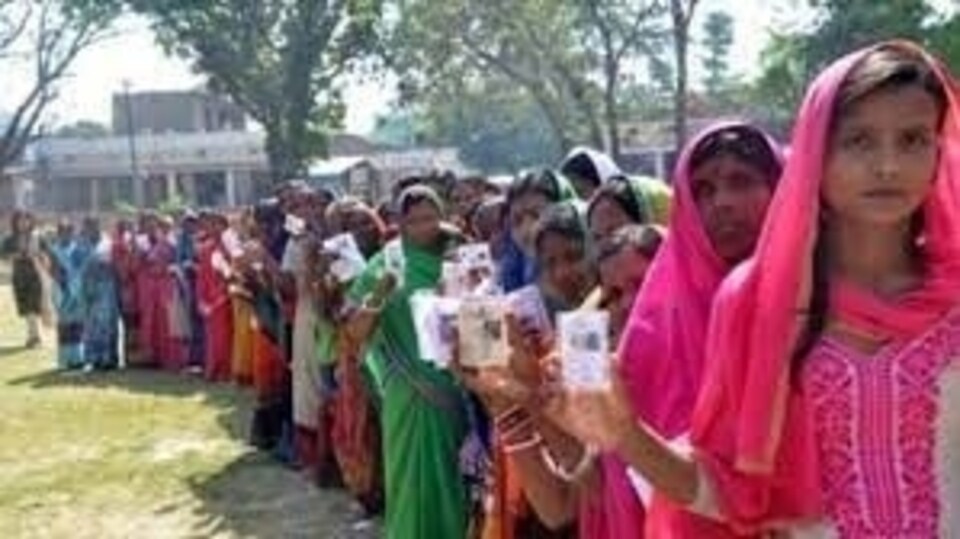
In no election has the woman voter mattered as much. Women have breached the gender gap in voter turnout and also exercised greater agency. In 2019, 81% said women had voted for their preferred candidate.
Unlike the United States, where gender issues, in particular abortion, are the big ticket and a highly polarising issue, in India, “women’s empowerment” is the song every party sings. “India stands in contrast to the emerging global trends on gender,” said Akshi Chawla, curator of WomenLead, which tracks the progress of women in politics globally. “In several countries, gender and women’s rights are becoming polarising political issues. In India, nearly all parties want to target and attract women’s votes,” she added.
Yet all the sops in the world cannot mask the misogyny at the core of most major political parties. In the third phase of the ongoing general elections, parties collectively fielded just 123 women, among a total of 1,352 contestants. That’s less than the 172 candidates who have serious criminal charges against them — 38 with cases related to crimes against women, according to the Association of Democratic Reforms.
The exclusion of women is one part of the problem. The other is the inclusion and patronage of men accused of serious gender crimes, including rape. It tells us both of the desperation to win at all costs and the moral vacuum that these charges aren’t considered serious enough to merit being booted out.
There can be only one answer by women. Make your annoyance known at the voting booth. Demand better because we deserve better.
Namita Bhandare writes on gender. The views expressed are personal


