
 E-Paper



Fenced out: Bhavani Devi and a shattered Olympic dream
The world no.34 believes that she is a better fencer now than she was at the Tokyo Games but things don't always add up

 Prefer HTon Google


Bhavani Devi’s Olympic qualifiers are done, she lives a two-hour drive away from Paris and the Games are in little over two months. But she is not going to be in it. It’s a reality the Indian sabre fencer is struggling to come to terms with.
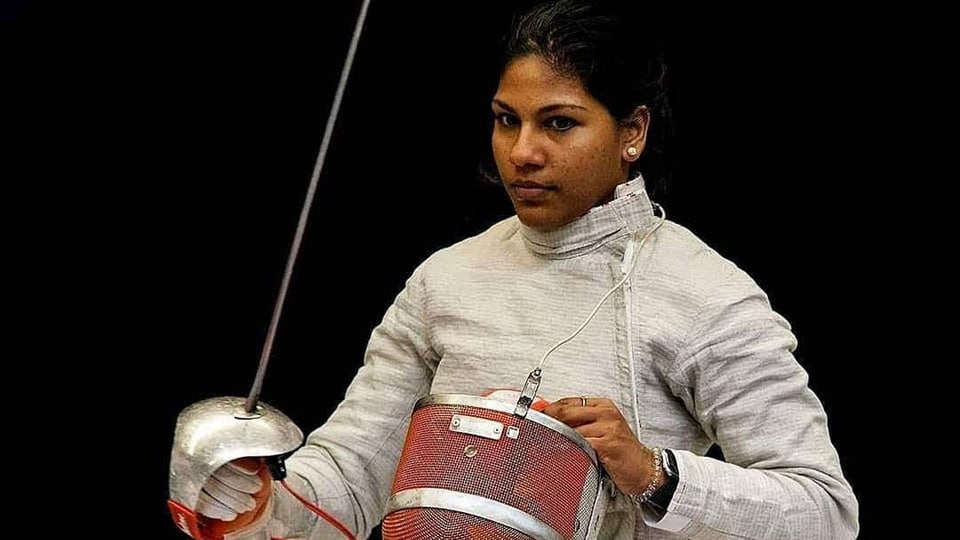
“It’s really painful,” Bhavani told HT, “It’s not easy to just forget and focus on the next competition. I’m trying. I’m trying to let it pass.”
Bhavani trains five days a week. On weekends, her limbs are usually so sore from 35 hours of lunging, thrusting, parrying and ripostes, that she can barely get out of bed. It's also her preferred way of coping with the lost opportunity.
Since her debut at the Tokyo Olympics, the 30-year-old Indian fencer has moved countries, switched coaches, barely visited home in India and immersed herself in training. It was all supposed to lead up to one, grand moment – the 2024 Paris Olympics.
The Asia Oceania Zonal qualifiers in late April was to be her ticket to Paris. “Everybody was confident of my chances. During the competition, coaches, players came up to me and said that they were certain I would win. I believed it myself too. It’s a bit stressful to be in a position when you’re expected to win and it’s also your final shot. I just dropped to the floor after my (semifinal) loss and couldn’t get up for like five minutes. It was very hard for me. I still haven’t been able to shake off that feeling.”
Three years ago, Bhavani stirred a nation awake to her sport. She became the first-ever Indian fencer to qualify for an Olympic Games and took to the yellow piste in the Makuhari Messe Hall in Tokyo in her tricolour painted mask. Indian sports fans scrambled out of bed to watch her bout live in the early hours in the country. The sabre fencer won her first bout and lost in her Round of 32 match to fourth seed Manon Brunet.
After Tokyo, Bhavani shifted her training base from the Italian port city of Livorno to Orleans, the French city Joan of Arc famously liberated from English siege. She has been training under Christian Bauer since, who’s coached more than his fair share of Olympic medallists. The association has completely changed her understanding of the sport, she believes. She touched her career-highest ranking of world No 32 in 2022-23 and is currently placed two spots below.
“That’s what makes it (missing out on the Olympics) harder,” she said, “I’ve improved a lot since Tokyo. Training alongside some of the world’s top fencers here has made a difference. Of course, there’s no one better than coach (Bauer) in techniques. I’ve learnt so much. Earlier when I’d attack, if it didn’t work the first time, I’d repeat the same action a second time. The plan was entirely centred around me – doing my defence, movement, distance. But now I’m learning to weave in a lot more techniques, provocation and working off my opponent’s repertoire.”
In 2023, Bhavani became the first Indian fencer to win an Asian Championship medal. Before she lost to Uzbekistan’s Zaynab Dayibekova in a close semifinal for a bronze, she pulled off a stunner against reigning world champion Misaki Emura of Japan.
Bauer’s academy is bursting with some of the top names in the game. Interestingly, world No 2 Manon, who ended Bhavani’s Tokyo Olympics run is now one of her closest friends, sparring partners and a stand-in coach for tournaments at times. “Earlier we used to barely speak,” Bhavani said, “Now, we spend five days a week training for seven hours and we have become good friends. She’s a wonderful person and very competitive even in training. During some tournaments she’s even been with me for matches doubling up as coach.”
Bhavani suffered an adductor tear in October last year, possibly brought on by a punishing calendar. “I carried the injury till January this year and though I wasn’t ready I still went for competitions. Sometimes when your body is tired, you have to push through. Sometimes it’s a signal to rest. We may not always know the difference.”
For the upcoming Olympics, no Indian fencer will take the piste at the iconic Parisian venue, Grand Palais. For a sport already consigned to the margins of attention in the Indian sporting landscape it can seem like a cruel blow.
“To live in France for three years and not be able to compete at Grand Palais just seems so hard. Seven athletes from my academy will be competing. I want to go to Paris and watch a few of the fencing matches and cheer for Indian athletes in other Olympic sports. The tickets though seem very expensive.”
Bhavani has to wait four more years for another shot. She’ll be 34 at the next Olympics. Five of the top 10 female sabre fencers are aged 30 or above. The oldest among them, 38-year-old Sofya Velikaya has medalled at the last three Games. Bhavani believes this wasn't her last chance. The pain though still keeps her awake and the proximity only turns the knife in.


