
 E-Paper



India miffed at Colombo for allowing PLA satellite tracker ship in Hambantota
A Luyang class guided missile destroyer with Type 071 Landing Platform Dock (LPD) is also transiting the Indian Ocean and headed towards the Chinese base in Djibouti on the eastern seaboard of Africa.

 Prefer HTon Google


Under the cloak of a research and survey vessel, a Chinese Space and Satellite Tracking ship Yuan Wang 5 is headed towards China leased port of Hambantota in Sri Lanka on August 11 despite serious objections from Indian Navy.
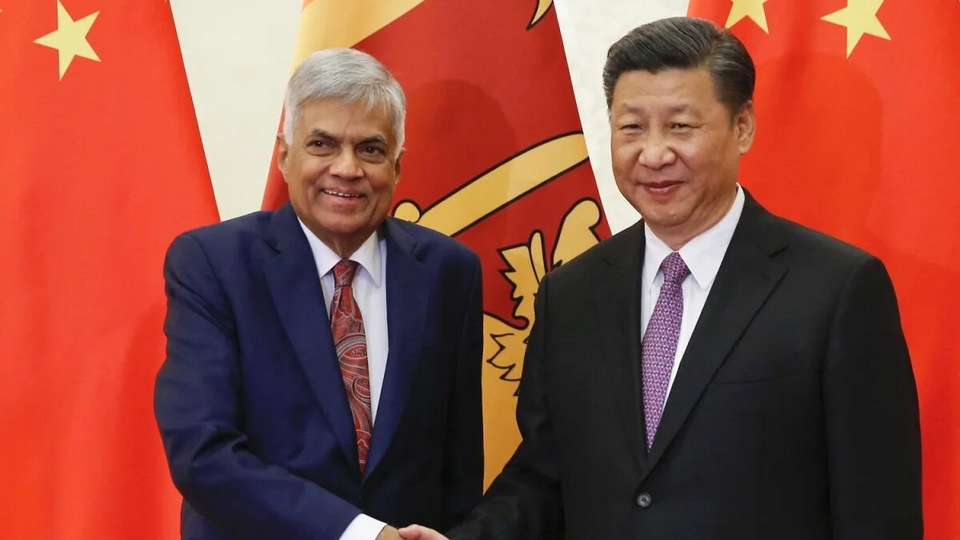
A Luyang class guided missile destroyer with Type 071 Landing Platform Dock (LPD) is also transiting the Indian Ocean and headed towards the Chinese base in Djibouti on the eastern seaboard of Africa.
The Sri Lanka regime under Ranil Wickremesinghe has given approval to satellite tracker military ship Yuan Wang 5 to dock at Hambantota from August 11 to 17 for refueling, rest and recreation, and supplies. Incidentally, the Hambantota Port was given to China for a 99-year lease by Ranil Wickremesinghe in 2017 as Prime Minister.
It is understood that Sri Lanka was forced to allow the Chinese ship entry into Hambantota port after Beijing’s envoy to Colombo muscled his way around with the Wickremesinghe regime and made it clear that denial of permission would have impact on bilateral ties.
Despite Indian Navy raising objections to the docking of the military surveillance ship, Sri Lankan Cabinet Spokesperson on August 2 went on record stating the strategic surveillance ship was only coming to refuel. “President told the cabinet that diplomatic efforts will be made to work with both the countries so as to not create any issues,” said spokesman Bandula Gunawardana.
Whatever be the diplomatese used by Colombo to justify the entry of the Chinese ship into Hambantota, fact is that Sri Lanka owes more than 10 per cent of its external debt to China as it burrowed money at high interest rates from Chinese Exim Bank to fund white elephant projects like Hambantota port and international airport. Simply put, Sri Lanka cannot afford to annoy China as Colombo like Islamabad is a brand ambassador of Belt Road Initiative (BRI) of President Xi Jinping.
India, on its part, has not taken kindly to this move by Sri Lanka as the military ship is also involved in ocean mapping, which is critical to anti-submarine operations by the Chinese PLA Navy. The virtual rebuff to India comes at a time when the Modi government has gone out of its way to support Sri Lanka during on-going economic crisis by doling out more than USD 3.5 billion for buying food, fuel and cooking gas supplies.


