
 E-Paper



India-US 2+2 meeting to be held in November
The upcoming meeting will be between India’s external affairs minister S Jaishankar and defence minister Rajnath Singh and US secretary of state Antony Blinken and defence secretary Lloyd Austin.


The next round of India-US 2+2 ministerial dialogue is expected to take place in November and “there is some talk” of a summit meeting between Prime Minister Narendra Modi and President Joe Biden on the sidelines of the first in-person summit-level meeting of the leaders of the Quadrilateral Security Dialogue (Quad).
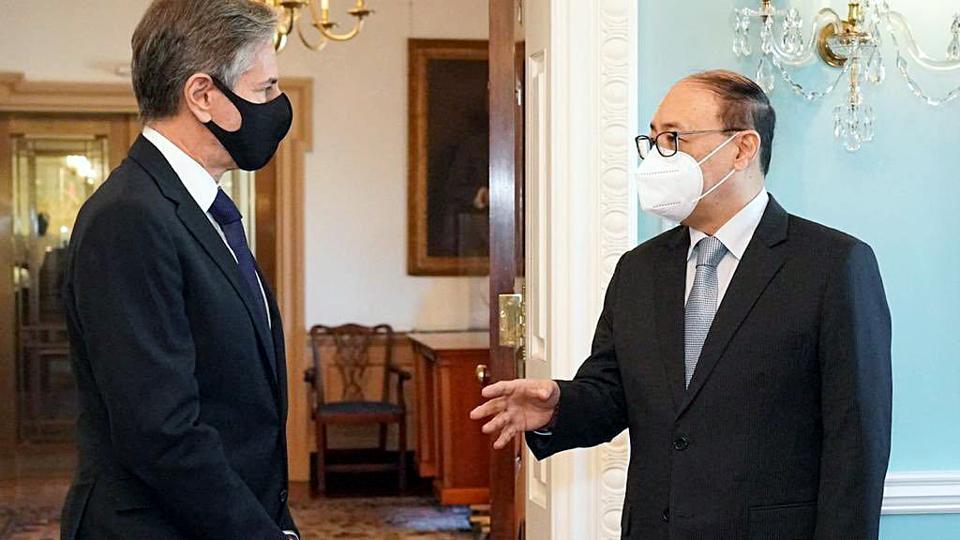
Indian foreign secretary Harsh Vardhan Shringla told reporters on Friday, at the end of two days of meetings with US officials and business leaders, that the dates for the 2+2 are still being discussed. He also spoke of the tentative bilateral summit as he qualified it as something under discussion.
It’s US’s turn to host the annual meeting of the foreign and defence ministers of the two countries and it will be the first meeting of this format with the Biden administration. The last meeting was held in New Delhi October 2020 with MikePompeo and Mark Esper, secretaries of state and defence in the Trump administration.
The upcoming meeting will be between India’s external affairs minister S Jaishankar and defence minister Rajnath Singh and US secretary of state Antony Blinken and defence secretary Lloyd Austin. All four of them have had in-person meetings before; and several times with Jaishankar and Blinken.
An in-person summit of the Quad - with leaders of Japan and Australia - is also being discussed following up the virtual meeting in March. Modi and Biden could meet for their first bilateral at the time according to discussions currently under way.
Also, President Biden’s special envoy on climate John Kerry is headed for India, for his second visit in this capacity.
Shringla met almost the entire leadership of the state department including secretary of state Blinken and deputy secretary of state Wendy Sherman, and top leaders at the department of defence and the national security council at the White House.
The situation in Afghanistan figured in all his conversations predictably and the foreign secretary said the US position of “wait and watch” tracked closely with India’s own approach.
Shringla said the US has adopted a “wait and watch policy” and that they will calibrate their actions depending on how the situation evolves. “That’s also similar to what we ourselves conveyed in the parliamentary briefing that was held a few days ago. We said we will have a wait-and-watch policy, which does not mean you don’t do anything,” Shringla said, adding, “It simply means … the situation is very fluid on the ground, you have to allow it to see how it evolves. You have to see whether the assurances that were made publicly are maintained on the ground.”
India’s ask list, the foreign secretary said, was as “we have told them that we want them to be cognisant of the fact that there should be no terrorism that emanates from their territory against us or other countries. We want them to be mindful of the status of women, minorities and so on so forth.”
The foreign secretary was referring to repeated assurances the Taliban gave Indian diplomats in their first official contact some days ago after the insurgent group took control of the country.