E-Paper



President Muizzu’s party takes convincing lead in Maldives parliamentary election
Muizzu's party winning could spell further trouble for India’s relations with the Maldives.

 Prefer HTon Google


The convincing lead established by Maldives President Mohamed Muizzu’s ruling coalition in the parliamentary election on Sunday could spell further trouble for India’s relations with the Indian Ocean archipelago, already under strain over Male’s tilt towards Beijing.
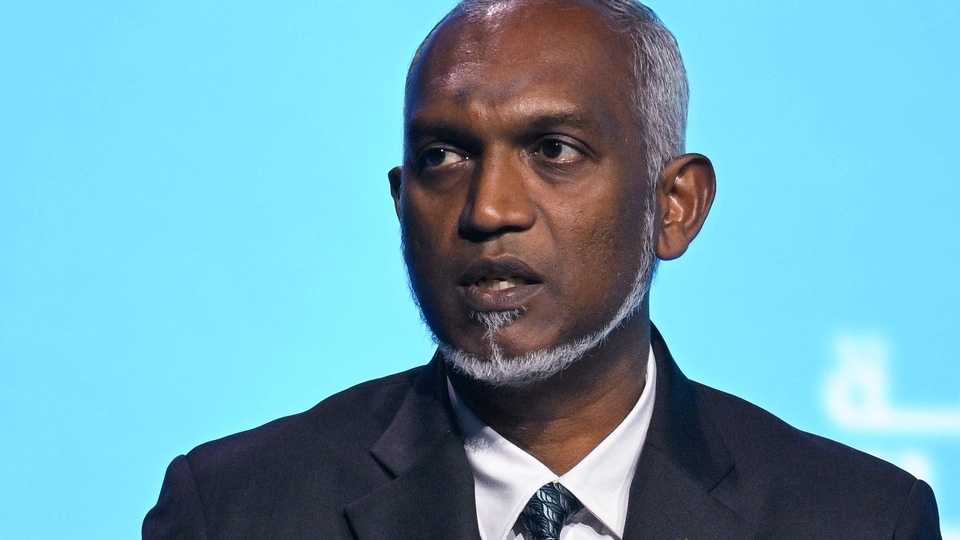
According to trends reported by the Maldivian media several hours after the counting of votes began, Muizzu’s People’s National Congress (PNC) was leading in 59 of the 93 seats in the Majlis or Parliament. The opposition Maldivian Democratic Party (MDP), which had pursued an “India First” policy before losing last year’s presidential election, was ahead in only 15 seats.
The Maldives Development Alliance, the Jumhooree Party and independent candidates were leading in a total of seven constituencies, indicating that the PNC was set for a comfortable majority in Parliament.
Why New Delhi cold shouldered Maldives plan for Prez Muizzu’s India visit
More than 284,000 voters were eligible to participate in the polls to choose the 93 members of Parliament for the next five years. Media reports described the voting throughout Sunday as brisk.
During his campaign, Muizzu had portrayed the parliamentary election as a referendum for the policies of his government. The PNC had asked voters to elect a majority so that Muizzu’s government could swiftly fulfil his presidential campaign pledges, including a move to send back Indian military personnel deployed in the Maldives to operate two helicopters and an aircraft.
Since coming to power last year, Muizzu has sought to shift the Maldives toward China and away from its longstanding ties with India. He has taken several steps to lessen the country’s dependence on India for food security and healthcare, including signing contracts with Turkey and other countries for supplying food items and pharmaceutical products.
More than 80 Indian military personnel were stationed in the Maldives to operate the aircraft used mainly for humanitarian relief operations and medical evacuations and two batches were withdrawn in March and April. All the military personnel are set to leave by May 10, and will be replaced by civilian experts.
The Maldivian Parliament exercises supervisory powers over the executive and can hold up presidential actions. With the PNC set to gain a majority in the Majlis, Muizzu is expected to face fewer obstacles in implementing his policies, people familiar with the matter said on condition of anonymity.
Muizzu - who recently accused his predecessor Mohammed Ibrahim Solih of acting on the orders of a “foreign ambassador” in a thinly veiled dig at India – had also appealed to voters to give his coalition a majority in Parliament to protect the independence of the Maldives.
“All those who love our nation must make sure the decision they make tomorrow is one to secure our nation’s future,” he said at a rally on Saturday. “The ballot you cast tomorrow must be for national sovereignty and for the protection of our nation.”
Both India and China have wooed the Maldives as part of efforts to project influence across the Indian Ocean. Both countries have poured billions of dollars into major infrastructure and housing projects in the Maldives in recent years.