
 E-Paper



Opinion | New Delhi has pulled off a calculated precision strike
Modi is no warmonger. India’s experience at Pathankot ensured that the procedure for such strikes are now set

 Prefer HTon Google


The more you sweat in training, the less you bleed in war is an age-old adage, and Prime Minister Narendra Modi has taken it to his heart. The surgical strikes in on terrorist camps in Pakistan-occupied Kashmir (PoK) after the 2016 Uri attack and the stand-off missile strike on Jaish-e-Mohammed (JeM) terror training camp at Balakot in Khyber-Paktoonkhwa post February 14 Pulwama car bombing illustrate this. Neither was a knee-jerk reaction to the preceding terror strikes planned in haste.
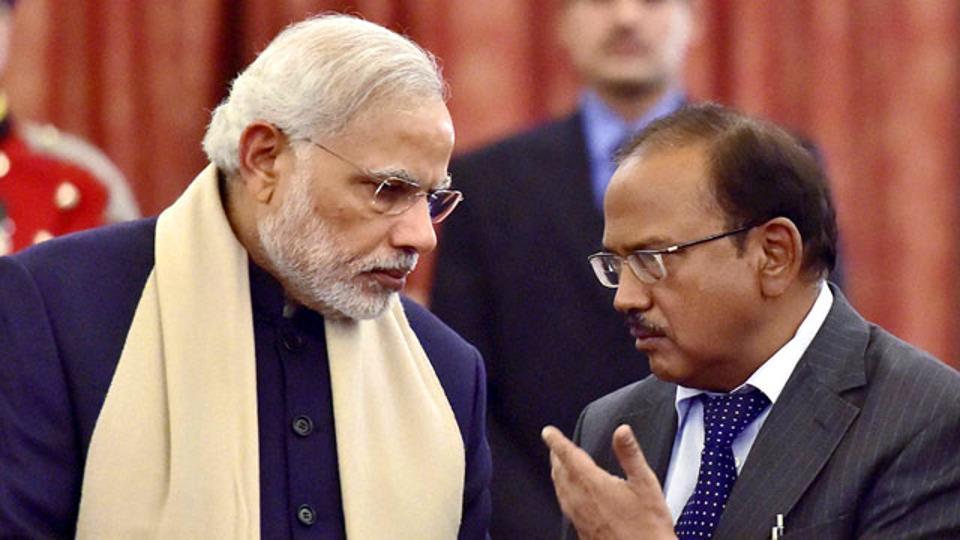
The standard operating procedure for such strikes was prepared, much like a military drill, by National Security Advisor Ajit Doval in consultation with the three military chiefs and three intelligence chiefs including the NTRO (National Technical Research Organisation; the other two are the Intelligence Bureau and RAW), under instructions of PM Modi when the NDA government took charge in 2014.
Even the target wasn’t chosen by chance and impulsively. Although the precision strike on Balakot camp may have taken Pakistan by surprise due to depth of the terror asset, India’s security team had been watching the biggest Jaish-e-Mohammed camp for the past four-and-a-half years.
PM Modi is no warmonger. Nor does he have a visceral hatred of either Pakistan or China — the two neighbours and principal adversaries of India. He laid out the red carpet for Xi Jinping when the Chinese leader visited Ahmedabad on September 17, 2014 but the Peoples Liberation Army (PLA) rebuffed him with a major stand-off with Indian Army at Chumar in eastern Ladakh at the same time. The April 2018 Wuhan understanding between the two leaders was reached after Modi did not bat an eyelid and made the Indian Army stand up to the Chinese PLA for 73 days at the Doklam plateau near Sikkim border in aid of India’s closest ally Bhutan. The Doklam stand-off did not ease just due to deft diplomacy between Beijing and New Delhi; it was backed by the same drill (as in the Balakot attack), with the Indian military being prepared for all eventualities.
Today, it is not that the relationship between India and China is cosy, but the two countries and their leaders understand each other very well in terms of vision, capacities and capability. This has ensured PLA does not play the lone ranger at odds with Beijing on the Line of Actual Control (LAC).
With Pakistan also, PM Modi started on a very positive note by inviting the then Prime Minister Nawaz Sharif to his May 26, 2014 swearing-in ceremony and then landing up at Lahore on December 25, 2015 to attend a family marriage at the Sharifs at Raiwind. But the Pakistan army and its sword arm, JeM, decided to attack India the same day as evident from the from the note recovered from the vehicle used in the Pathankot air base attack on January 2, 2016.
New Delhi knew the attack was coming, although it didn’t know where. NSA Doval briefed his then counterpart in Pakistan, Gen Naseer Janjua the night before so that the Rawalpindi would use its clout with JeM leader Masood Azhar to stop the attack. The terror strike took place as Pakistan did not make enough effort to choke the terror group’s leadership. The military option was ready at that time also but India chose to give Sharif a chance by providing all evidence against JeM’s involvement in the airbase attack and unheard-of access to the joint investigation team from Pakistan.
It was Modi’s bitter experience with Pakistan after the Pathankot attack that changed the game and the military drill. Disregarding the unsolicited advice of armchair strategic experts about the threat of nuclear escalation in case of a counter-strike, Modi struck in PoK within 11 days of the Uri attack on September 18, 2016 with precision and no collateral damage. He struck again on February 26, 2019 at the JeM terror training camp in mainland Pakistan, this time 12 days after Pulwama .
In both the counter-strikes, India ensured that its closest friends in the international community particularly the US were kept in the loop. It was the support of the US and the international community for Pakistan that prevented then Prime Minister Atal Bihari Vajpayee from taking a similar stand against JeM after the Indian military mobilised following the 2001 Parliament attack.
It’s worth noting though, that if anything had gone wrong in Balakot (or, for that matter, in the surgical strike following Uri), Modi and the NDA would have been on the backfoot. Then, Modi likes to play and deliver on the razor’s edge.
shishir.gupta@hindustantimes.com


