
 E-Paper



GMSH-16 to resume OPD services on Monday
For now, only services of the orthopaedics, gynaecology, surgery, skin, and paediatrics departments will be restored.

 Prefer HTon Google


Government Multi-Speciality Hospital, Sector 16, has decided to resume its out-patient departments and non-emergency operation services from Monday.
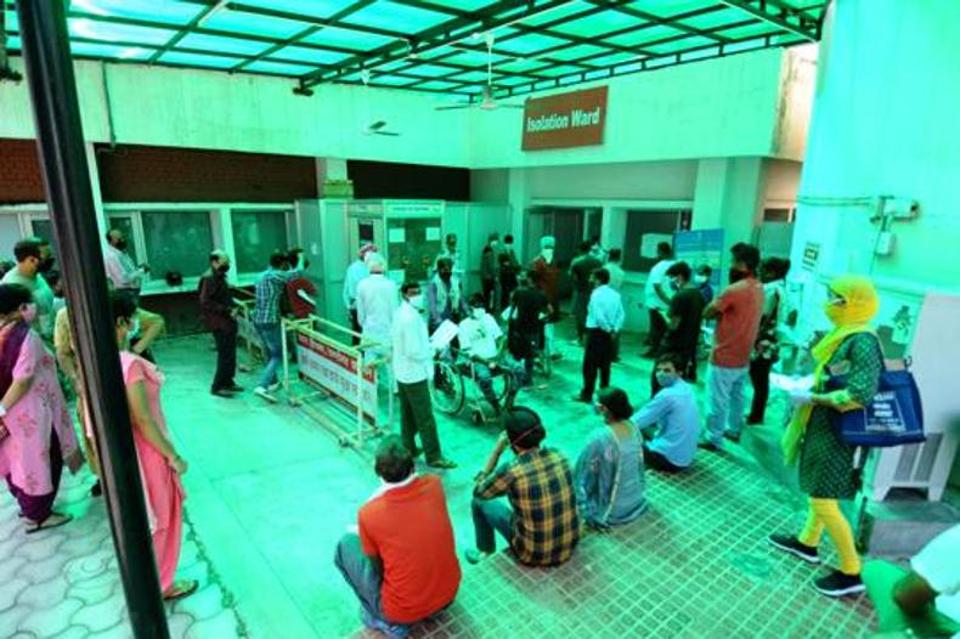
The hospital will be the first among the city’s government health institutes to restart its routine services since they were suspended on March 19, a day after the first Covid-19 case surfaced in Chandigarh.
For now, only services of the orthopaedics, gynaecology, surgery, skin, and paediatrics departments will be restored.
The decision comes after a significant reduction in the daily Covid-19 cases. “GMSH-16 will re-open the OPDs with precautionary measures in place and more staff will be deployed for maintaining physical distancing between patients,” said Dr VK Nagpal, medical superintendent-cum-joint director, UT health department.
“We are planning to run all services at full capacity in the coming days if the Covid-19 spread remains low,” Dr Nagpal added.
Meanwhile, during a review meeting on Thursday, UT administrator VP Singh Badnore asked city’s medical institutions to try and restore normalcy in OPD treatment, since the burden of corona cases had substantially come down.
He also directed principal health secretary Arun Gupta to explore the possibility of strengthening satellite medical centres by providing services of specialists from major hospitals, as this will avoid crowding in the OPDs of PGIMER and other institutions.
However, two major tertiary-care institutes, Post-Graduate Institute of Medical Education and Research and Government Medical College and Hospital, Sector 32, have yet to take a call on reopening their OPDs.
Instead, PGIMER has added more dedicated lines to its tele-consultation services and increased the registration timings from the earlier 8am-9.30am to 8am-10.30am with effect from Friday.
Giving details about the initiative, PGIMER director Dr Jagat Ram said, “In the thick of Covid-19 pandemic, we had suspended OPDs fearing transmission of the contagious virus among patients considering the huge footfall at our OPDs. However, we took this step to broad-base the service to meet the consistently increasing demand and cater to the health needs of more of our non-Covid patients, while ensuring their safety with this initiative.”
“More people are now availing of the tele-consulation service. The daily cards issued have increased from approximately 500 in the beginning to 1,600 now. Therefore, we have increased the quantum of this service to meet the growing demand,” said Dr Ashok Kumar, additional medical superintendent, PGIMER.


