
 E-Paper



Wildbuzz: A dapper cradle killer
Observant citizens nurturing a passion for Nature and equipped with high-tech gadgets (the latest smartphones have very powerful cameras) can make productive contributions

 Prefer HTon Google


Observant citizens nurturing a passion for Nature and equipped with high-tech gadgets (the latest smartphones have very powerful cameras) can make productive contributions to our awareness of the behaviour of species. And, all from the comfort of a plush settee, if luck and chance come laden in a silver spoon! The Oriental Pied hornbill, a rare bird and beloved bird of Chandigarh, is a far more dapper cousin of the State Bird, the Grey hornbill.
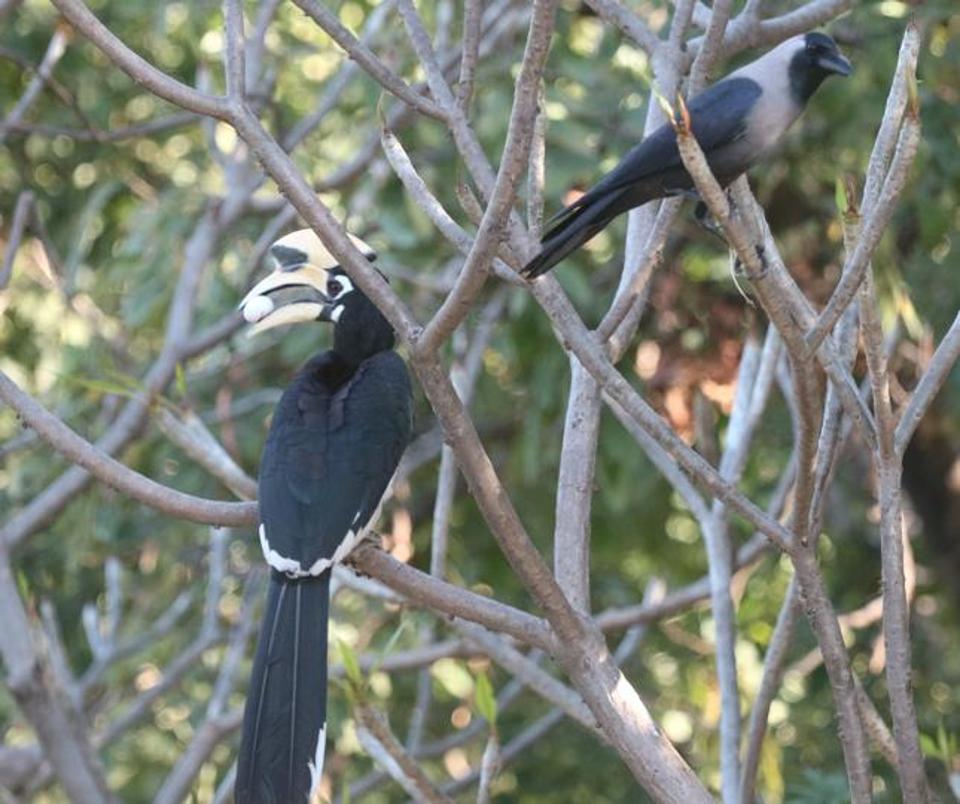
While most think hornbills are fruit eaters, this big bird’s formidable bill is not just a piece of eye candy. It can savage and mangle little birds and chicks with a force as brute as garden shears set upon a tender rose stem. The butcher bill can equally remove an egg from another bird’s nest with an extractive touch as delicate as a brain surgeon’s, before gobbling it whole and without remorse! In other words, the hornbill is a cradle predator.
In a Sector 8 bungalow garden in Chandigarh, a pair of Pied hornbills staked out a nest of Rose-ringed parakeets in a tree hollow. The hornbills were on the hunt for chicks or eggs.
Within a few minutes, the male hornbill pulled out a parakeet egg. The hunt was witnessed from inside the house by Nitin Sarin. He quietly took photographs bringing to light this aspect of hornbill feeding behaviour, the first such photo documentation from Chandigarh.
Asian hornbills also hunt scorpions, lizards, geckos, skinks, earthworms, frogs, caterpillars, beetles, butterflies, cicadas, grasshoppers while some hornbill species list serpents on their omnivorous diet charts.
A TRINKET GLITTERS IN THE NIGHT
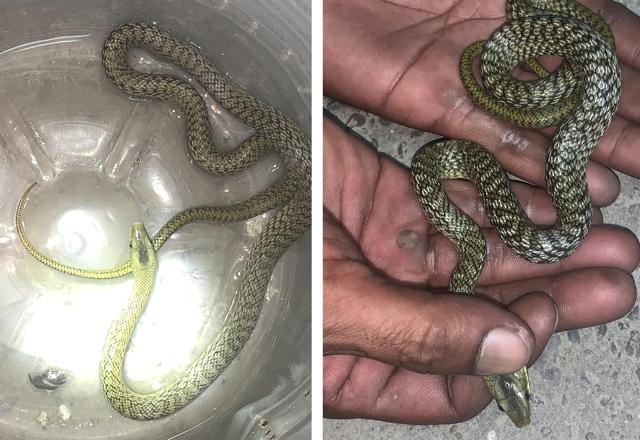
It was assessed as a routine snake rescue call when Salim Khan made his way to a house in Sector 21, Panchkula, late on Wednesday night. The householders had seen the serpent take shelter underneath planks of wood in their garden and Khan told them to maintain vigilance till the time he got there. Khan nabbed the serpent easily but its patterns mystified him. In all his decades of rescuing serpents, the hawk-eyed Khan had never seen this one before. In the darkness as light shone on the serpent, it appeared to him as if dazzling zebra stripes had materialised on a reptile so far away from the African savanna.
Identified later by field researcher and snake expert Vivek Sharma as the Himalayan Trinket snake (Orthriophis hodgsoni Günther, 1860), its rescue heralded the first authentic record of this species from Haryana. This species is encountered at elevations ranging between 1,000 to 3,200 m, so the Panchkula specimen was somewhat an oddity. It is possible that the serpent got swept by monsoon torrents in the upper hills and landed in the Ghaggar river bed adjacent to Sector 21, just as Himalayan fishes and flora travel far into the plains on water surges.
This trinket species is found in India, Nepal and Tibet, is non-venomous and kills prey such as rodents, small mammals and lizards by constriction just like a python. It is also known as the Hodgson’s Rat snake. “Trinket snake species get their common English names as they are colourful and beautiful,” Sharma told this writer.
vjswild1@gmail.com


